
About Stefano Rossetto
Lived 1501 – 1580 (aged 78–79). Stefano Rossetto was a composer.
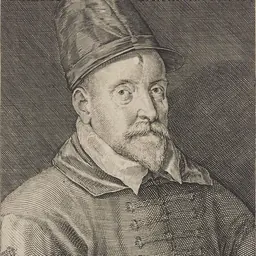
Stefano Rossetto (also Rossetti) (fl. 1560–1580) was an Italian composer of the late Renaissance, born in Nice, who worked mainly in Florence for the powerful Medici family, and in Munich.
Life His life has not yet been thoroughly studied. The earliest information available shows that he may have lived and worked on Chios, an island in the Aegean, in the service of the Genoese Giustiniani family; the connection can be made from the dedication to one of his 1560 books of madrigals. In 1560 he assisted at the wedding of Emmanuel Philibert of Savoy and Marguerite of Valois, which took place in Nice.
In 1566 at the latest he went to Florence, where he served Ferdinando I de' Medici as a composer, alongside Alessandro Striggio, and Francesco Corteccia, whose career by then had begun to wane. By 1579 he was in the employ of either Albrecht V, or William V (Albrecht died in 1579). The intermedio performed in Florence in 1583 alongside Fedini's play Le due Persile may have been his work. Connections between the Medici and Bavarian courts were close through the period, and composers often passed between them. Nothing certain is yet known of Rossetto's career after 1580.
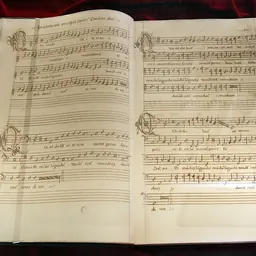
Rossetto also composed three books of madrigals, for four, five, and six voices, respectively (all published in Venice in 1560 and 1566), and an ambitious setting of the Lamento d'Olimpia, in seventeen parts, for from four to ten voices, which he published in Venice in 1567. (Florence, for all its opulence, lacked publishing houses, and most of the Medici composers published their works in Venice, a city with a long publishing history.) In addition to his secular music, he published a book of motets in Nuremberg in 1573, Novae quaedam sacrae cantiones, quas vulgo motetas vocant, for five and six voices.
In his madrigals he uses chromaticism creatively, and he liked to write both madrigals and motets in groups, as did the other Medici composers (such as Corteccia and Striggio). Much of his music is intended to be accompanied by instruments, another characteristic of Florentine polyphony of the period.
References and further reading James Haar: "Stefano Rossetto", Grove Music Online, ed. L. Macy (Accessed May 14, 2007), (subscription access) Gustave Reese, Music in the Renaissance. New York, W.W. Norton & Co., 1954. Davitt Moroney, "Alessandro Striggio's Mass in Forty and Sixty Parts". Journal of the American Musicological Society, Vol. 60 No. 1., pp. 1–69. Spring 2007. ISSN 0003-0139 Stefano Rossetti, "Il lamento di Olimpia" and Other Madrigals from Four to Ten Voices, ed. and reconstructed by James Chater. Madison, Wisc.: A-R Publications (forthcoming)
Don’t just read it —
keep it.
Full-length biographies made to live with: read them, listen on the way to work, watch them tonight.
- E-book
- Audio
- Video
Instant download · yours to keep · every purchase keeps this site free
Important facts
People in Stefano Rossetto's life
Named in this biography and alive at the same time

Related people
Same field, nearest in time


Contemporaries
People whose lives overlapped Stefano Rossetto's






Frequently asked questions
Who was Stefano Rossetto?
Italian composer
When was Stefano Rossetto born?
Stefano Rossetto was born in 1501.
When did Stefano Rossetto die?
Stefano Rossetto died in 1580.
What was Stefano Rossetto's occupation?
Stefano Rossetto was a composer.
Sources & further reading
Cite this page
APA: Biography.guide. (2026). Stefano Rossetto. https://biography.guide/stefano-rossetto/
MLA: "Stefano Rossetto." Biography.guide, https://biography.guide/stefano-rossetto/.
Chicago: "Stefano Rossetto." Biography.guide. https://biography.guide/stefano-rossetto/.
Data last updated: 2026-09-20 · Spot an error? Report a correction.
Page generated 2026-09-27 05:30 UTC