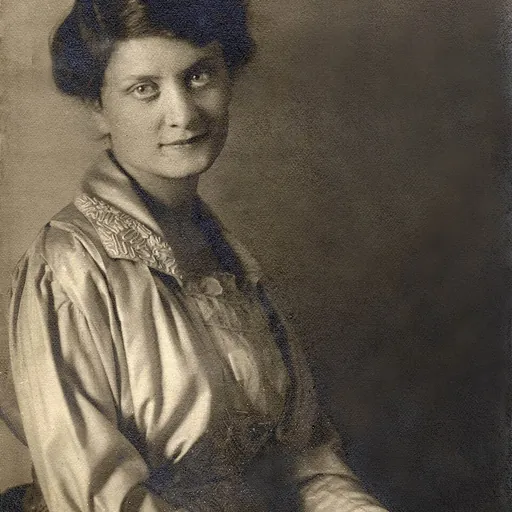
About Stefania Zahorska
Lived 1890 – 1961 (aged 70). Stefania Zahorska was a Polish art historian, writer, translator, opinion journalist, university teacher and art critic.
Stefania Zahorska (25 April 1889 – 6 April 1961), pseudonym Pandora, was a Polish art historian, writer, and publicist. She was one of the most highly respected, widely read, and influential Polish film critics during the interwar period.
Early life Zahorska was born Stefania Ernestyna Leser in Kraków (then part of Austria-Hungary) to a family of assimilated, middle class Polish Jews; some sources have put her year of birth as 1890. Her mother died when she was a teenager and she moved to Budapest to live with her older sister Helena. Her dissertation focused on the aesthetics of the early Polish Enlightenment. During her university studies, she married Bohdan Zahorski, an officer in one of Józef Piłsudski's officer legions.
Film criticism Zahorska began writing film criticism in the early 1930s for the weekly magazine Wiadomości Literackie; she worked up until the outbreak of World War II and published over 500 film reviews. She was a leader in the fight against parochialism in both Polish cinema and Poland itself. Her reviews could be scathing and controversial. She wrote of the 1937 Yiddish film The Dybbuk that it left such "an insipid residue of pathetic kitsch that all the traditions on which it is based have not given birth to even one good scene"; The Dybbuk is recognized as a supreme achievement of both Yiddish film-making and as a masterpiece of European cinema.
In 1934, she traveled throughout the Soviet Union where she attended seminars at the Gerasimov Institute of Cinematography in Moscow. Her most influential and best known work was the essay "What the novel owes film", in which she argued that film, a relatively new medium, played a role in developing the contemporary literary metaphor, making it more sensual and dynamic as a response to film.
Zahorska became the partner and literary collaborator of the Polish exiled activist and writer, Adam Pragier. She lived in France from 1939 to 1940, when she moved to the UK. From 1950 onward, she and Pragier co-authored a column "Puszka Pandory" (Pandora's Box) for Wiadomości Literackie. She died in London.
Works Zahorska was an author of Matejko (1925), Eugeniusz Żak (1927), Szczęśliwe oczy. Wybór studiów i esejów z dziedziny filozofii, historii i krytyki sztuk plastycznych z lat 1921-1960 (published posthumously in London, 1970); the play Smocza 13; novels Stacja Abbesses (Tonbridge, 1952), Ziemia pojona gniewem (London, 1961), Ofiara (The Offering), and Korzenie; memoirs Warszawa - Lwów 1939 (London, 1964).
Don’t just read it —
keep it.
Full-length biographies made to live with: read them, listen on the way to work, watch them tonight.
- E-book
- Audio
- Video
Instant download · yours to keep · every purchase keeps this site free
Important facts
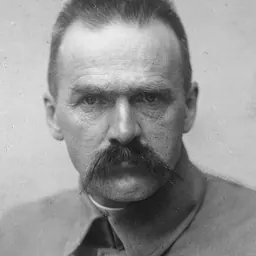
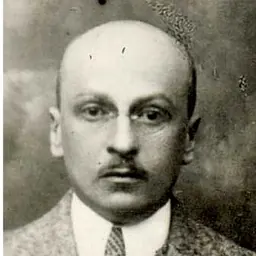
People in Stefania Zahorska's life
Named in this biography and alive at the same time
Related people
Same field, nearest in time


Contemporaries
People whose lives overlapped Stefania Zahorska's





Frequently asked questions
Who was Stefania Zahorska?
writer, art historian (1890–1961)
When was Stefania Zahorska born?
Stefania Zahorska was born on 25 April 1890 in Kraków.
When did Stefania Zahorska die?
Stefania Zahorska died on 6 April 1961 in London.
What was Stefania Zahorska's occupation?
Stefania Zahorska was an art historian, writer, translator, opinion journalist, university teacher and art critic.
What nationality was Stefania Zahorska?
Stefania Zahorska was Polish.
Sources & further reading
· Wikipedia: Stefania Zahorska
Cite this page
APA: Biography.guide. (2026). Stefania Zahorska. https://biography.guide/stefania-zahorska/
MLA: "Stefania Zahorska." Biography.guide, https://biography.guide/stefania-zahorska/.
Chicago: "Stefania Zahorska." Biography.guide. https://biography.guide/stefania-zahorska/.
Data last updated: 2026-09-22 · Spot an error? Report a correction.
Portrait: Wikimedia Commons · author & licence
Page generated 2026-09-27 05:02 UTC