
About Stefan Szende
Lived 1901 – 1985 (aged 84). Stefan Szende was a Hungarian and Swedish writer, journalist, resistance fighter, political scientist, politician and political science.
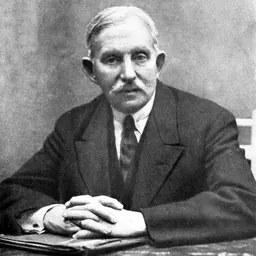
Stefan Szende (born István Szende: 10 April 1901 – 5 May 1985) was a Hungaro-Swedish political scientist, politician, journalist and writer who during the Nazi years became an anti-fascist resistance fighter and a victim of the concentration camp system.
Life Hungarian provenance and early years István Szende was born in Szombathely, then on the western edge of the Hungarian part of Austria-Hungary. Max Szende (1872–1921), his father, was an insurance company worker. With his elder brother László, István grew up in a prosperous liberal-Jewish family and acquired a sold classical education, largely free of Jewish religious elements. He attended school locally, moving on to a Roman Catholic secondary school. Szombathely was a multi-cultural city. His mother Elisabeth (1874–1944), who came from a German-speaking family, ensured that he grew up fluently bilingual, and he also learned a third language, French, to a high standard at school. was born in Budapest.
Nazi Germany The Nazi take-over at the start of 1933 completely changed the political backdrop, and after the Reichstag fire at the end of February 1933 the new government accelerated the transformation of Germany into a one-party dictatorship. Having already anticipated that the period of Nazi government would be no passing trend, but a sustained and long-term threat, the SAPD was in many ways better prepared to transform itself into an underground movement than the larger Communist Party and SPD. Szende was quick to respond to the challenge of sustaining party political work under conditions of illegality. His choice of a party cover name, "Stefan", nevertheless indicates a certain naivete in aspects of his approach. In August 1933 the Gestapo broke the national leadership of the SAPD, which included the arrest of the party's Berlin region leader, Max Köhler. Stefan Szende now took over the party leadership in Berlin. }
In several of his subsequent published writings, Stefan Szende describes in considerable detail the extreme sadistic pleasure taken by Obersturmführer Hans Stahlkopf in the regular torture sessions. In some of the other concentration camp guards and administrators it was occasionally possible to detect glimpses of humanity beyond the inhuman cruelty, but Stahlkopf was driven by a passionate antisemitism and took an unconfined delight in inflicting physical pain. Willy Brandt, a political friend and soul-mate whom he particularly respected, and whom he met when Brandt had visited Prague from Berlin for a few days earlier in 1937, was now dividing most of his time between Oslo and Stockholm. Eventually, in October 1937, the Szende family were able to emigrate to Stockholm, their travel costs supported with a grant from the Thomas Mann fund. Moving to Sweden provided, for the first time in years, relative long-term security and an important impetus for Stefan Szende's own further political development.
As the war's end approached Szende's own long and varied political trajectory turned ever more clearly towards concrete political issues. Experience of Sweden's advanced welfare state pushed him further in the direction of social democracy, while his own experience of communism in action, marked by coercion and dogma, sharpened his critique of Marxism.
During the mid-1940s, Szende's political development was accompanied by lively exchanges with his friends, including above all the others Willy Brandt, with whom he was able to intensify his intellectual contacts. As early as 1942 Szende was participating in a small circle of socialist refugees who regularly discussed problems presented by the war and anticipated postwar challenges. This "International Group of Democratic Socialists" (also, not without irony, sometimes identified as the "Little [communist/socialist] International") united around support for peace objectives and, drawing on the ideas of the Scandinavia labour movement and continental European Socialist traditions, created a theoretical ideological structure. Stefan Szende, who had been a temporary resident in a succession of countries, always opted for European peace objectives rather than national solutions.
In the late summer of 1944 Stefan Szende, Irmgard Enderle, Willy Brandt and Ernst Behm jointly published "Zur Nachkriegspolitik deutscher Sozialisten" ("On the Postwar Politics of German Socialists"), in which the SAPD members set out their demands for a democratic socialist postwar Germany. A few weeks later, the exiled SAPD in Sweden switched their allegiance to the Social Democratic Party (SPD), which effectively put an end to the SAPD as a stand-alone political party. The former communist Stefan Szende was now officially a Social Democrat, influenced by his experience and a conviction of a need for unity on the political left (although this new "United Front" did not include the Communist Party). Stefan and Erszi Szende both formally joined the SPD on 30 September 1944.
When he learned of Hitler's suicide – which was seen to mark the beginning of the end of the war – Stefan Szende was attending a meeting of the "Little International" group. The end of the war would end nearly two decades of enforced exile for Szende and for all the participants at the meeting offered the prospect of new beginnings and opened up a range of possibilities for participation in postwar politics.
Postwar opportunities After the war ended, formally in May 1945, Stefan Szende reportedly received several lucrative offers to return to Germany and become an editor in chief or publisher of a newspaper, or even a government minister. He preferred to preserve his independence and freedom, however, notably in respect of his fifteen-year-old daughter, and in the end the family stayed in Sweden, unlike Szende's friend Willy Brandt. In Sweden, Stefan Szende pursued with his journalistic and literary career. In 1947 he became editor for Agence Européenne de Presse, acquiring the news agency in 1949. Being the agency's representative for Sweden enabled him to remain in the country, and in 1950, after twenty-two years in which he had been legally stateless, he was granted Swedish citizenship. By now he was working for the press in both Sweden and Germany, also retained as Scandinavia correspondent for RIAS, the West Berlin radio station. Work for RIAS, friendship with Willy Brandt and his own itinerant past all combined to give him a firm connection with West Berlin, which endured through the rest of his life.
In 1968 Stefan Szende retired from the press agency, still remaining in Sweden with his family. Their daughter Barbara studied medicine and received her doctorate, marrying in 1957. Although her husband, Ronald Julian Moss Baron (1926–2003), came from London, she and he also appear to have made their life together in Sweden. In 1975 Stefan Szende published a memoire entitled "Zwischen Gewalt und Toleranz" ("Between Violence and Tolerance"), recalling life experiences and also extending to more theoretical reflections on personal and political development. His unusually varied life story had left him as a committed European, keen to bridge differences between the two competing political blocks, but resolutely separated from the Soviet bloc.
Stefen Szende died in 1985.
Don’t just read it —
keep it.
Full-length biographies made to live with: read them, listen on the way to work, watch them tonight.
- E-book
- Audio
- Video
Instant download · yours to keep · every purchase keeps this site free
Important facts
People in Stefan Szende's life
Named in this biography and alive at the same time



Related people
Same field, nearest in time




Contemporaries
People whose lives overlapped Stefan Szende's


Frequently asked questions
Who was Stefan Szende?
Hungarian writer and journalist (1901-1985)
When was Stefan Szende born?
Stefan Szende was born on 10 April 1901 in Szombathely.
When did Stefan Szende die?
Stefan Szende died on 5 May 1985 in Skarpnäcks församling.
What was Stefan Szende's occupation?
Stefan Szende was a writer, journalist, resistance fighter, political scientist, politician and political science.
What nationality was Stefan Szende?
Stefan Szende was Hungarian and Swedish.
Sources & further reading
Cite this page
APA: Biography.guide. (2026). Stefan Szende. https://biography.guide/stefan-szende/
MLA: "Stefan Szende." Biography.guide, https://biography.guide/stefan-szende/.
Chicago: "Stefan Szende." Biography.guide. https://biography.guide/stefan-szende/.
Data last updated: 2026-09-20 · Spot an error? Report a correction.
Page generated 2026-09-27 05:18 UTC