
About Stasys Ušinskas
Lived 1905 – 1974 (aged 68). Stasys Ušinskas was a Lithuanian glass artist and filmmaker.
Stasys Ušinskas (20 July 1905 – 14 June 1974) was a Lithuanian artist of multiple creative fields: modern painting, stained glass, scenography, animation, puppetry and decorative glass artworks. He is widely regarded as the "father of Lithuanian stained glass art".
Early life and education Stasys Ušinskas was born in Pakruojis, a city situated in northern Lithuania, to a family of stonebreaker Juozas Ušinskas, his mother Sofija Ušinskaitė and his siblings Filomena, Romas, Alfonsas. Between 1908 (1909?) and 1914, the family lived in the United States. In 1914, Stasys returned to Lithuania and in 1925 graduated from the Šiauliai Gymnasium. Between 1925 and 1929 he studied painting in Kaunas Art School and frequented the art studio of .
In 1929–1931, Ušinskas studied at the Académie Julian and later attended lectures by Henri-Marcel Magne at the Conservatoire national des arts et métiers (National Conservatory of Arts and Crafts). In 1930, Aleksandra Ekster has encouraged Ušinskas to join the Académie Moderne where he attended Ekster’s lectures on scenography, Fernand Léger’s lectures on painting and Le Corbusier’s abstract composition. Stasys Ušinskas has later remembered his formative years in Paris in the following words : Having had come to Paris without a grant, I had to undertake a variety of additional jobs: I drew cinema posters, later I worked as a scenographer in the theatre ‘Folies Bergère’. There I met theatre scenographer Aleksandra Ekster – she created decorations and costumes for some plays. Thanks to her, I got into the Académie Moderne, for which I had to pay 300 franc per month (otherwise I wouldn’t have been able to study [there] without the salary received from the given [theatrical] projects).
At the time, Léger’s painting was a novelty. It has immediately enticed my interest, I turned towards that path- and pursued it. Whereas Classical painting became mundane, he [Léger] created a foundation for a new composition. Arrangement of colors, composition in Léger’s artworks is not very complicated, merely simplified, however he attains a clear decorative, monumental, expressive construction. He used to say: ‘Don’t go to museums, don’t visit them, run from them, rather go to the shops, observe window-cases…’ F. Léger was not preoccupied with atmosphere, perspective, but with plane, constructive issues. While teaching the drawing, he claimed that you cannot isolate drawing because painting is a synthesis of a color and composition. S. Ušinskas' final graduation work included a project of decorations and costumes for Sophocles' tragedy "Oedipus Rex" and Shakespeare's drama "Othello".Stasys Ušinskas, having absorbed the expressions of constructionism, cubism, neoclassicism and Art Deco into historical, allegorical, genre painting and portraiture, embodied the spirit of his time, modernised the shapes of his works and kept in step with the world art avant-garde. In 1931, Ušinskas returned to Lithuania and organized the first solo exhibitions in Kaunas and Šiauliai. His scenography works drew interest of , the director of the State Theater, who invited Ušinskas to work in the theater. S. Ušinskas also worked with Lithuanian writer Balys Sruoga and the famous Russian actor and director Mikhail Chekkov.
In 1932, Ušinskas designed numerous performances in drama, opera and ballet theaters. In 1934, Ušinskas became a professor at Kaunas Art School and taught monumental painting, stained glass and scenography design. Between 1935 and 1940, Ušinskas manages a decorative painting studio at Kaunas Art School. Ušinskas took over the leadership of the studio and soon became an authority in set design, demanding that his students master constructive thinking and logic in design, and emphasizing the importance of new technologies, also instructing students in the proper exhibition of artistic works.
Scenography and marionettes Stasys Ušinskas' Costume Designs for Balys Sruoga's 'Milžino paunksmė' (1934), directed by Andrius Oleka-Žilinskas. In 1935, Ušinskas created a number of marionettes for the first Lithuanian puppet play Silvester Fife (Silvestras Dūdelė) directed by Antanas Gustaitis and in 1938 for the first Lithuanian sound animation The Fat-Man's Dream (Storulio sapnas).According to Audronė Girdzijauskaitė: Ušinskas seems to be looking for a universal space that would equally suit a dramatic or musical piece by interpreting, improvising and playing. He was preoccupied with the issues of figure and object within space. Ušinskas took deep interest in the prehistory of theatrical puppets and masks. Having created unique dynamic marionettes of constructive shape and large size, and establishing a puppet show in 1936, he became the initiator of a professional Lithuanian puppet theatre. A year later (1937), Ušinskas received gold and silver medals at the Exposition Internationale des Arts et Techniques dans la Vie Moderne for scenography design of Balys Dvarionas ballet Matchmaking (1933). The novel technology of Ušinskas' puppets allowed to flexibly move various body parts, express certain emotions and traits of the characters from the story.
In 2019, 'Ušinskas' puppet film The Fat-Man's Dream and collection of puppet sketches were inscribed onto the Lithuanian National Memory of the World Register' by the UNESCO.
Stained-glass and decorative glass artworks
After the return from studies in Paris, Ušinskas created the first stained-glass pieces for the Church of Vytautas the Great in Kaunas. Žydrūnas Mirinavičius describes the formative influence of studies in Paris felt in Ušinskas artworks such as Saint (1931): This work in its character and spirit is close to stained-glass art of Romanesque period, though its stylisation evokes French modernists' constructivist thinking of the beginning of the 20th century. Stasys Ušinskas continues working with stained-glass and creates numerous pieces for public places in Lithuania and later in Russia, some of which: 1937-1938: Subject based stained-glass works Lithuanian Girl and Builder for the Chamber of Commerce and Industry in Kaunas. 1939-1947: A series of stained-glass pieces Mindaugas and Vytautas for the Berčiūnai Church in Panevežys. 1940: St. Casimir and St. Joseph for the Šančiai Church. 1945-1947: A series of stained-glass works for the Christ's Resurrection Church in Kaunas. 1946: Žalgiris Battle stained-glass piece now in the M.K. Čiurlionis Museum of Art. 1964: Students in Practical Training now in Kaunas University of Technology (KTU). 1965: Kristijonas Donelaitis stained-glass piece now in the M.K. Čiurlionis Museum of Art. 1968: Juratė and Kastytis 1972: Eglė the Queen of Serpents ('Eglė žalčių karalienė') now situated in the Kretinga City's Cultural Centre (Kretingos rajono kulturos centras).
The stained-glass pieces evoke a variety of stylistic influences such as Art Deco, Cubism, Constructivism, with Gothic, Renaissance and Classicism details, under which Stasys Ušinskas developed traditional, historical and Lithuanian literature narratives.
Ušinskas decorated his creations using stained glass painting techniques: employing silicate paints (glazes), enamels, metal film, gilding and silver plating. Flaws in the furnace's construction often led to contamination of the molten glass, but glazing would usually cover up shoddy glass. Initially, Ušinskas used the supply of paints that he had brought with him from Paris, and later turned to mixing his own glazes. As an instructor at the Kaunas Institute for Applied and Decorative Arts, Ušinskas trained many talented artists whose later works would bring renown to Lithuanian stained glass artistry: Algimantas Stoškus, Kazimieras Morkūnas, Vladas Jankauskas, Vytautas Banys, Rita Gabrėnaitė, and Rachilė Krukaitė. His student Algimantas Stoškus remembers :Ušinskas impressed us with his personality, his teaching method ("understand form, then try to render it"), and his personal workshop. There, he had his own small wood-fired furnace where students could fire their glasswork for academic projects. My life turned to stained glass because of my training with Ušinskas. During the work in Aleksotas glass factory, Stasys Ušinskas was often assisted by his sister Filomena Ušinskaitė and other students, one of them was his second wife Vitalija Blažytė (1926–1999) who will become an important collaborator in a variety of glass artworks and a muse for Stasys Ušinskas' stained-glass pieces and paintings.
Painting The UNESCO plaques for Stasys Ušinskas' patent of marionettes and The Fat-Man's Dream animation, Vilnius, 2019. ‘In Paris, teacher H. M. Magne and his milieu cultivated the perception of monumentality and the skills of drawing construction which inclined Ušinskas to constructive principles, emphasis on drawing architectonics and rigid compositional structures.’
‘From Ekster Ušinskas picked up laconic expression, synthesized shapes and the sense of structurally worked out spaces. Ušinskas tied in his teacher’s scenographic experience with painting by seeking constructive clarity, and static and dynamic synthesis of rhythm.’ The publication of Stasys Ušinskas letters to his wife Vitalija Blažytė who was exiled to Siberia‘s gulags between 1940 and 1957 reveal the life in a post-war Lithuania and the details of Stasys Ušinskas work specifics, professional life. In the letters, Ušinskas also mentions his students Vytautas Cipljauskas, Sofija Veiverytė and Kazys Varnelis whose early works evoke strong Ušinskas’ influence.
Memorial A memorial plaque in S. Daukanto g. 15, Kaunas where Stasys Ušinskas lived in 1961–1967 m. A memorial plaque in Baritonų g. 6, Kaunas, next to the former house and studio (1968–1974) of Stasys Ušinskas. A memorial plaque in Martynas Mažvydas National Library of Lithuania for Stasys Ušinskas' patent of marionettes' construction and his animation The Fat-Man's animation which were inscribed to the Memory of the World Register by the UNESCO in 2019. Stasys Ušinskas museum Monument for Stasys Ušinskas
Don’t just read it —
keep it.
Full-length biographies made to live with: read them, listen on the way to work, watch them tonight.
- E-book
- Audio
- Video
Instant download · yours to keep · every purchase keeps this site free
Important facts
People in Stasys Ušinskas's life
Named in this biography and alive at the same time

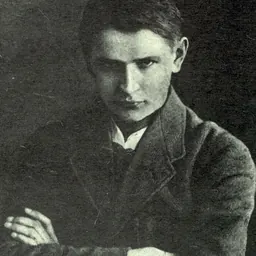

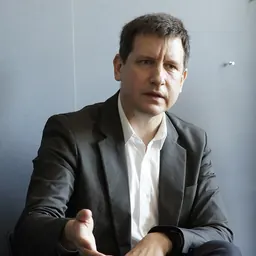


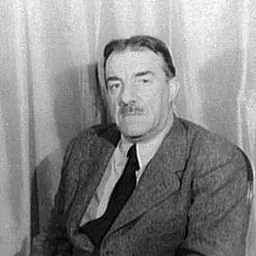
Related people
Same field, nearest in time
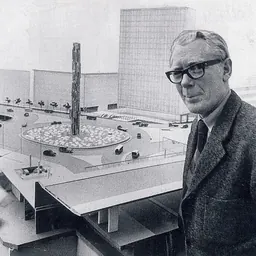

Contemporaries
People whose lives overlapped Stasys Ušinskas's




Frequently asked questions
Who was Stasys Ušinskas?
Lithuanian artist (1905–1974)
When was Stasys Ušinskas born?
Stasys Ušinskas was born on 20 July 1905 in Pakruojis.
When did Stasys Ušinskas die?
Stasys Ušinskas died on 14 June 1974 in Kaunas.
What was Stasys Ušinskas's occupation?
Stasys Ušinskas was a glass artist and filmmaker.
What nationality was Stasys Ušinskas?
Stasys Ušinskas was Lithuanian.
Sources & further reading
Cite this page
APA: Biography.guide. (2026). Stasys Ušinskas. https://biography.guide/stasys-usinskas/
MLA: "Stasys Ušinskas." Biography.guide, https://biography.guide/stasys-usinskas/.
Chicago: "Stasys Ušinskas." Biography.guide. https://biography.guide/stasys-usinskas/.
Data last updated: 2026-09-20 · Spot an error? Report a correction.
Page generated 2026-09-27 05:03 UTC