
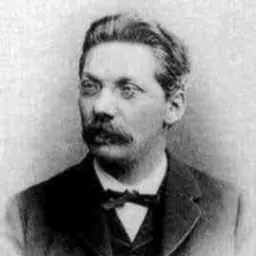
About Stanley Royle
Lived 1888 – 1961 (aged 72–73). Stanley Royle was a painter.
Stanley Royle RBA, (1888–1961) Senior was Painting Master at the art school, of whom Royle had a high opinion, and who exhibited at the Royal Academy. He also was influenced by Anglo-Danish artist Sir George Clausen.
His first employment was as an illustrator and designer for local newspapers. In 1911, he began exhibiting professionally in the UK. His first major success was to have three paintings accepted by the Royal Academy Summer Exhibition in 1913.
In 1921, he painted Morning on the Derbyshire Moors. His technique is impressionistic with almost a pointillist effect combined with broad sweeps of colour. Michael Tooby has written about this painting. His article is available to read on the official Stanley Royle website:http://www.stanleyroyle.com/morning-on-the-derbyshire-moors-an-appraisal-by-mike-tooby/
Although Stanley Royle often used female figures within his compositions these were usually secondary to the landscape, which formed his chief interest. However, the three paintings Spring Morning Amongst the Bluebells, The Lilac Sun Bonnet and The Goose Girl all show single female figures prominently displayed in the foreground, while in later works figures give way in importance to the landscape.
The four major views of Sheffield
In 1922, he received a commission from Frederick Horner, a local art dealer, to paint four large views in oils of Sheffield: Sheffield from Mayfields; Sheffield from Wincobank Wood; Sheffield from the Park; Sheffield from Crookes. This quartet of paintings forms a significant part of the collection of Stanley Royle's work in Museums Sheffield. In 2005, one of this group, Sheffield from Wincobank Wood was included in the Tate Britain's exhibition A Picture of Britain.
Living in an outlying rural district with limited public transport did not prevent Stanley Royle from undertaking large canvasses of landscapes, as shown by his study Burbage Valley (Museums Sheffield). Sometimes he would walk, but often cycle, to his chosen viewpoint, with all his painting equipment and canvas strapped to the side of his bike. Whilst painting Burbage Valley he hid the canvas in a cave in order not to damage the wet paint by transporting it home. The subject of the oil painting The Goose Girl now in the National Gallery of Ireland
In 1925, after resigning from the RSBA, Stanley Royle was elected an associate member of The Royal West of England Academy. and eventually persuaded Royle to emigrate in December 1931, with his wife and daughter, to take up a post as a lecturer in painting there (the "Great Depression" had made it next to impossible for him to make a living in the England).
Stanley Royle taught at the Nova Scotia School of Art until 1934 when he was dismissed by Nutt who saw him as a possible artistic rival. The family returned to Britain and Sheffield in the summer of that year, but in 1935, he returned to Nova Scotia to be Director of the Owens Art Museum and College of Art, then at Mount Allison University, Sackville where he became first professor of Fine Arts for the next ten years. and in 1945, he and his wife returned to the UK where he sojourned with his daughter and family in Suffolk before settling in north Nottinghamshire. Many of his paintings emphasise the sky by making use of a low horizon, so Suffolk, Nottinghamshire and Lincolnshire provided ideal subjects.
He and his wife returned to live permanently in Britain in 1945. On his return he acquired a motorbike and had removable carriers built for the pillion seat to accommodate his canvasses and paint box. Throughout the remainder of the 1940s he continued to exhibit at the Royal Academy and was elected president of the Sheffield Society of Artists in 1950. The Paris Salon awarded him the Silver Medal in 1951 and the Gold Medal in 1955. During this decade he visited Ireland, Scotland, Cornwall and again Brittany as he found the lighting effects of maritime subjects particularly inspiring. Brittany was his last overseas painting expedition. Thirty-nine of his paintings were accepted for exhibition at the Royal Academy during his lifetime. He did not like the harsh lighting effects of the midday sun as it flattened the subject, but preferred early morning or mid to late afternoon and evening light.
In conjunction with the 1988 centenary travelling exhibition held in Canada, Patrick Condon Laurette, the Curator of the Art Gallery of Nova Scotia, published a book in 1989 titled Stanley Royle (1888–1961). The next major publication solely dedicated to Stanley Royle's life and work was published in 2008, written by Timothy Dickson and published by Derwent-Wye Fine Art. It is an illustrated publication which also includes a full catalogue raisonné of the artists work. Further publications include Our Home and Native Land - Sheffield's Canadian Artists by Michael Tooby, published in 1991 by the Sheffield Arts Department with funding from the Arts Council. His publication explores the work and relationships of Sheffield's Canadian Artists which included Arthur Lismer and Frederick Varley as well as Stanley Royle.
In 1995, Royle's daughter Jean bequeathed her collection of Stanley Royle paintings to the Sheffield Galleries and Museums Trust in order that future generations would have the opportunity of viewing, in one venue, the artist's work. This is of particular value since so many of his paintings are privately owned: however several British Collections own his works including the galleries at Rotherham, Oldham, Derby Art Gallery and the Glasgow Museum. These can be viewed at the Art UK web site. and elsewhere.
Personal life Stanley Royle suffered from Bright's disease and this prevented him from joining the forces in the First World War. His daughter Jean Royle (1915-2002) was also an artist.
The Royle Art Group The Royle Art Group, based in Sheffield and founded in 1952, takes its name from the artist. The group is made up of admirers and former pupils of Stanley Royle and was originally known as the Royalist Art Group.
Don’t just read it —
keep it.
Full-length biographies made to live with: read them, listen on the way to work, watch them tonight.
- E-book
- Audio
- Video
Instant download · yours to keep · every purchase keeps this site free
Important facts
People in Stanley Royle's life
Named in this biography and alive at the same time



Related people
Same field, nearest in time



Contemporaries
People whose lives overlapped Stanley Royle's



Frequently asked questions
Who was Stanley Royle?
(1888 - 1961) Sheffield artist
When was Stanley Royle born?
Stanley Royle was born in 1888 in Stalybridge.
When did Stanley Royle die?
Stanley Royle died in 1961.
What was Stanley Royle's occupation?
Stanley Royle was a painter.
Sources & further reading
Cite this page
APA: Biography.guide. (2026). Stanley Royle. https://biography.guide/stanley-royle/
MLA: "Stanley Royle." Biography.guide, https://biography.guide/stanley-royle/.
Chicago: "Stanley Royle." Biography.guide. https://biography.guide/stanley-royle/.
Data last updated: 2026-09-22 · Spot an error? Report a correction.
Page generated 2026-09-27 05:30 UTC