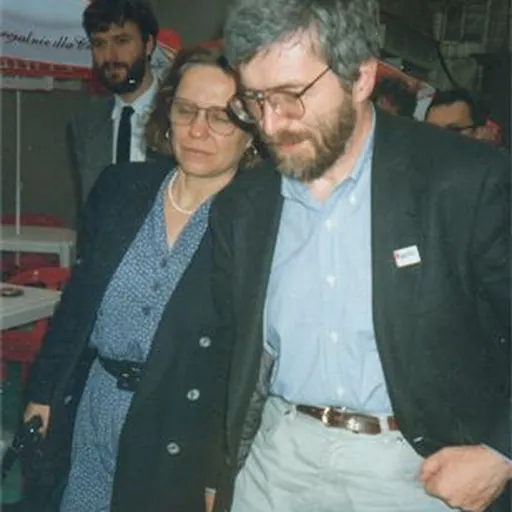
About Stanisław Barańczak
Lived 1946 – 2014 (aged 68). Stanisław Barańczak was a Polish poet, translator, writer, literary critic, university teacher and trade unionist.
Stanisław Barańczak (, November 13, 1946 – December 26, 2014) was a Polish poet, literary critic, scholar, editor, translator and lecturer. He is perhaps most well known for his English-to-Polish translations of the dramas of William Shakespeare and of the poetry of E.E. Cummings, Elizabeth Bishop, Emily Dickinson, Wystan Hugh Auden, Seamus Heaney, Thomas Hardy, Gerard Manley Hopkins, Thomas Stearns Eliot, John Keats, Robert Frost, Edward Lear and others.
Personal life Born in Poznań, Poland on November 13, 1946, Barańczak was raised by his father Jan and mother Zofia, both doctors. He was the brother of the novelist Małgorzata Musierowicz. He studied philology at Poznań's Adam Mickiewicz University, where he obtained an M.A. and Ph.D. His doctoral dissertation concerned the poetic language of Miron Białoszewski. In 1968, he married Anna Bryłka, with whom he had two children, Michael and Anna.
Career Barańczak became a lecturer at Adam Mickiewicz University in Poznań. He broke into print as a poet and critic in 1965. Barańczak was on the staff of the Poznań magazine Nurt from 1967 to 1971. After the political events of June 1976, he became a co-founder of the Workers' Defence Committee (KOR) and of the clandestine quarterly Zapis. In 1981, the year Poland declared martial law, he left the country and accepted a three-year contract to work as a lecturer at Harvard University. He stayed at Harvard for almost two decades, leaving in 1999 due to complications with Parkinson's disease. He was a co-founder of the Paris Zeszyty Literackie (Literary Textbooks) in 1983, and a regular contributor to the periodical Teksty Drugie. He also served as editor of The Polish Review from 1986 to 1990.
Barańczak was a prominent representative of the Polish New Wave and is generally regarded as one of the greatest translators of English poetry into Polish and Polish poetry into English. He received the PEN Translation Prize with Clare Cavanagh in 1996. His book, Surgical Precision (Chirurgiczna precyzja), won the 1999 Nike Award - Poland's top literary prize. The language he employed in his works is highly evocative of the poetry of Emily Dickinson, John Donne and Robert Frost, with whom he felt strongest connection and whose literary legacy he helped popularize in Poland. Barańczak's own poetry deals with three major themes: the ethical, the political, and the literary. His language can be characterized as outstandingly fluent and flexible and the subject-matter of his poems seems to confirm his commitment to social issues. He started his literary career as "a poetic critic of language and the social order" but his greatest achievements came from his works as a late-20th-century Parnassist, a master of poetic form.
Barańczak introduced the concept of semantic dominant (Polish: dominanta semantyczna) in translations of poetry. The semantic dominant is a "key to the content" of the poem. It is a semantic or formal element that is most crucial and irreplaceable. It can take the form of rhyme, versification, syntax, or the other stylistic elements that prevail. The translator's task is to find the dominant feature of a given work and make it the most important translation element. This approach to poetry translations is based on heuristic model, which Barańczak described in his essay entitled: Mały, lecz maksymalistyczny manifest translatologiczny (Small but Maximalistic Translatological Manifest), included in his book: Saved in Translation: Sketches on the Craft of Translating Poetry.
Some of his poems were set to music by Jan Krzysztof Kelus.
Death Stanisław Barańczak died at the age of 68 after "a long debilitating disease" in Newtonville, Massachusetts on December 26, 2014. He was buried at Mount Auburn Cemetery.
Don’t just read it —
keep it.
Full-length biographies made to live with: read them, listen on the way to work, watch them tonight.
- E-book
- Audio
- Video
Instant download · yours to keep · every purchase keeps this site free
Important facts
People in Stanisław Barańczak's life
Named in this biography and alive at the same time

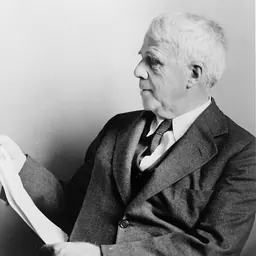

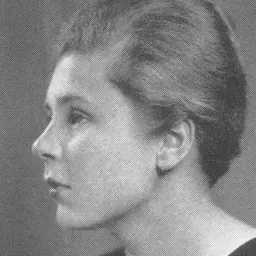

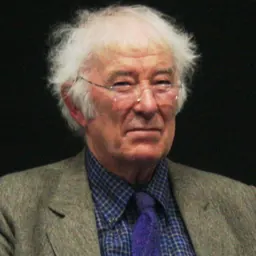


Related people
Same field, nearest in time


Contemporaries
People whose lives overlapped Stanisław Barańczak's


Frequently asked questions
Who was Stanisław Barańczak?
Polish poet (1946-2014)
When was Stanisław Barańczak born?
Stanisław Barańczak was born on 13 November 1946 in Poznań.
When did Stanisław Barańczak die?
Stanisław Barańczak died on 26 December 2014 in Newtonville.
What was Stanisław Barańczak's occupation?
Stanisław Barańczak was a poet, translator, writer, literary critic, university teacher and trade unionist.
What nationality was Stanisław Barańczak?
Stanisław Barańczak was Polish.
Sources & further reading
· Wikipedia: Stanisław Barańczak
· DBpedia: Stanisław Barańczak
Cite this page
APA: Biography.guide. (2026). Stanisław Barańczak. https://biography.guide/stanislaw-baranczak/
MLA: "Stanisław Barańczak." Biography.guide, https://biography.guide/stanislaw-baranczak/.
Chicago: "Stanisław Barańczak." Biography.guide. https://biography.guide/stanislaw-baranczak/.
Data last updated: 2026-09-20 · Spot an error? Report a correction.
Page generated 2026-09-27 05:09 UTC