
About Stanislaus von Prowazek
Lived 1875 – 1915 (aged 39). Stanislaus von Prowazek was an Austrian zoologist, microbiologist, biologist and botanist.
Stanislaus Josef Mathias von Prowazek, Edler von Lanow (12 November 1875 Jindřichův Hradec, Bohemia – 17 February 1915, Cottbus), born Stanislav Provázek, was a Czech zoologist and parasitologist, who made notable contributions to infectious diseases and their causative pathogens. He and Ludwig Halberstädter were the first to describe the pathogen of trachoma. Along with Brazilian pathologist Henrique da Rocha Lima, he discovered the pathogen of epidemic typhus, which bears an eponymous scientific name Rickettsia prowazekii.
Biography
Prowazek was born on 12 November 1875 and baptised the next day, which was St Stanislaus Day, from which he got his first name. His father Colonel Joseph von Provézek was chief of the Austro-Hungarian Army garrison in Jindřichův Hradec. His father was enobled in 1893, while he was studying at Plzeň Gymnasium and changed his name spelling to Prowazek.
In 1895, which was subsequently published in a series of papers. His supervisor Richard von Wettstein, was a botanist and had little interest in his research, and no one paid attention to protozoology that he worked entirely on his own. Guided by Schaudinn, Prowazek focussed his research on protozoal infections. In 1905, Schaudinn became director of the zoological section (parasitology department) at the Institut für Schiffs- und Tropenkrankheiten (later renamed Bernhard-Nocht-Institut für Tropenmedizin) in Hamburg. Prowazek simultaneously was appointed Schaudinn's deputy and position at the Charlottenburg Imperial Sanitary Board Institute. Schaudinn died in June 1906 while Prowazek was on an expedition to Southeast Asia. Prowazek returned to Hamburg in 1907 and was made Schaudinn's successor. Around that time Schaudinn and Erich Hoffmann had established a bacterium as a causative pathogen of syphilis so that Prowazek turned his attention to other tropical infections like trachoma and elephantiasis. In 1908, he conducted research on trypanosomiasis and viral infections (vaccinia and variola In 1913, he worked at the Balkans, Japanese islands and nearby islands like Mariana Islands. He was impressed by the indigenous culture of the Pacific islands that he wrote a ecological and cultural book Die Deutschen Marianen, ihre Natur und Geschichte. or Halberstädter-Prowazek bodies. Prowazek and Halberstädter identified the causative pathogen as a protozoan. However, other scientists believed that the pathogen could be a virus. In 1933, Brazilian ophthalmologist Archimede Busacca identified the trachoma inclusion bodies contained rickettsia, which he called as "a new category of germs", and gave the name Rickettsia trachomae. By the 1960s, it was resolved that the pathogen was a distinct bacterium, not rickettsial, and renamed Chlamydia trachomatis. During the 19th century wars in Europe and the American Civil War, it is estimated that more people die of the disease than the battle wounds. Understanding the nature and cause of the disease was important not only in public health but also in warfare.
In 1909, French physician Charles Nicolle at the Pasteur Institute in Tunis discovered that epidemic typhus is transmitted by human body louse. It was the first scientific milestone and earned Nicolle the 1928 Nobel Prize in Physiology or Medicine. At the time, American microbiologist Howard Taylor Ricketts had been studying Rocky Mountain spotted fever, which he discovered was transmitted by ticks. Upon the news of Nicolle's discovery he confirmed that epidemic typhus was transmitted by body louse and that it was fundamentally similar to the tick-borne disease. Nicolle demonstrated that the infection could be induced from body lice into the bloods of chimpanzees and then to monkeys (macaques), as well as between monkeys. While trying to work out the mode of infection, Ricketts contracted the disease in Mexico and died in 1910.
In 1913, Prowazek and Carl Theodor Hegler investigated epidemic typhus in Serbia. The Prussian Ministry of War assigned Prowazek and Rocha Lima to investigate the outbreak. In early February, Prowazek developed symptoms of the disease and died on 17 February 1915. He chose the name after the two "martyrs" of the epidemic typhus, Ricketts and Prowazek.
Publications Prowazek published around 200 papers many of which covered philosophy. Einführung in die Physiologie der Einzelligen (1910). Zur Kenntnis der Giemsafärbung vom Standpunkt der Zytologie. - 1914. Digital edition by the University and State Library Düsseldorf (in German). Handbuch der pathogenen Protozoen (1912).
Don’t just read it —
keep it.
Full-length biographies made to live with: read them, listen on the way to work, watch them tonight.
- E-book
- Audio
- Video
Instant download · yours to keep · every purchase keeps this site free
Important facts
People in Stanislaus von Prowazek's life
Named in this biography and alive at the same time
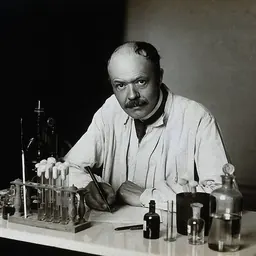


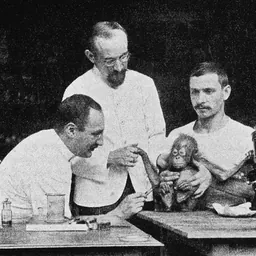
Related people
Same field, nearest in time



Contemporaries
People whose lives overlapped Stanislaus von Prowazek's


Frequently asked questions
Who was Stanislaus von Prowazek?
Czech biologist
When was Stanislaus von Prowazek born?
Stanislaus von Prowazek was born on 12 November 1875 in Jindřichův Hradec.
When did Stanislaus von Prowazek die?
Stanislaus von Prowazek died on 17 February 1915 in Cottbus, Chotěbuz.
What was Stanislaus von Prowazek's occupation?
Stanislaus von Prowazek was a zoologist, microbiologist, biologist and botanist.
What nationality was Stanislaus von Prowazek?
Stanislaus von Prowazek was Austrian.
Sources & further reading
· Wikipedia: Stanislaus von Prowazek
· DBpedia: Stanislaus von Prowazek
Cite this page
APA: Biography.guide. (2026). Stanislaus von Prowazek. https://biography.guide/stanislaus-von-prowazek/
MLA: "Stanislaus von Prowazek." Biography.guide, https://biography.guide/stanislaus-von-prowazek/.
Chicago: "Stanislaus von Prowazek." Biography.guide. https://biography.guide/stanislaus-von-prowazek/.
Data last updated: 2026-09-20 · Spot an error? Report a correction.
Page generated 2026-09-27 05:24 UTC