
About Stanislaŭ Šabunieŭski
Lived 1868 – 1937 (aged 68–69). Stanislaŭ Šabunieŭski was an architect.
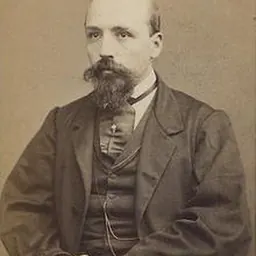
Stanislaŭ Šabunieŭski (, 1868–1937) was an architect whose buildings "in many respects determined the modern appearance of Gomel" and a victim of Stalin's purges.
Early years Šabunieŭski was born into an impoverished Belarusian noble family in the village of Skarodnaje (now in the Yelʹsk District of Belarus). His father served as a postman, later as an assistant postmaster at the Babruysk district post office.
Šabunieŭski graduated from a gymnasium in Slutsk, then studied architecture in St. Petersburg. In 1897, he came to Gomel and started working in the local construction department of the Libau–Romny Railway.
He went on to design the offices of the Aroł and Vilna commercial banks, Savoy hotel (destroyed during military hostilities in 1919), fire station as well as grand houses for Gomel merchants and prosperous professionals. In 1913, Šabunieŭski designed a district hospital funded by the last owner of the Gomel Palace, Princess . Today the building still functions as a hospital.
Later life Šabunieŭski had frictions with the Communist authorities immediately after the Russian Revolution but was able to resume his professional activities under the new government. In the 1920s, he worked as a provincial architect and district engineer. He managed a drainage project in Gomel, the construction of the city's water supply and restored the parts of the Gomel Palace damaged by fire in 1919.
In 1937, Šabunieŭski was arrested on trumped-up charges and sentenced to 10 years in the Gulag. He died in the same year at the age of 69 as a forced labourer at the construction of the infamous White Sea–Baltic Canal.
He was posthumously exonerated during Gorbachev's Perestroika in 1989. In December 2018, Šabunieŭski was named an honorary citizen of Gomel in recognition of his contribution to the city.
Further information «Рэпрэсаваная архітэктура», д/ф, рэж. Марыя Булавінская, 2019 г., Беларусь [Repressed Architecture, documentary directed by Marya Bulavinskaja, 2019, Belarus] (in Belarusian)
Don’t just read it —
keep it.
Full-length biographies made to live with: read them, listen on the way to work, watch them tonight.
- E-book
- Audio
- Video
Instant download · yours to keep · every purchase keeps this site free
Important facts
Related people
Same field, nearest in time



Contemporaries
People whose lives overlapped Stanislaŭ Šabunieŭski's


Frequently asked questions
Who was Stanislaŭ Šabunieŭski?
Belarusian architect, Gulag victim
When was Stanislaŭ Šabunieŭski born?
Stanislaŭ Šabunieŭski was born on 2 December 1868 in Skarodnaje.
When did Stanislaŭ Šabunieŭski die?
Stanislaŭ Šabunieŭski died in 1937 in White Sea – Baltic Canal.
What was Stanislaŭ Šabunieŭski's occupation?
Stanislaŭ Šabunieŭski was an architect.
Sources & further reading
· Wikipedia: Stanislaŭ Šabunieŭski
· DBpedia: Stanislaŭ Šabunieŭski
Cite this page
APA: Biography.guide. (2026). Stanislaŭ Šabunieŭski. https://biography.guide/stanislau-sabunieuski/
MLA: "Stanislaŭ Šabunieŭski." Biography.guide, https://biography.guide/stanislau-sabunieuski/.
Chicago: "Stanislaŭ Šabunieŭski." Biography.guide. https://biography.guide/stanislau-sabunieuski/.
Data last updated: 2026-09-25 · Spot an error? Report a correction.
Page generated 2026-09-27 05:12 UTC