
Sophie, Duchess of Hohenberg
Wife of Archduke Franz Ferdinand of Austria
About Sophie, Duchess of Hohenberg
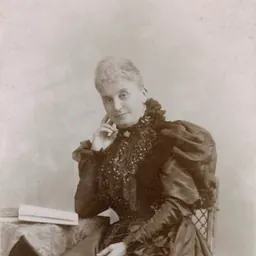
Lived 1868 – 1914 (aged 46). Sophie, Duchess of Hohenberg was an Austrian lady-in-waiting and photographer.
Sophie, Duchess of Hohenberg (; ; 1 March 1868 – 28 June 1914) was the wife of Archduke Franz Ferdinand of Austria, the heir to the Austro-Hungarian throne. Their assassination in Sarajevo sparked a series of events that led, four weeks later, to World War I.
Early life and ancestry Countess Sophie Chotek von Wognin was born in Stuttgart as the fifth child and fourth daughter of Count Bohuslav Chotek von Chotkow und Wognin and his wife, Countess Wilhelmine Kinsky von Wchinitz und Tettau (1838–1886). Her father was a Bohemian aristocrat, by birth a member of an old House of Chotek, who served as Austrian Ambassador to the royal courts of Stuttgart, Saint Petersburg and Brussels.
As a young woman, Sophie became a lady-in-waiting to Archduchess Isabella,
Franz Ferdinand had become heir presumptive to the throne, after the suicide of his cousin Crown Prince Rudolf in 1889 and the death of his father Karl Ludwig of typhoid in 1896. As such his uncle, the Emperor Franz Joseph, informed him that he could not marry Sophie, who could not become an Empress consort. Seal of Albert IV, Count of Habsburg, mutual ancestor of Sophie and Franz Ferdinand.
Franz Ferdinand refused to renounce Sophie to marry equally and beget an heir to the throne, compounding the scandal surrounding the death and illicit affair of the emperor's previous heir.
Marriage with Franz Ferdinand
In 1899, under pressure from family members (especially the Archduchess Maria Theresa, the emperor's formidable sister-in-law and Franz Ferdinand's stepmother) the couple were granted permission to wed.
Sophie and Franz Ferdinand were married on 1 July 1900 at Reichstadt (now Zákupy) in Bohemia. The Emperor did not attend the nuptials, nor did any of the archdukes, including Franz Ferdinand's brothers. The only members of the Imperial family who were present were Franz Ferdinand's stepmother, Archduchess Maria Theresa, and her two daughters, Maria Annunciata and Elisabeth Amalie.
The couple had four children:
In 1914, Archduke Franz Ferdinand was invited by General Oskar Potiorek, Governor of the Austro-Hungarian province of Bosnia and Herzegovina, to watch troops on maneuvers for three days in Sarajevo, the provincial capital. Sophie was not usually allowed to accompany her husband on ceremonial visits because of her lower status, but on this occasion, Franz Ferdinand was invited as a military commander rather than a royal personage. The archduke therefore arranged for Sophie to join him on 28 June, the third and final day, for a troop review followed by a visit to the city to dedicate a new museum before returning to Vienna. The date coincided with the 14th anniversary of their Oath of Renunciation and was a rare opportunity to celebrate in public together, although he knew that the visit would be dangerous.
At 10:10 am of Sunday, 28 June 1914, when the procession passed the Sarajevo central police station, Nedeljko Čabrinović hurled a hand grenade at the archduke's car. The driver accelerated when he saw the object flying towards the car and the grenade exploded under the wheel of the next car. Two of the occupants, Eric von Merizzi and Count Boos-Waldeck, were seriously wounded. Fourteen spectators were hit by bomb splinters.
After attending the official reception at the City Hall, Franz Ferdinand asked about the members of his party that had been wounded by the bomb. When the archduke was told they were badly injured and had been taken to the hospital, he insisted on being taken to see them. A member of the archduke's staff, Andreas, Freiherr von Morsey, suggested this might be dangerous, but General Oskar Potiorek, who was responsible for the safety of the Imperial party, replied, "Do you think Sarajevo is full of assassins?" However, Potiorek did accept it would be better if Sophie remained behind in the city hall. When Freiherr Morsey told Sophie about the revised plans, she refused to stay, arguing: "As long as the Archduke shows himself in public today I will not leave him."
In order to avoid the city centre, Potiorek decided that the Imperial car should travel straight along the Appel Quay to the Sarajevo Hospital. However, Potiorek forgot to tell the driver, Leopold Loyka, about this decision. On the way to the hospital, by the Latin Bridge, the driver took a right turn into Franz Joseph Street. One of the conspirators, Gavrilo Princip, was standing on the corner at the time. Oskar Potiorek immediately realized the driver had taken the wrong route and shouted "What is this? This is the wrong way! We're supposed to take the Appel Quay!"
The driver put his foot on the brake, and began to back up. In doing so he moved slowly past the waiting Gavrilo Princip. The assassin stepped forward, drew his pistol, and at a distance of about five feet, fired twice into the car. Franz Ferdinand was hit in the neck and Sophie in the abdomen. Sophie said to her husband, "For God's sake, what has happened to you?!" She then fell bleeding. Before losing consciousness he pleaded, "Sopherl! Sopherl! Don't die! Stay alive for our children!", using his pet name for the duchess. Today the castle houses a museum in their memory.
alt=Arstetten Castle, its chapel, and the final resting place of the couple, showing each resting at equal heights.
Commemorative coin
Duchess Sophie's castle of Artstetten was selected as a main motif for the 10-euro Castle of Artstetten commemorative coin minted on 13 October 2004. The reverse of the coin shows the entrance to the Hohenberg family crypt, with left-set overlay profile portraits of Sophie and Archduke Franz Ferdinand.
Titles, styles, honours and arms
Titles and styles 1 March 1868 – 1 July 1900: Countess Sophie Chotek von Chotkow und Wognin 1 July 1900 – 1905: Her Grace The Princess of Hohenberg 1905 – 4 October 1909: Her Serene Highness The Princess of Hohenberg 4 October 1909 – 28 June 1914: Her Highness The Duchess of Hohenberg
Honours Austria-Hungary: Dame of the Order of the Starry Cross, 1889 Grand Cross of the Imperial Austrian Order of Elizabeth, 1913
Don’t just read it —
keep it.
Full-length biographies made to live with: read them, listen on the way to work, watch them tonight.
- E-book
- Audio
- Video
Instant download · yours to keep · every purchase keeps this site free
Important facts
Family & relationships
People in Sophie, Duchess of Hohenberg's life
Named in this biography and alive at the same time

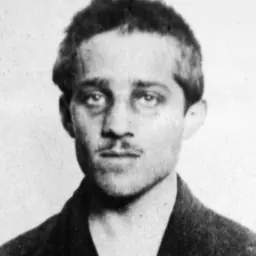
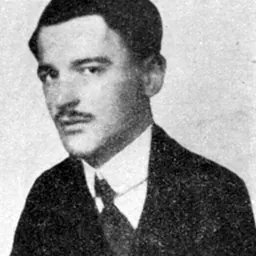

Related people
Same field, nearest in time


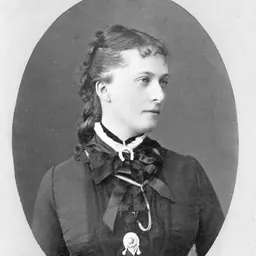

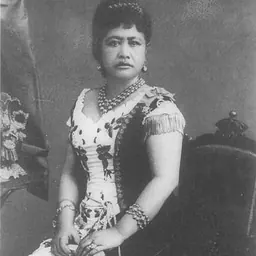
Contemporaries
People whose lives overlapped Sophie, Duchess of Hohenberg's





Frequently asked questions
Who was Sophie, Duchess of Hohenberg?
wife of Archduke Franz Ferdinand of Austria (1868–1914)
When was Sophie, Duchess of Hohenberg born?
Sophie, Duchess of Hohenberg was born on 1 March 1868 in Stuttgart.
When did Sophie, Duchess of Hohenberg die?
Sophie, Duchess of Hohenberg died on 28 June 1914 in Sarajevo.
What was Sophie, Duchess of Hohenberg's occupation?
Sophie, Duchess of Hohenberg was a lady-in-waiting and photographer.
What nationality was Sophie, Duchess of Hohenberg?
Sophie, Duchess of Hohenberg was Austrian.
Sources & further reading
· Wikipedia: Sophie, Duchess of Hohenberg
· DBpedia: Sophie, Duchess of Hohenberg
Cite this page
APA: Biography.guide. (2026). Sophie, Duchess of Hohenberg. https://biography.guide/sophie-duchess-of-hohenberg/
MLA: "Sophie, Duchess of Hohenberg." Biography.guide, https://biography.guide/sophie-duchess-of-hohenberg/.
Chicago: "Sophie, Duchess of Hohenberg." Biography.guide. https://biography.guide/sophie-duchess-of-hohenberg/.
Data last updated: 2026-09-20 · Spot an error? Report a correction.
Page generated 2026-09-27 05:34 UTC