
Solange Corbin
French musicologist specialising in medieval music
About Solange Corbin
Lived 1903 – 1973 (aged 70). Solange Corbin was a French musicologist and medievalist.
Solange Corbin de Mangoux (1903–1973) was a French musicologist specialising in medieval music, particularly the singing repertoires of Latin Christianity. Her most notable contribution was her use of an interdisciplinary approach to research that was different from the approach of the religious institutions that were the depositories of sacred music. In the early 1940s, Corbin was a member of the French Resistance.
In 1939, she entered the École pratique des hautes études (EPHE), where she studied history with the medievalist Louis Halphen between 1939 and 1941, and palaeography, the study of handwriting and manuscripts, with Charles Samaran in 1946 and 1947. In 1939 she also entered Sorbonne University, where she was a student of the musicologist, Paul-Marie Masson. She graduated from the Sorbonne in 1946 and then returned to Portugal to complete her research, which was published in 1952. During the occupation of France by the Germans during World War Two, she served as a member of the French Resistance, not only in France but also in Spain, Portugal and Algiers, a fact that was not revealed until her death.
Corbin first visited Portugal in 1940. The following year, with a CNRS scholarship, she stayed there for almost a year, during which time she followed the courses of the medieval historian Abbé Pierre David (1882–1955) who, after first leaving Kraków in Poland and then leaving France on the advice of Marshal Pétain, leader of the Vichy France government, had made his way to Portugal. Corbin's first publication was a seven-page account of 15th-century liturgical books from the Aveiro Museum, published in 1943. At the same time, she was continuing to prepare her thesis on medieval religious music in Portugal. This was presented in 1944, when she obtained a diploma from the EPHE in historical and philological sciences, with the work Essai sur la musique religieuse portugaise au Moyen-Age (1100–1385), based on her research in Portugal. This was revised in 1946 during a further two-month stay in Portugal and expanded before its publication in 1952. The documents gathered in Portugal also provided the core of her second book, on the liturgical deposition of Christ on Good Friday. The Resistance Because of the nature of the work, little is known about Corbin's work with the French Resistance and she never said anything in public. It was revealed in 1973 by Denise Jourdan-Hemmerdinger in her obituary of Corbin, citing two testimonies from former resistance fighters. According to the first testimony, from March 1943 to April 1944 she escorted young people who were going clandestinely to Spain, accompanying them to relays located in places such as Pau and Toulouse and providing false papers to young people wishing to escape. According to Jourdan-Hemmerdinger, Corbin sometimes crossed the border to Spain with them and had mentioned several times about "her stay in prison in Spain", without giving more detail. A second testimony states that she was in charge of a France-Portugal transit network and that she went to Algiers several times. Although the bulk of her efforts were devoted to religious music, she did not neglect studies of profane or secular music in the Middle Ages.
In the last years of her life, Corbin continued to be active academically. She gave lectures in the United States (1969 and 1973), in England (1970) and in Poland (1971), held a colloquium in Italy (1972), and participated in the organization of the 1972 Musicology Studies Conference of the University of Poitiers. She also taught at the Faculté Libre International Interdisciplinaire de París. She studied the harp and performed concerts with her students on instruments designed to replicate the sounds of early instruments.
Death In April 1973, in the United States, Corbin suffered a cerebral congestion. After being operated on, she was able to return to France, where she spent the last months of her life. She died in Bourges on 17 September 1973.
In 2005, the first international conference on medieval sacred monody was organized in Portugal. It was dedicated to the memory of Corbin.
Don’t just read it —
keep it.
Full-length biographies made to live with: read them, listen on the way to work, watch them tonight.
- E-book
- Audio
- Video
Instant download · yours to keep · every purchase keeps this site free
Important facts
People in Solange Corbin's life
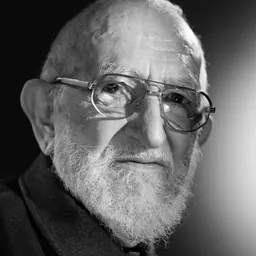
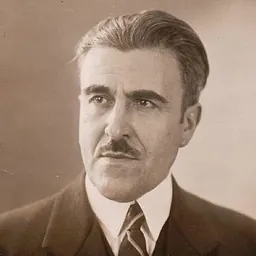
Named in this biography and alive at the same time



Related people
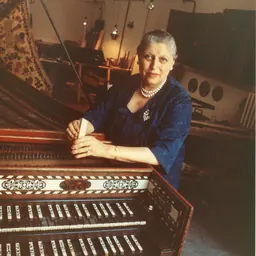
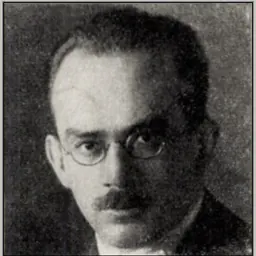
Same field, nearest in time

Contemporaries
People whose lives overlapped Solange Corbin's

Frequently asked questions
Who was Solange Corbin?
French musicologist specialising in medieval music (1903-1973)
When was Solange Corbin born?
Solange Corbin was born on 5 April 1903 in Vorly.
When did Solange Corbin die?
Solange Corbin died on 17 September 1973 in Bourges.
What was Solange Corbin's occupation?
Solange Corbin was a musicologist and medievalist.
What nationality was Solange Corbin?
Solange Corbin was French.
Sources & further reading
Cite this page
APA: Biography.guide. (2026). Solange Corbin. https://biography.guide/solange-corbin/
MLA: "Solange Corbin." Biography.guide, https://biography.guide/solange-corbin/.
Chicago: "Solange Corbin." Biography.guide. https://biography.guide/solange-corbin/.
Data last updated: 2026-09-20 · Spot an error? Report a correction.
Page generated 2026-09-27 05:08 UTC