
About Sofía Montenegro
Born 1954. Sofía Montenegro is a Nicaraguan journalist, known for Barricada.
Sofía Montenegro Alarcón (born 15 February 1954) is a Nicaraguan journalist, social researcher, and feminist. Montenegro's family were militarily aligned with the Somoza forces, but her feminist and Marxist studies moved her to join with the opposition to the regime. She fought in the Sandinista Revolution and though initially supportive of the Sandinista Party, later became an outspoken critic, saying it had moved to the right. She served as an editor of various divisions of the official Sandinista newspaper, Barricada, until 1994, when she founded the Center for Communication Research (CINCO) as an independent research organization free of government influence. She has written broadly on power, gender, and social interaction.
Biography Sofía Isabel Montenegro Alarcón was born on 15 February 1954 in Ciudad Darío, Matagalpa Department, Nicaragua. Her father, Alfonso Montenegro, was a major in Anastasio Somoza Debayle's army. In 1968, to protect her from the violence in the country, Montenegro was sent to live with her sister in West Palm Beach, Florida where she finished high school and was exposed to feminist thought and Marxism for the first time. She returned to Nicaragua and though she passed the university entrance exams, her parents chose to send her brother to school abroad, rather than educating a woman.
Initially Montenegro enrolled in the National School of Fine Arts to become a painter, but later at the National Autonomous University of Nicaragua and translated documents for foreign journalists to pay her way. She began writing articles for a Maoist newspaper published by the Movimiento de Acción Popular (Popular Action Movement). Franklin Montenegro, being a torturer In 1989, she founded the weekly segment "Gente" (People) in the same newspaper, which evaluates how sex, gender, and power affect Nicaraguan society. which won the Coral Award at the Havana Latinamerican Film Festival.
In 2000, Montenegro completed a study and published a book, "La cultura sexual en Nicaragua" (Sexual Culture in Nicaragua) evaluating the high levels of violence against women. She concluded that misconceptions and misinformation about sexuality and the rooting of women's identity in motherhood led to inequalities and a culture of violence. She has published many articles evaluating political empowerment, communications, and social participation.
Around this same time, with fissures forming between the FSLN, its official women's organization, Asociación de Mujeres Nicaragüenes Luisa Amanda Espinoza (AMNLAE) (Luisa Amanda Espinoza Association of Nicaraguan Women) and feminist groups Montenegro founded the Movimiento Autonomo de Mujeres (MAM) (Women's Autonomous Movement). She is currently a member of its policy coordination committee and its political coordinator. The organization was founded to fight laws that might be unconstitutional or restrict the rights of citizens.
In 1995, when the Sandinista party split into the Sandinista Renovation Movement (MRS), composed of intellectuals who supported social democracy and the FSLN orthodoxy, who remained committed to the authoritarian policies of the revolution, Montenegro and Gioconda Belli aligned with the MRS faction. The push towards support of patriarchy and family-oriented definitions of women's roles, were seen as limiting women's economic and political rights.
Montenegro was an outspoken critic of Daniel Ortega's administration citing the lack of transparency, nepotism, and fundamentalism as failures of the administration to meet the needs of women and human rights of all citizens. After Ortega's 2006 reelection and criminalization of therapeutic abortion, leftist dissidents and feminists felt betrayed thus became more marginalized as Ortega moved toward more fundamentalist traditions.
Her outspokenness led to threats, attempts to discredit her, The “campaign to criminalize feminists for their struggle to reinstitute the right to therapeutic abortion" united feminists from Argentina, Belize, Brazil, Chile, Costa Rica, Dominican Republic, El Salvador, Guatemala, Mexico, Paraguay, Puerto Rico, and Venezuela, who sent an open letter to Ortega's administration denouncing the attempts to silence activists. Foreign aid has been jeopardized by attempts to silence critics.
In spite of the investigations, Montenegro has continued to speak against Ortega. She went to Washington, DC in 2015 to participate in an Inter-American dialogue. She also criticized a proposed inter-oceanic canal project, maintaining that it would threaten the quality of the water in Lake Nicaragua and environmental health.
Selected works Montenegro, Sofía. "Memorias del Atlántico" Editorial El Amanecer, Managua, Nicaragua (1986) (in Spanish) Montenegro, Sofía and Adam Jones. "A woman and a rebel: Sofía Montenegro and the Sandinista revolution, conversations with Adam Jones". A. Jones, Montreal, Canada (1991) (in Spanish) Montenegro, Sofía. "Identidad y colonialismo: el retorno de la Malinche", Fundación Friedrich Ebert, Santo Domingo (1993) (in Spanish) Montenegro, Sofía. "La revolución simbólica pendiente: mujeres, medios de comunicación y política", Centro de Investicaciones de la Comunicación Managua, Nicaragua (1997) (in Spanish) Montenegro, Sofía. "La cultura sexual en Nicaragua", Centro de Investigaciones de la Comunicacioń, Managua, Nicaragua (2000) (in Spanish) Montenegro, Sofía and Elvira Cuadra Lira. "Jóvenes y cultura política en Nicaragua: la generación de los 90", Hispamer, Managua, Nicaragua (2001) (in Spanish) Montenegro, Sofía and Elvira Cuadra Lira. "Las claves del empoderamiento : sistematización de diez años de experiencia del Centro de Mujeres Xochilt Acalt", Centro de Investigaciones de la Comunicación, Malpasillo, Nicaragua (2002) (in Spanish) Montenegro, Sofía and Elvira Cuadra Lira. "La descentralización en Nicaragua: diagnóstico del proceso" Centro de Investigaciónes de la Comunicación, Managua, Nicaragua (2003) (in Spanish) Montenegro, Sofía. "Nicaragua : la gobernabilidad al sevicio de las reformas: primer informe independiente" Centro de Investigaciónes de la Comunicación, Managua, Nicaragua (2005) (in Spanish) Montenegro, Sofía and Elvira Cuadra Lira. "La búsqueda de lun liderazgo autónomo: la Sección de la Mujer en la Unión Nacional de Agricultores y Ganaderos (UNAG) de Estelí" Centro de Investigaciónes de la Comunicación, Managua, Nicaragua (2006) (in Spanish) Montenegro, Sofía. "Los medios de comunicación como actores políticos en Nicaragua: los periodistas, los medios y el poder" Centro de Investigaciónes de la Comunicación, Managua, Nicaragua (2007) (in Spanish) Montenegro, Sofía; Elvira Cuadra Lira; and Ángel Saldomando. "Nicaragua entre la democracia y el autoritarismo: Perspectivas, suplemento de análisis político, compilación", Centro de Investigaciónes de la Comunicación, Managua, Nicaragua (2009) (in Spanish)
Don’t just read it —
keep it.
Full-length biographies made to live with: read them, listen on the way to work, watch them tonight.
- E-book
- Audio
- Video
Instant download · yours to keep · every purchase keeps this site free
Important facts
People in Sofía Montenegro's life
Named in this biography and alive at the same time



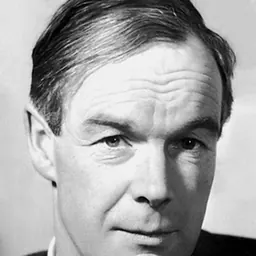
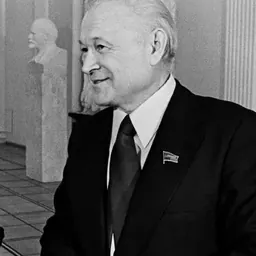
Related people
Same field, nearest in time


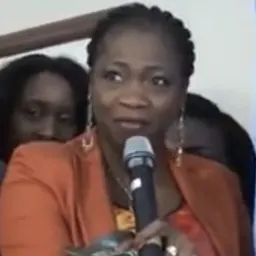
Contemporaries
People whose lives overlapped Sofía Montenegro's



Frequently asked questions
Who is Sofía Montenegro?
Nicaraguan journalist
When was Sofía Montenegro born?
Sofía Montenegro was born on 15 February 1954 in Ciudad Darío.
What is Sofía Montenegro's occupation?
Sofía Montenegro is a journalist.
What is Sofía Montenegro known for?
Sofía Montenegro is known for Barricada.
What nationality is Sofía Montenegro?
Sofía Montenegro is Nicaraguan.
Sources & further reading
Cite this page
APA: Biography.guide. (2026). Sofía Montenegro. https://biography.guide/sofia-montenegro/
MLA: "Sofía Montenegro." Biography.guide, https://biography.guide/sofia-montenegro/.
Chicago: "Sofía Montenegro." Biography.guide. https://biography.guide/sofia-montenegro/.
Data last updated: 2026-09-24 · Spot an error? Report a correction.
Page generated 2026-09-27 05:04 UTC