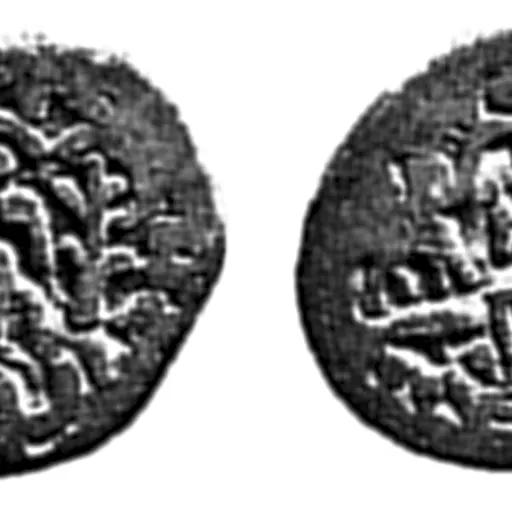
Sodasa
Indo-Scythian Northern Satraps king
About Sodasa
The abundance of dedicatory inscriptions in the name of Sodasa (eight of them are known, often on sculptural works), and the fact that Sodasa is known through his coinage as well as through his relations with other Indo-Scythian rulers whose dates are known, means that Sodasa functions as a historic marker to ascertain the sculptural styles at Mathura during his rule, in the first half of the 1st century CE. The next historical marker corresponds to the reign of Kanishka under the Kushans, whose reign began circa 127 CE. The sculptural styles at Mathura during the reign of Sodasa are quite distinctive, and significantly different from the style of the previous period circa 50 BCE, or the styles of the later period of the Kushan Empire in the 2nd century CE. Another depiction of the Buddha from the same period appears in the Bimaran casket.
Paleography The inscriptions in the name of Sodasa are also an important marker for the paleography of the Brahmi script, the shape of the Brahmi letters having evolved in time, and also having varied depending on the regions.
Don’t just read it —
keep it.
Full-length biographies made to live with: read them, listen on the way to work, watch them tonight.
- E-book
- Audio
- Video
Instant download · yours to keep · every purchase keeps this site free
Family & relationships
Frequently asked questions
Who was Sodasa?
indo-Scythian Northern Satraps king
Sources & further reading
Cite this page
APA: Biography.guide. (2026). Sodasa. https://biography.guide/sodasa/
MLA: "Sodasa." Biography.guide, https://biography.guide/sodasa/.
Chicago: "Sodasa." Biography.guide. https://biography.guide/sodasa/.
Data last updated: 2026-09-23 · Spot an error? Report a correction.
Portrait: Wikimedia Commons · author & licence
Page generated 2026-09-27 05:06 UTC