
About So Phim
Lived 1925 – 1978 (aged 52–53). So Phim was a Cambodian military personnel and politician.
So Phim (, né So Vanna សូ វណ្ណា) was a leader of the Khmer Issarak movement, the third-rank official of the Permanent Bureau and of the Military Bureau of the Central Committee of the Communist Party of Kampuchea, deputy head of the People's National Liberation Armed Forces of Kampuchea, and secretary of East Zone of the Democratic Kampuchea of the Khmer Rouge, until he refused to carry out the Cambodian genocide designed by Pol Pot and his comrades, a refusal that led to his own suicide in June 1978.
Biography
A young Cambodian peasant fighting for Independence So Phim was born in 1925 as the son of a modest peasant, in a hamlet in the province of Svay Rieng, Cambodia. He was considered to be quite rude and could, in a fit of anger, threaten his colleagues with his gun.
So Phim, after a brief period in the colonial army, joined the United Issarak Front in the fight against French protectorate of Cambodia with close ties to the Vietnamese communists and Viet Minh. He joined the Indochinese Communist Party in 1951 under the revolutionary name of So Vanna. In May 1952, bands in Prey Veng were combining into a Mobile Unit and under the leadership of So Phim they took the name of Achar Hem Chieu Unit, the monk who had led the 1942 Umbrella uprising against the French colonization. Following the signing of the Geneva Accords in July 1954, he was forced, like a thousand other executives, into exile in Hanoi.
Climbing up the ladder of the Communist revolution So Phim became a member of the Communist Party of Kampuchea in 1955. He climbed the ranks to become a "trial" member of the Party's Central Committee at the end of the decade. He was raised to the rank of “full right” member of the Central Committee of the Communist Party of Kampuchea in 1966, and he was appointed by Pol Pot as deputy to the political department of the People's National Liberation Armed Forces of Kampuchea and secretary of the Eastern Zone which he led until 1975 alongside Mit Phuong (after Seng Hong) and Suas Nau who was the secretary of Region 24.
Falling from favor in the eyes of Pol Pot Shortly after the fall of Phnom Penh in April 1975, tensions began to arise between the men of Ta Mok and those of So Phim. Cadres imprisoned in the S-21 prison of Tuol Sleng often accused So Phim of being another traitor, inasmuch as he refused the ethnic cleansing based on tenets of Khmer racial purity. Nuon Chea also defended So Phim against those who accused him of secretly selling Cambodian rice to the Vietnamese.
He was "elected" first vice-president of the state praesidium on 11 April 1976 after Khieu Samphan replaced Sihanouk as head of state. However, it was merely a nominal position.
So Phim and Pol Pot's protege, Seng Hong, then in charge of the troops in the Zone, then came into conflict. Contrary to Seng Hong, So Phim was reluctant to resort to so much violence and questions the validity of the increasingly anti-Vietnamese policy pursued by the Angkar. From May to August 1976, So Phim went to China supposedly for medical treatment. During that time, his power structures in the East Zone were dismantled by the Central Bureau.
Despite everything, the number 3 of the Military Bureau of the Permanent Bureau of the Communist Party of Kampuchea Central Committee signed the order to attack Vietnam in early 1977. In early December 1977, Chinese Maoist Minister Chen Yonggui came to visit the East of Cambodia and insisted that the Khmer should also Learn from Dazhai in agriculture as he also inspected the "southern front" of China's ongoing battle with Vietnam. Removed from power despite his good and loyal service, So Phim founded a dissident organization in November called Authentic Revolutionary Forces of Kampuchea. Thereafter, So Phim, who was accused to have planned a coup against Pol Pot, was invited to a meeting by Pauk. Realizing that it was a trap, he ended his own life on 3 June 1978 not far from the village of Prek Pra, on the road linking the districts of Srei Santhor and Pea Reang District. His wife and children were captured and massacred as they prepared his body for the Buddhist funerary rites.
Legacy
Repression of the Cham under the Khmer rouge So Phim was secretary of the East Zone of Democratic Kampuchea, the zone which had the largest share of the Muslim Cham population in Cambodia. Thus, his responsibility in the persecution of this religious minority by the atheistic regime of Democratic Kampuchea has drawn attention. While he signed the first order which specifically targeted two Cham communities in Krouch Chhmar District, he was also considered by some to have resisted the policies of ethnic cleansing designed by the Angkar.
Resistance against the Cambodian genocide
So Phim is one of the examples of resistance against the policies of Pol Pot, which were rather rare as death was its certain consequence. His disappearance was to be followed by a vast purge within the East Zone which made up 100,000 victims, both among the grassroots and within the local apparatus formerly commanded by So Phim. They led a resistance against the Khmer Rouge from abroad, until they defeated them in 1979 with the support of the Vietnamese army.
Don’t just read it —
keep it.
Full-length biographies made to live with: read them, listen on the way to work, watch them tonight.
- E-book
- Audio
- Video
Instant download · yours to keep · every purchase keeps this site free
Important facts
People in So Phim's life
Named in this biography and alive at the same time
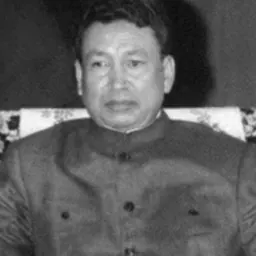





Related people
Same field, nearest in time


Contemporaries
People whose lives overlapped So Phim's



Frequently asked questions
Who was So Phim?
Cambodian military personnel
When was So Phim born?
So Phim was born in 1925 in Svay Rieng Province.
When did So Phim die?
So Phim died on 3 June 1978 in Kampong Cham province.
What was So Phim's occupation?
So Phim was a military personnel and politician.
What nationality was So Phim?
So Phim was Cambodian.
Sources & further reading
Cite this page
APA: Biography.guide. (2026). So Phim. https://biography.guide/so-phim/
MLA: "So Phim." Biography.guide, https://biography.guide/so-phim/.
Chicago: "So Phim." Biography.guide. https://biography.guide/so-phim/.
Data last updated: 2026-09-22 · Spot an error? Report a correction.
Page generated 2026-09-27 05:13 UTC