
About Sister Regina Purtell
Lived 1866 – 1950 (aged 83). Sister Regina Purtell was an American nun and nurse.
Regina Purtell (1866–1950) was an American Roman Catholic sister and United States Army nurse. She cared for Theodore Roosevelt's "Rough Riders", and the media dubbed her "The Florence Nightingale of the Spanish-American War."
In 1902, after Roosevelt had become president, she became his personal nurse at his request when he underwent surgery. In 1918 she became even more well-known for nursing many students at the University of Texas at Austin, including sons of the Rough Riders, during the Spanish flu pandemic.
Her last, 20-year posting at a leprosy hospital in Carville, Louisiana, drew upon all she had learned. Because of her expertise in infectious disease, she was the first to recognize smallpox, and she went into quarantine with her patients. Neither she nor her nurses contracted either smallpox or leprosy thanks to her standard of hygiene and medical care.
Youth and entry into religious life Sister Regina is in the back row, center right. Her parents are seated in the middle of the front row. Photo courtesy of the Purtell family. Ellen "Nellie" Purtell was born on November 14, 1866, in Monches, Wisconsin, a small village in Waukesha County. Her mother was Catherine Sullivan Purtell, born in Boston, Massachusetts, and her father was John Purtell, born in Bradford, Ontario, Canada. She had three sisters and four brothers. All of the brothers became medical professionals (two doctors and two dentists). Four nephews also became doctors.
She attended a school run by the Daughters of Charity of St. Vincent de Paul, and she became a nursing sister at age 18, in 1883, adding the letters D.C. after her religious name, Mary Regina Purtell (though she always went by Regina).
Becoming an Army nurse Purtell worked at St. Mary's Hospital in Evansville, Indiana, at the start of the Spanish-American War. Toward the end of the war, President William McKinley issued a call for nurses to minister to soldiers who were suffering in unsanitary conditions at the Camp Wikoff Army Hospital, Montauk Point, Long Island. The Daughters of Charity were among the first volunteers. Sister Purtell applied and was assigned to the 1st United States Volunteer Cavalry, nicknamed the Rough Riders, treating men who had been sent there from Cuba. She found the conditions so unacceptable that she took over and reorganized the entire hospital. She addressed the crisis during a typhoid fever epidemic both there and in Huntsville, Alabama, which is how she met Theodore Roosevelt, saying, "Teddy made the rounds of the sick every day. He had a deep concern for his men." One of her former patients recalled, "My only pleasant memory of my various infirmary sojourns is of the nurses.... Sister Regina resisted the usual routine of rotation from department to department. She admittedly disliked nursing women, so she was a fixture in the men's infirmary. During my first hospitalization, she was night nurse and frequently sat down with me to try to buck up my drooping spirits. She even gave me an alcohol rub — an eyebrow-raising act for a Sister of Charity — and she did it with considerable authority." There are fond stories of her not just caring for her male patients, but even washing their clothes and scrubbing their rooms herself. She became known, especially in the media, as the Florence Nightingale of the Spanish-American War.
In 1918 the sisters assigned her to the University of Texas at Austin, to manage a campus outbreak of the global pandemic of Spanish flu. Her sisters said she acted like a commanding officer, with requests such as "Give me a house, and let me organize it myself."
In 1919, over the objections of the doctors where she served in Indiana who did not want to lose her, she went to Carville, Louisiana to care for patients with leprosy (Hansen's disease). Another story said that a man served as her personal guard, and she also had a big watchdog named Zep, a companion who also protected her from patients who could become violent because of their illnesses.
She became a national heroine during an outbreak of smallpox at the leper colony. She was the first to recognize the disease, and went into quarantine with her patients. Her standards were so effective that neither she nor any other sister contracted leprosy or smallpox. Many believed that one would have to die with people with leprosy, smallpox, or both, because of the brutal symptoms, or at least never come back again. Her correspondence is preserved in the archives of the International Leprosy Association.
Later years, death, and legacy Ill health forced her into retirement in 1940. She suffered from cataracts that rendered her nearly blind until surgery successfully corrected them. A Catholic News Service report stated, "At the cemetery, taps were sounded by an Army bugler and by a bugler-veteran of the Spanish American War. A [medical corps] detail from Camp Leroy Johnson fired a volley, while an Army Medical Corps detail and a number of Army and Navy nurses stood at attention. Spanish-American War veterans were pallbearers."
In 1957 the U. S. Department of Health, Education, and Welfare presented the Daughters of Charity at Carville with its highest honor, the Distinguished Service award, in great part for Purtell's work during the smallpox outbreak.
Don’t just read it —
keep it.
Full-length biographies made to live with: read them, listen on the way to work, watch them tonight.
- E-book
- Audio
- Video
Instant download · yours to keep · every purchase keeps this site free
Important facts
People in Sister Regina Purtell's life
Named in this biography and alive at the same time
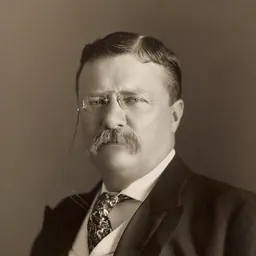


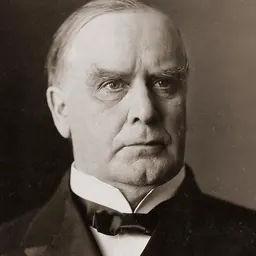
Related people
Same field, nearest in time




Contemporaries
People whose lives overlapped Sister Regina Purtell's



Frequently asked questions
Who was Sister Regina Purtell?
Spanish-American War nurse
When was Sister Regina Purtell born?
Sister Regina Purtell was born on 14 November 1866 in Monches.
When did Sister Regina Purtell die?
Sister Regina Purtell died on 24 October 1950 in New Orleans.
What was Sister Regina Purtell's occupation?
Sister Regina Purtell was a nun and nurse.
What nationality was Sister Regina Purtell?
Sister Regina Purtell was American.
Sources & further reading
· Wikipedia: Sister Regina Purtell
Cite this page
APA: Biography.guide. (2026). Sister Regina Purtell. https://biography.guide/sister-regina-purtell/
MLA: "Sister Regina Purtell." Biography.guide, https://biography.guide/sister-regina-purtell/.
Chicago: "Sister Regina Purtell." Biography.guide. https://biography.guide/sister-regina-purtell/.
Data last updated: 2026-09-20 · Spot an error? Report a correction.
Page generated 2026-09-27 05:29 UTC