
About Siri Gunasinghe
Lived 1925 – 2017 (aged 92). Siri Gunasinghe was a Sri Lankan film director, poet and writer.
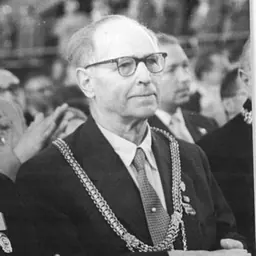
Siri Gunasinghe (Sinhala: සිරි ගුණසිංහ; 18 February 1925 – 25 May 2017) was a Sri Lankan academic, poet, Sanskritist, art historian, author and filmmaker. He played a crucial role in honing the creativity of free Sinhala poetry. Gunasinghe was one of the most important advocates of the use of spoken language instead of the literary language in Sinhalese literature (see diglossia).
Early life and career Siri Gunasinghe was born Ruwanwella in Kegalle District of Sri Lanka. He was educated at Mahinda College, Galle and University of Ceylon. At Sorbonne University, he completed his PhD on 'Techniques of Indian painting'. Later Siri Gunasinghe became a university lecturer and taught at the University of Peradeniya, Sri Lanka and at the University of Victoria, British Columbia, Canada where he was a professor in the Department of History in Art. He subsequently travelled to Paris where he continued his studies and wrote La technique de la peinture indienne d'après les textes du Silpa. His brother Dharma Gunasinghe, is the former Principal of Nalanda College, Colombo.
Gunasinghe had lived in Canada since 1970. He died on 25 May 2017 at the age of 92.
Career His most outstanding achievements are: 1) the introduction of free verse into Sinhalese poetry with the publication of the collection of poems Mas Lea Nati Ata (Bleached Bones) in 1956; this publication was a major revolutionary force in the literary community at the time. He published 'Hewenella' in 1960, which is considered to be the first Sinhala novel to be written according to the rules of consciousness narrative style. In his writing, Gunasinghe discarded the Sinhala letters 'N' and 'L' (මූර්ධජ ‘ණ‘ සහ ‘ළ‘). He wrote the research article titled as "Sinhala Contributions to the Buddha Statue" which drew attention to the gradually waning murals of most temples. The film won eight Sarasavi awards including best picture and best director. He also designed costumes (e.g. for Prof. Ediriweera Sarachchandra's play Manamē). He is also considered a pioneer book cover designer in Sri Lanka and has hosted several radio programs. In 2010, he published the work "Sigiriya: Kashyapage Saundarya Pranamaya" which was earlier translated to "Kassapa’s Homage to Beauty" in 2008.
Works
Sinhala Abinikmana ("The Renunciation of worldly Life") Cirantana Sampradāya hā pragatiya ("Tradition and Innovation"; non-fiction work) Hevanälla ("The Shadow") Mandārama ("Rainy Sky") Mas Lē Näti Aṭa ("Bones without Flesh and Blood") Ratu Käkuḷa ("The red Bud") Sath Samudra ("The seven Seas") - Feature film
Other languages Masks of Ceylon Buddhist Paintings from Sri Lanka (Kandy Period) La Technique de la Peinture Indienne
Don’t just read it —
keep it.
Full-length biographies made to live with: read them, listen on the way to work, watch them tonight.
- E-book
- Audio
- Video
Instant download · yours to keep · every purchase keeps this site free
Important facts
People in Siri Gunasinghe's life
Named in this biography and alive at the same time

Related people
Same field, nearest in time



Contemporaries
People whose lives overlapped Siri Gunasinghe's


Frequently asked questions
Who was Siri Gunasinghe?
Sri Lankan poet and historian (1925–2017)
When was Siri Gunasinghe born?
Siri Gunasinghe was born on 18 February 1925 in Sri Lanka.
When did Siri Gunasinghe die?
Siri Gunasinghe died on 25 May 2017 in British Columbia.
What was Siri Gunasinghe's occupation?
Siri Gunasinghe was a film director, poet and writer.
What nationality was Siri Gunasinghe?
Siri Gunasinghe was Sri Lankan.
Sources & further reading
Cite this page
APA: Biography.guide. (2026). Siri Gunasinghe. https://biography.guide/siri-gunasinghe/
MLA: "Siri Gunasinghe." Biography.guide, https://biography.guide/siri-gunasinghe/.
Chicago: "Siri Gunasinghe." Biography.guide. https://biography.guide/siri-gunasinghe/.
Data last updated: 2026-09-22 · Spot an error? Report a correction.
Page generated 2026-09-27 05:30 UTC