
About Sir Richard Carew, 1st Baronet
Lived 1579 – 1643 (aged 63–64). Sir Richard Carew, 1st Baronet was a politician.
Arms of Carew: Or, 3 lions passant in pale sable These were the arms shown on the seal of "Nicholas de Carreu" (c.1255–1311), appended to the Barons' Letter, 1301, which he joined as "Lord of Mulesford" and which were blazoned for the same bearer in the Caerlaverock Poem or Roll of Arms of 1300, when he was present at the Siege of Caerlaverock Castle. From him were descended the Carew baronets of Antony and of Haccombe Sir Richard Carew, 1st Baronet (ca. 1580 – 14 March 1643), of Antony in Cornwall, was an English writer and Member of Parliament.
Life Carew was the eldest son of the antiquary Richard Carew (1555–1620). He was educated at Oxford, probably at Merton, and studied law at the Middle Temple. He also visited the courts of Poland, Sweden and France, the first two as part of an embassy led by his uncle and the last in attendance on the ambassador, Sir Henry Nevill. He entered Parliament in 1614 as member for Cornwall, and subsequently also represented Mitchell in 1621–2.
Carew published several works, including a treatise written to prove that "a warming stone" was "useful and comfortable for the colds of aged and sick people". His most notable work, however, was the True and readie Way to learne the Latine Tongue, attested by three excellently learned and approved authours of three nations, of which he was the English author. This was not published until 1654, well after his death, and apparently only made its way into print on the misapprehension that it was his more distinguished father who had penned it. The work argues for learning by translating back and forth, with a minimal amount of grammar teaching.
On 9 August 1641, Richard Carew was created a baronet. He died less than two years later.
Family He had married twice: first, during his father's lifetime, to Bridget Chudleigh, by whom he had one son, Alexander (who succeeded to the baronetcy), and four daughters. After her death he married again, to a Miss Rolle, and they had at least two other sons, John and Thomas.
The Civil War divided the family, and proved particularly fateful for them, for two years after Sir Richard's death Sir Alexander was executed on Tower Hill for treason as a Royalist, while John as a loyal Parliamentarian sat on the court that condemned King Charles and was eventually hanged, drawn and quartered as a regicide at the Restoration.
Don’t just read it —
keep it.
Full-length biographies made to live with: read them, listen on the way to work, watch them tonight.
- E-book
- Audio
- Video
Instant download · yours to keep · every purchase keeps this site free
Important facts
People in Sir Richard Carew, 1st Baronet's life
Named in this biography and alive at the same time

Related people
Same field, nearest in time

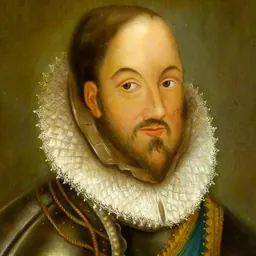
Contemporaries
People whose lives overlapped Sir Richard Carew, 1st Baronet's

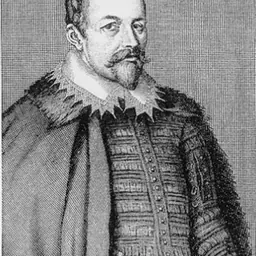


Frequently asked questions
Who was Sir Richard Carew, 1st Baronet?
English politician
When was Sir Richard Carew, 1st Baronet born?
Sir Richard Carew, 1st Baronet was born in 1579.
When did Sir Richard Carew, 1st Baronet die?
Sir Richard Carew, 1st Baronet died in 1643 in London.
What was Sir Richard Carew, 1st Baronet's occupation?
Sir Richard Carew, 1st Baronet was a politician.
Sources & further reading
· Wikipedia: Sir Richard Carew, 1st Baronet
· DBpedia: Sir Richard Carew, 1st Baronet
Cite this page
APA: Biography.guide. (2026). Sir Richard Carew, 1st Baronet. https://biography.guide/sir-richard-carew-1st-baronet/
MLA: "Sir Richard Carew, 1st Baronet." Biography.guide, https://biography.guide/sir-richard-carew-1st-baronet/.
Chicago: "Sir Richard Carew, 1st Baronet." Biography.guide. https://biography.guide/sir-richard-carew-1st-baronet/.
Data last updated: 2026-09-20 · Spot an error? Report a correction.
Page generated 2026-09-27 05:29 UTC