
About Sir John Owen, 1st Baronet
Lived 1776 – 1861 (aged 84–85). Sir John Owen, 1st Baronet was a British lawyer and politician.
Sir John Owen, 1st Baronet (1776 – 6 February 1861), born John Lord, was a British Tory (later Conservative Party) politician from Wales. He sat as a Member of Parliament (MP) for over fifty years. His wealth came from coal mining but he lost most of his fortune as a result of costly electoral campaigns in Pembrokeshire, most notably those of 1831.
Early life Born in 1776, the son of Joseph Lord and Corbetta Owen, grand-daughter of Sir Arthur Owen, third baronet of Orielton, Owen was educated at Eton and Christ Church, Oxford. He was married at Gretna Green in 1800 to Charlotte, daughter of the Rev. John Lewes Philipps of Llwyncrwn, Llangynin. The poll for the county election remained open for eleven days and proved so costly that Owen was obliged to raise a mortgage on part of his estate. Writing to Sir James Graham many years later in 1841, Owen admitted that this contest marked the beginnings of the financial difficulties that overshadowed his later career.
Following his electoral success, albeit with a heavy financial cost, Owen chose to sit for the county, and held that seat until 1841, aged 84. Upon the death of Lord Milford in 1823, Owen was proposed by Robert Peel (who had entered the Commons in the same years as Owen) as Lord-Lieutenant of Pembrokeshire, a post he held from 1824 until his death. This reflected the pre-eminence that Owen held at that time in the public life of the county.
The Reform crisis and the 1831 elections On 23 March 1831, Owen, together with his son Sir Hugh Owen Owen who had represented Pembroke Boroughs since 1826, voted against Russell's Reform Bill in the Commons. This provoked anger in his constituency amongst supporters of reform. When the government fell shortly afterwards, Owen found that he would be opposed at the General Election by Robert Fulke Greville, who was supported by Lord Kensington.
Greville published his address in late April, directly criticising Owen for his opposition to the Reform Bill. Owen sought to avoid a contest by indicating that he would henceforth support the reform proposals. Opposition was growing, however, and Owen was criticised both for his lax attendance at the Commons and the considerable income that he derived from church patronage in Pembrokeshire. Passing through Carmarthen on route to Pembrokeshire, Owen "was received with hisses and hootings by an immense crowd, who followed him with the same demonstrations to the outskirts of the town."
Polling was conducted over several days on a field at Prendergast, on the outskirts of Haverfordwest. Lawyers engaged by both candidates scrutinised the voting and in his account of the contest, David Williams states that the result was largely determined by the influence of the landed gentry. After chaotic scenes at the poll, Owen was declared the victor, polling 1949 votes against 1850 for his opponent.
Greville immediately launched a petition against the result and after lengthy and costly proceedings, the result was declared void and a further election was held in October. The number of votes cats was several hundred lower than earlier in the year but Owen was again returned by a small majority, polling 1531 votes against 1423 for Greville.
The elections proved costly for Owen and the Orielton estate and by the early 1840s both he and his son were obliged to stay away from Pembrokeshire to escape their creditors.
Later political career In 1836 Sir John Owen fought a duel at Gumfreston Hall near Tenby with William Richards, a former mayor of the town who was badly wounded in the event. Fought with pistols, it is the last known duel to have taken place in Wales.
He also took up a lease on property in Australia in 1838, but never visited.
In 1841 he was obliged to abandon the county seat which he had held since 1812 and to contest the Pembroke Boroughs. He was opposed by a Liberal candidate, J.N. Child, but also, bizarrely, by his own son.
The family wealth came from coal mining. South Wales coal was important to the beginning of the Industrial Revolution. His coal mines suffered notable disasters, with many fatalities: an explosion in 1830 and an inundation in 1844.
After a long career as a Conservative, including his opposition to reform in 1831, Owen moved towards the Liberal ranks in later life. He opposed Derby's Reform Bill in 1859 and a few weeks before his death his son and heir contested the Pembrokeshire county seat as a Liberal candidate. Mary Lord (1833-1892) who married in 1861 Captain Andrew George Onslow of the 97th Foot Regiment. William (4 September 1834 - 29 June 1855) who married in 1871 Margaret Agnes Annie Cowmeadow Emma (1837-24 May 1876) He was succeeded in the baronetcy by his son Hugh Owen Owen.
Big House Owen built a country house on the river, with a substantial dock for the coal boats. He named it "Landshipping House" after his colliery of the same name. It was an impressive castellated mansion, imitating Picton Castle across the River Cleddau. However, debts incurred from running for Parliament and losses caused by water inundation in one of his coal mines meant that he had to sell the house to avoid bankruptcy. The inundation of Garden Pit on 14 February 1844 killed 40 miners, some of whom were probably female - despite the passage two years earlier of the Mines and Collieries Act, which forbad women and girls (and boys under ten) from working underground. The sale took place in 1857 at one of the coffeehouses that served as places of business on Exchange Alley in the City of London. The auction details describe the property as extensive.
The house fell into ruin, and stood abandoned for about a century, before being purchased and restored by a local man who had known the building since childhood. The story of the house and its restoration was covered in Restoration Home, a BBC programme shown in August 2011. Architectural historian Kieran Long and social historian Kate Williams researched and presented some of the background about the Owens and their house.
It is known simply as "Big House".
Don’t just read it —
keep it.
Full-length biographies made to live with: read them, listen on the way to work, watch them tonight.
- E-book
- Audio
- Video
Instant download · yours to keep · every purchase keeps this site free
Important facts
People in Sir John Owen, 1st Baronet's life
Named in this biography and alive at the same time



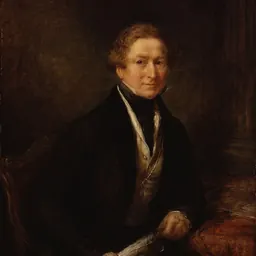
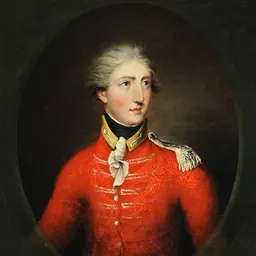

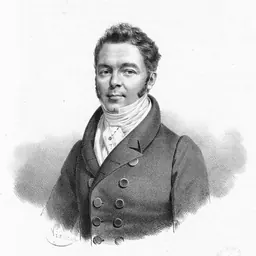
Related people
Same field, nearest in time
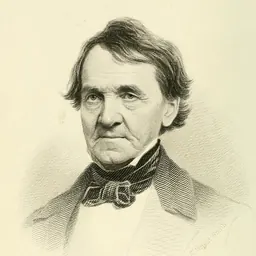


Contemporaries
People whose lives overlapped Sir John Owen, 1st Baronet's



Frequently asked questions
Who was Sir John Owen, 1st Baronet?
British politician
When was Sir John Owen, 1st Baronet born?
Sir John Owen, 1st Baronet was born in 1776 in Wales.
When did Sir John Owen, 1st Baronet die?
Sir John Owen, 1st Baronet died on 6 February 1861 in Gloucester.
What was Sir John Owen, 1st Baronet's occupation?
Sir John Owen, 1st Baronet was a lawyer and politician.
What nationality was Sir John Owen, 1st Baronet?
Sir John Owen, 1st Baronet was British.
Sources & further reading
· Wikipedia: Sir John Owen, 1st Baronet
· DBpedia: Sir John Owen, 1st Baronet
Cite this page
APA: Biography.guide. (2026). Sir John Owen, 1st Baronet. https://biography.guide/sir-john-owen-1st-baronet/
MLA: "Sir John Owen, 1st Baronet." Biography.guide, https://biography.guide/sir-john-owen-1st-baronet/.
Chicago: "Sir John Owen, 1st Baronet." Biography.guide. https://biography.guide/sir-john-owen-1st-baronet/.
Data last updated: 2026-09-20 · Spot an error? Report a correction.
Page generated 2026-09-27 05:24 UTC