
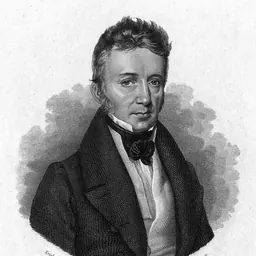
Sir John Alleyne, 3rd Baronet
British engineer and Warden of Dulwich College
About Sir John Alleyne, 3rd Baronet
Lived 1820 – 1912 (aged 91).
Sir John Gay Newton Alleyne, 3rd Baronet (8 September 1820 – 20 February 1912) was a British baronet, Barbados landowner, and industrial engineer in England, who designed the roof of St Pancras Railway Station, London, which was then the largest steel surface ever built.
Family Alleyne was born in Alleynedale Hall, formerly Cabbage Tree Hall, in Saint Peter, Barbados, the son of Sir Reynold Abel Alleyne, 2nd Baronet, and his wife Rebecca Olton (1794–1860). that he inherited.
The Alleyne family and 1630.
His sister Philippa Cobham Alleyne (1813–1889) married the Barbados landowner Hampden Clement (1807–1880) who inherited the estates Black Bess (196 slaves) and Clement Castle (220 slaves) (formerly Sober Castle, latterly Ellis Castle) in Saint Peter, Barbados. He therefore was the maternal uncle of the Belgravia cricketers Richard Clement and Reynold Clement.
Career in England He was Warden of Dulwich College between 1845 and 1851, and President of the Steel and Iron Institute. Alleyne had joined the Butterley Company in 1852 as its first manager at a time when highly paid professionals were being brought into the industry. He served as manager and chief engineer of the ironworks for 28 years. of which he forged the girders at Butterley. During the production of steel sections the bar has to be repeatedly put through rollers. Allowing this to happen using just one person provided a substantial increase in productivity. However his most notable invention was probably the two high reversing steel mill patented in 1870, which used two steam engines to allow metal ingots to be repeatedly rolled in order to get the correct size and section. With this technique the steel did not have to be moved to re-enter the rolling process but merely had to be moved back into the rolling machine once it had passed through. He also devised a method of determining the percentages of phosphorus in steel using a spectroscope.
Personal life In his spare time he was an amateur astronomer and metalworker in his workshop at home.
Alleyne married Augusta Isabella, who was the daughter of Sir Henry FitzHerbert, 3rd Baronet, in 1851. He died on 20 February 1912, aged 91.
Don’t just read it —
keep it.
Full-length biographies made to live with: read them, listen on the way to work, watch them tonight.
- E-book
- Audio
- Video
Instant download · yours to keep · every purchase keeps this site free
Important facts
People in Sir John Alleyne, 3rd Baronet's life
Named in this biography and alive at the same time




Contemporaries
People whose lives overlapped Sir John Alleyne, 3rd Baronet's





Frequently asked questions
Who was Sir John Alleyne, 3rd Baronet?
British engineer and Warden of Dulwich College (1820-1912)
When was Sir John Alleyne, 3rd Baronet born?
Sir John Alleyne, 3rd Baronet was born on 8 September 1820.
When did Sir John Alleyne, 3rd Baronet die?
Sir John Alleyne, 3rd Baronet died on 20 February 1912.
Sources & further reading
· Wikipedia: Sir John Alleyne, 3rd Baronet
· DBpedia: Sir John Alleyne, 3rd Baronet
Cite this page
APA: Biography.guide. (2026). Sir John Alleyne, 3rd Baronet. https://biography.guide/sir-john-alleyne-3rd-baronet/
MLA: "Sir John Alleyne, 3rd Baronet." Biography.guide, https://biography.guide/sir-john-alleyne-3rd-baronet/.
Chicago: "Sir John Alleyne, 3rd Baronet." Biography.guide. https://biography.guide/sir-john-alleyne-3rd-baronet/.
Data last updated: 2026-09-20 · Spot an error? Report a correction.
Page generated 2026-09-27 05:20 UTC