
About Sir Henry Bedingfeld
Lived 1509 – 1583 (aged 73–74). Sir Henry Bedingfeld was a politician.
Sir Henry Bedingfeld (1505 –1583 ), also spelled Bedingfield, of Oxburgh Hall, King's Lynn, Norfolk, was a Privy Councillor to King Edward VI and Queen Mary I, Lieutenant of the Tower of London, and (in 1557) Vice-Chamberlain of the Household and Captain of the guards. With Henry Jerningham he was among the principals who rallied to Mary's cause following the death of Edward VI in 1553 and helped to set her upon the throne. He was a senior figure in the kinship group of Catholic recusant landowning knights of Suffolk. Given responsibility for the custody of Mary I's half-sister Elizabeth when in the Tower of London and at Woodstock, his reputation has suffered from the repetition of claims of his severity towards her: however Queen Elizabeth was respectful towards him and continued to find service for him. Among the foremost Englishmen of his time, he occupied prominent and honourable positions and was of unquestioned loyalty.
Family and education
Bedingfeld was the eldest of five sons of Edmund Bedingfield (1479/80–1553) and his wife, Grace (died in or after 1553), the daughter of Henry Marney, 1st Baron Marney. In February 1527/28, Bedingfeld was admitted to Lincoln's Inn. The Bedingfelds were closely connected to the ancient family of Beaupré, of Beaupré Hall, Outwell/Upwell, Norfolk.
During the 1530s Bedingfeld married Katherine (died 1581 In 1549 he was one of the many knights, esquires, and gentlemen who assisted the Marquess of Northampton in putting down Kett's Rebellion at Norwich, where, with Thomas Paston, John Clere, William Waldegrave and Thomas Cornwallis, he was appointed to the defence of part of the city. By that date, or certainly by 1551, he had received knighthood. and the accession of Queen Mary, Bedingfield succeeded his father as heir to the Oxburgh estate and the Hall which had been built by his grandfather, the elder Edmund Bedingfield, (died 1496/97). It was to the March parliament of 1553, the second parliament of King Edward VI, that Bedingfeld was first elected, on that occasion as Knight of the Shire for Suffolk: from this it is supposed that he was then acquiescent in the regency of the Duke of Northumberland. She now entrusted Bedingfeld with the princess Elizabeth's custody, appointing him Constable of the Tower of London on 8 May, and instructing him to guard Elizabeth at Woodstock Palace, where he remained with her until April 1555. Although, after her accession to the throne in 1558, Elizabeth used to address Bedingfeld at court as "Her Gaoler", most agree that the term was probably applied loosely and in good spirit. "That seems to have rather been a term of royal familiarity, than contempt; for had it been the latter, he would scarce have been so much at court as it appears he usually was," wrote Blomefield. The correspondence, published by C. R. Manning, suggests that Bedingfeld conducted himself in gentlemanly fashion towards the princess: J. M. Stone, noting that Elizabeth granted the manor of Caldecott to him, observed that John Strype, Bishop Burnet and Reginald Hennell had followed Foxe's account uncritically.
A mandate of Mary's to Bedingfeld survives in which she instructs him to deliver his orders to the bearer, John Sulyard, and to receive from him her orders as if from herself, and to carry them out unfailingly. Bedingfeld was appointed to the Lieutenancy of the Tower on 28 October 1555, after the resignation of Thomas Brydges. Among his prisoners were Peter Carew, Nicholas Arnold, William Courtenay and John Bray. Many unpleasant episodes passed in the Tower of London during Bedingfeld's governance of it, not least the tortures and executions arising from the Henry Dudley conspiracy in 1556, and the enforced recantation of John Cheke a few days after the death of Edward Lewknor. Yet several prisoners under his charge were permitted to have access to their wives or family members, and in such matters Bedingfeld appears to have been the obedient interpreter of Mary's direct commands, rather than the initiator of autocratic or vindictive practises.
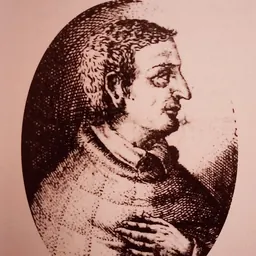
Bedingfeld's friend and fellow Privy Councillor was Henry Jerningham: on 25 December 1557, as Edward Hastings became Lord Chamberlain of the Household and Thomas Cornwallis Comptroller, so Jerningham became Master of the Horse and Bedingfeld succeeded Jerningham as Vice-Chamberlain and became Captain of the Guard. Both maintained friendship with John Bourne, also a Privy Councillor and Secretary of State during the reign of Mary I. He was then re-elected for the third and last time as a Knight of the Shire for Norfolk in the parliament of 1558. In December 1569 the justices of Suffolk delivered to the Privy Council various bonds of those who had refused to subscribe to a declaration of obedience to the Act of Uniformity 1558: these included a bond of Bedingfeld's, dated 1 December 1569, for good behaviour towards the Queen and for his appearance before the Privy Council. His lands were valued at £500 and his goods at £1000 at Oxburgh in the Norfolk diocesan returns of recusants of 1577. In her royal progress of 1578 Elizabeth received Bedingfeld's hospitality at Oxburgh, or intended to do so. An engraving is in the National Portrait Gallery. A miniature, oil on ivory, dated c. 1700–1799, is today at Oxburgh Hall, which now belongs to the National Trust.
Death and monument Katherine Bedingfeld was buried at Oxborough on 7 December 1581, and Bedingfeld on 24 August 1583. Bedingfeld's will, which gives a lively impression of the community at Oxburgh Hall, was dated 15 August 1583 and proved on 13 November following.
Their monument is to be found in the Bedingfield chapel at the parish church of St John, Oxborough. Shortly after the Second World War the tower of this church collapsed, destroying most of the nave. The chancel of the church, together with the Bedingfield chapel which was built onto the south side of it, was spared destruction and still remains.
Children The children of Sir Henry Bedingfeld and Katherine Townsend were:
Edmund Bedingfield (died 1585) of Eriswell in Suffolk, who married (1) Anne, daughter of Sir Robert Southwell of Hoxne, Suffolk; and (2) Anne, daughter of John Moulton of Thurgarton, Norfolk. Thomas Bedingfeld, Nicholas Bedingfeld, Amy Bedingfeld, the wife of Thomas Wilbraham, Attorney of the Court of Wards Eva Bedingfeld (died 1631 ), the wife of William Yaxley of Yaxley, Suffolk Katherine Bedingfeld Elizabeth Bedingfeld, married Edmund Richers of Swannington, Norfolk Anne Bedingfeld
Don’t just read it —
keep it.
Full-length biographies made to live with: read them, listen on the way to work, watch them tonight.
- E-book
- Audio
- Video
Instant download · yours to keep · every purchase keeps this site free
Important facts
People in Sir Henry Bedingfeld's life
Named in this biography and alive at the same time




Related people
Same field, nearest in time


Contemporaries
People whose lives overlapped Sir Henry Bedingfeld's



Frequently asked questions
Who was Sir Henry Bedingfeld?
English knight (1509–1583)
When was Sir Henry Bedingfeld born?
Sir Henry Bedingfeld was born in 1509.
When did Sir Henry Bedingfeld die?
Sir Henry Bedingfeld died in 1583.
What was Sir Henry Bedingfeld's occupation?
Sir Henry Bedingfeld was a politician.
Sources & further reading
· Wikipedia: Sir Henry Bedingfeld
Cite this page
APA: Biography.guide. (2026). Sir Henry Bedingfeld. https://biography.guide/sir-henry-bedingfeld/
MLA: "Sir Henry Bedingfeld." Biography.guide, https://biography.guide/sir-henry-bedingfeld/.
Chicago: "Sir Henry Bedingfeld." Biography.guide. https://biography.guide/sir-henry-bedingfeld/.
Data last updated: 2026-09-20 · Spot an error? Report a correction.
Page generated 2026-09-27 05:19 UTC