
About Sir Andrew Agnew, 7th Baronet
Lived 1793 – 1849 (aged 56). Sir Andrew Agnew, 7th Baronet was a British politician.
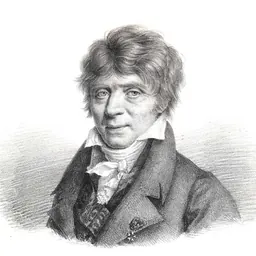
Sir Andrew Agnew, 7th Baronet (21 March 1793 – 28 April 1849) was a Scottish politician and a prominent promoter of Sunday Sabbatarianism, which brought him to the notice of Charles Dickens who criticised both his cause and his character.
Biography Andrew Agnew was the son of Andrew Agnew and Martha, daughter of John de Courcy, 19th Lord Kingsale. The family lived at Lochnaw Castle in the parish of Leswalt.
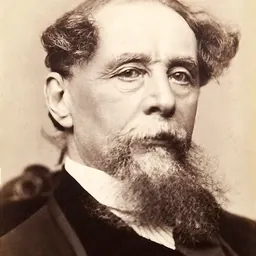
Agnew was Member of Parliament for Wigtownshire, 1830–1837. He stood as a moderate reformer, but soon became deeply attached to the cause of Sabbatarianism, and pressed for the banning of all secular labour on Sunday. For this purpose he introduced no less than four Sabbath Observance Bills in the Commons, none of which passed. It was the third attempt which drew on him the wrath of Charles Dickens, whose essay Sunday Under Three Heads (1836) is very largely a personal attack on Agnew, whom he described as a fanatic, motivated by resentment of the idea that those poorer than himself might have any pleasure in life. While Dickens made many cogent arguments against the Bill, the strongest perhaps being that people cannot be forced to go to Church on Sunday, his personal attack is probably unjust: the Dictionary of National Biography speaks of Agnew's "genial and kindly nature". He left Parliament in 1837, and no further effort to proceed with a Sabbath Observance Bill was made.
He died from scarlet fever in 1849 and he was succeeded in the baronetcy by his eldest son. Martha Agnew (d. 1904), married Frederick Lewis Maitland-Heriot in 1848. Reverend David Carnegie Andrew Agnew (1821–1887)) James Andrew Agnew (1823–1918) Sir Stair Andrew Agnew (1831–1916) Thomas Frederick Andrew Agnew (1834–1924) Lt.-Col. Gerald Andrew Agnew (1835–1927)
Don’t just read it —
keep it.
Full-length biographies made to live with: read them, listen on the way to work, watch them tonight.
- E-book
- Audio
- Video
Instant download · yours to keep · every purchase keeps this site free
Important facts
People in Sir Andrew Agnew, 7th Baronet's life
Named in this biography and alive at the same time

Related people
Same field, nearest in time


Contemporaries
People whose lives overlapped Sir Andrew Agnew, 7th Baronet's





Frequently asked questions
Who was Sir Andrew Agnew, 7th Baronet?
Scottish politician (1793–1849)
When was Sir Andrew Agnew, 7th Baronet born?
Sir Andrew Agnew, 7th Baronet was born on 21 March 1793.
When did Sir Andrew Agnew, 7th Baronet die?
Sir Andrew Agnew, 7th Baronet died on 12 April 1849.
What was Sir Andrew Agnew, 7th Baronet's occupation?
Sir Andrew Agnew, 7th Baronet was a politician.
What nationality was Sir Andrew Agnew, 7th Baronet?
Sir Andrew Agnew, 7th Baronet was British.
Sources & further reading
· Wikipedia: Sir Andrew Agnew, 7th Baronet
· DBpedia: Sir Andrew Agnew, 7th Baronet
Cite this page
APA: Biography.guide. (2026). Sir Andrew Agnew, 7th Baronet. https://biography.guide/sir-andrew-agnew-7th-baronet/
MLA: "Sir Andrew Agnew, 7th Baronet." Biography.guide, https://biography.guide/sir-andrew-agnew-7th-baronet/.
Chicago: "Sir Andrew Agnew, 7th Baronet." Biography.guide. https://biography.guide/sir-andrew-agnew-7th-baronet/.
Data last updated: 2026-09-26 · Spot an error? Report a correction.
Page generated 2026-09-27 05:16 UTC