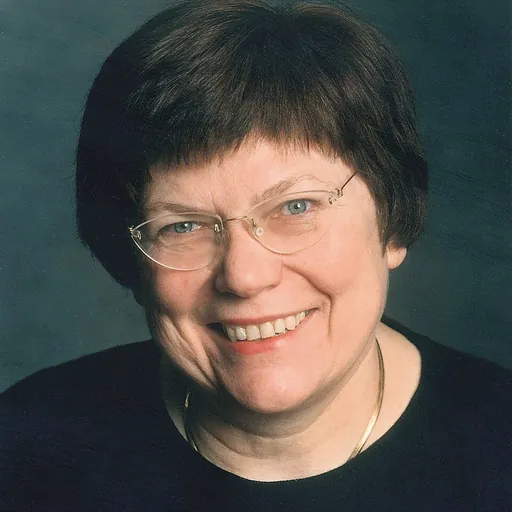
About Sine Larsen
Lived 1943 – 2025 (aged 81). Sine Larsen was a Danish researcher.
Professor Sine Ydun Larsen (, 28 May 1943 – 4 January 2025) was a Danish structural chemist, crystallographer and scientific director. Her research included crystal structure analyses of organic molecules and proteins, chirality and charge density studies. She was scientific research director at the European Synchrotron Radiation Facility (ESRF) in Grenoble, France, general director at the MAX IV Laboratory synchrotron radiation facility in Lund, Sweden, and director of the Centre for Crystallographic Studies at the University of Copenhagen in Copenhagen, Denmark. She was president, general secretary and treasurer of the International Union of Crystallography (IUCr). She was awarded the Max Perutz Prize by the European Crystallographic Association (ECA), was appointed to the Order of the Dannebrog and was elected to the Royal Physiographic Society in Lund.
Biography Larsen was born on 28 May 1943 in Copenhagen, Denmark.
Larsen was educated at Rysensteen Gymnasium, After graduating, Larsen worked as postdoctoral researcher with American chemist F. Albert Cotton at the Massachusetts Institute of Technology (MIT) in Cambridge, Massachusetts, United States.
In 1994, Larsen became the professor of structural chemistry and director of the Centre for Crystallographic Studies at her alma mater, University of Copenhagen. Alongside her university appoointments, Larsen gave scientific advice to the Italian synchrotron plant ELETTRA, the Spanish plant ALBA, the European X-ray Free Electron Laser Project, United States National Synchrotron Light Source II and the German research facility DESY.
In 1996, Larsen was elected general secretary and treasurer of the International Union of Crystallography (IUCr). She was elected as president of the IUCr in 2008 and served as president until 2014.
In 1998, Larsen gave the annual Hasselforelesningen (The Hassel Lecture, in honour of Norwegian physical chemist and Nobel Laureate Odd Hassel) on the "Interactions between Chiral Molecules" at the University of Oslo in Oslo, Norway.
From 1998 to 2003, Larsen deposited 36 structures in the Protein Data Bank.
In 2003, Larsen became one of two scientific research directors and part of the senior management team at the European Synchrotron Radiation Facility (ESRF) in Grenoble, France, succeeding Peter F. Lindley. She was the first female director at ESRF. At ESRF Larsen was responsible for research in the fields of structural biology and structural chemistry
Larsen established an international team of scientists who used synchrotron techniques (micro-X-ray fluorescence (XRF) point analysis, micro X-ray diffraction, micro-infrared spectroscopy and Raman spectroscopy) at the ESRF to investigate the composition of red and black inks inscribed on Ancient Egyptian papyri fragments from the Tebtunis archive, which dated to c. 100–200 CE. The team discovered that lead was added to the ink mixtures as a dryer rather than as a dye and published research in 2020.
During her time at the ESRF, Larsen also launched an initiative proposing an "International Year of Crystallography" to celebrate the centenary of the discovery of X-ray crystallography. The initiative was later declared by the United Nations (UN) in 2012 for 2014. Larsen worked at the ESRF until 2009, then returned to the University of Copenhagen.
In 2010, Larsen became interim acting director for MAX-Lab at Lund University in Lund, Sweden at "short notice" during the transition to the MAX IV Laboratory, succeeding Nils Mårtensson.
With Sten Rettrup, Larsen investigated the charge distribution of orthoboric acid by using low-temperature X-ray diffraction data and ab initio calculations.
Awards In 2004, Larsen was awarded an honorary doctorate degree by Lund University in Lund, Sweden.
Larsen was appointed to the Order of the Dannebrog.
Death Larsen died on 4 January 2025, aged 82.
Don’t just read it —
keep it.
Full-length biographies made to live with: read them, listen on the way to work, watch them tonight.
- E-book
- Audio
- Video
Instant download · yours to keep · every purchase keeps this site free
Important facts
People in Sine Larsen's life
Named in this biography and alive at the same time

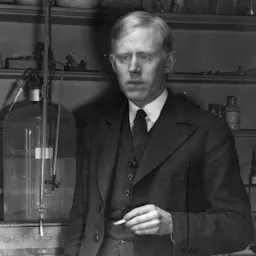
Related people
Same field, nearest in time



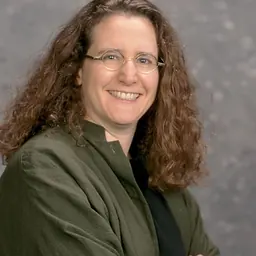
Contemporaries
People whose lives overlapped Sine Larsen's


Frequently asked questions
Who was Sine Larsen?
Danish chemist, crystallographer and science manager
When was Sine Larsen born?
Sine Larsen was born on 28 May 1943.
When did Sine Larsen die?
Sine Larsen died on 4 January 2025.
What was Sine Larsen's occupation?
Sine Larsen was a researcher.
What nationality was Sine Larsen?
Sine Larsen was Danish.
Sources & further reading
Cite this page
APA: Biography.guide. (2026). Sine Larsen. https://biography.guide/sine-larsen/
MLA: "Sine Larsen." Biography.guide, https://biography.guide/sine-larsen/.
Chicago: "Sine Larsen." Biography.guide. https://biography.guide/sine-larsen/.
Data last updated: 2026-09-23 · Spot an error? Report a correction.
Portrait: Wikimedia Commons · author & licence
Page generated 2026-09-27 05:07 UTC