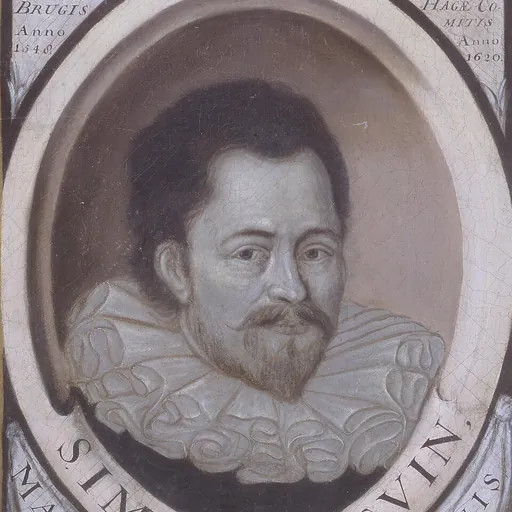
Simon Stevin
Flemish mathematician, physicist and engineer
About Simon Stevin
Lived 1548 – 1620 (aged 71–72). Simon Stevin was a mathematician, engineer, physicist, astronomer, architect and accountant, known for Decimal fractions.
Biography Very little is known with certainty about Simon Stevin's life, and what we know is mostly inferred from other recorded facts. The exact birth date and the date and place of his death are uncertain. It is assumed he was born in Bruges, since he enrolled at Leiden University under the name Simon Stevinus Brugensis (meaning "Simon Stevin from Bruges"). His name is usually written as Stevin, but some documents regarding his father use the spelling Stevijn (pronunciation [ˈste:vεɪn]); this was a common spelling shift in 16th-century Dutch. Simon Stevin's mother, Cathelijne (or Catelyne), was the daughter of a wealthy family from Ypres; her father Hubert was a poorter of Bruges. Cathelijne would later marry Joost Sayon, who was involved in the carpet and silk trade and was a member of the schuttersgilde Sint-Sebastiaan. Through her marriage, Cathelijne became a member of a family of Calvinists; it is thought that Simon Stevin was likely brought up in the Calvinist faith.
Simon Stevin's travels Stevin left Bruges in 1571 apparently without a particular destination. Stevin was most likely a Calvinist since a Catholic would likely not have risen to the position of trust he later occupied with Maurice, Prince of Orange. It is assumed that he left Bruges to escape the religious persecution of Protestants by the Spanish rulers. Based on references in his work "Wisconstighe Ghedaechtenissen" (Mathematical Memoirs), it has been inferred that he must have moved first to Antwerp where he began his career as a merchant's clerk. Some biographers mention that he travelled to Prussia, Poland, Denmark, Norway and Sweden and other parts of Northern Europe, between 1571 and 1577. It is possible that he completed these travels over a longer period of time. In 1577 Simon Stevin returned to Bruges and was appointed city clerk by the aldermen of Bruges, a function he occupied from 1577 to 1581. He worked in the office of Jan de Brune of the Brugse Vrije, the castellany of Bruges.
Why he had returned to Bruges in 1577 is not clear. It may have been related to the political events of that period. Bruges was the scene of intense religious conflict. Catholics and Calvinists alternately controlled the government of the city. They usually opposed each other but would occasionally collaborate in order to counteract the dictates of King Philip II of Spain. In 1576 a certain level of official religious tolerance was decreed. This could explain why Stevin returned to Bruges in 1577. Later the Calvinists seized power in many Flemish cities and incarcerated Catholic clerics and secular governors supportive of the Spanish rulers. Between 1578 and 1584 Bruges was ruled by Calvinists.
Simon Stevin in the Netherlands In 1581 Stevin again left his native Bruges and moved to Leiden where he attended the Latin school. Stevin is listed in the university's registers until 1590 and apparently never graduated.
Following William the Silent's assassination and Prince Maurice's assumption of his father's office, Stevin became the principal advisor and tutor of Prince Maurice. Prince Maurice asked his advice on many occasions, and made him a public officer – at first director of the so-called "waterstaet" Prince Maurice also asked Stevin to found an engineering school within the University of Leiden.
Stevin moved to The Hague where he bought a house in 1612. He married in 1610 or 1614 and had four children. It is known that he left a widow with two children at his death in Leiden or The Hague in 1620. He received a patent on his innovation in 1586. he derived the condition for the balance of forces on inclined planes using a diagram with a "wreath" containing evenly spaced round masses resting on the planes of a triangular prism (see the illustration on the side). He concluded that the weights required were proportional to the lengths of the sides on which they rested assuming the third side was horizontal and that the effect of a weight was reduced in a similar manner. It is implicit that the reduction factor is the height of the triangle divided by the side (the sine of the angle of the side with respect to the horizontal). The proof diagram of this concept is known as the "Epitaph of Stevinus". As noted by E. J. Dijksterhuis, Stevin's proof of the equilibrium on an inclined plane can be faulted for using perpetual motion to imply a reductio ad absurdum. Dijksterhuis says Stevin "intuitively made use of the principle of conservation of energy ... long before it was formulated explicitly".
Music theory
The first mention of equal temperament related to the twelfth root of two in the West appeared in Simon Stevin's unfinished manuscript Van de Spiegheling der singconst (ca 1605) published posthumously three hundred years later in 1884; however, due to insufficient accuracy of his calculation, many of the numbers (for string length) he obtained were off by one or two units from the correct values. He appears to have been inspired by the writings of the Italian lutenist and musical theorist Vincenzo Galilei (father of Galileo Galilei), a onetime pupil of Gioseffo Zarlino.
Bookkeeping
Double-entry bookkeeping may have been known to Stevin, as he was a clerk in Antwerp in his younger years, either practically or via the medium of the works of Italian authors such as Luca Pacioli and Gerolamo Cardano. However, Stevin was the first to recommend the use of impersonal accounts in the national household. He brought it into practice for Prince Maurice, and recommended it to the French statesman Sully. But nobody established their daily use before Stevin. He felt that this innovation was so significant, that he declared the universal introduction of decimal coinage, measures and weights to be merely a question of time.
Mathematics
Stevin wrote his Arithmetic in 1594. The work brought to the western world for the first time a general solution of the quadratic equation, originally documented nearly a millennium previously by Brahmagupta in India.
According to Van der Waerden, Stevin eliminated "the classical restriction of 'numbers' to integers (Euclid) or to rational fractions (Diophantus)...the real numbers formed a continuum. His general notion of a real number was accepted, tacitly or explicitly, by all later scientists". A recent study attributes a greater role to Stevin in developing the real numbers than has been acknowledged by Weierstrass's followers. Stevin proved the intermediate value theorem for polynomials, anticipating Cauchy's proof thereof. Stevin uses a divide and conquer procedure, subdividing the interval into ten equal parts. Stevin's decimals were the inspiration for Isaac Newton's work on infinite series.
Neologisms
Stevin thought the Dutch language to be excellent for scientific writing, and he translated many of the mathematical terms to Dutch. As a result, Dutch is one of the few Western European languages that have many mathematical terms that do not stem from Greek or Latin. This includes the very name wiskunde (mathematics).
His eye for the importance of having the scientific language be the same as the language of the craftsman may show from the dedication of his book De Thiende ('The Disme' or 'The Tenth'): 'Simon Stevin wishes the stargazers, surveyors, carpet measurers, body measurers in general, coin measurers and tradespeople good luck.' Further on in the same pamphlet, he writes: "[this text] teaches us all calculations that are needed by the people without using fractions. One can reduce all operations to adding, subtracting, multiplying and dividing with integers."
Some of the words he invented evolved: 'aftrekken' (subtract) and 'delen' (divide) stayed the same, but over time 'menigvuldigen' became 'vermenigvuldigen' (multiply, the added 'ver' emphasizes the fact it is an action). 'Vergaderen' (gathering) became 'optellen' (add lit. count up).
Another example is the Dutch word for diameter: 'middellijn', lit.: line through the middle.
The word 'zomenigmaal' (quotient lit. 'that many times') has been replaced by 'quotiënt' in modern-day Dutch.
Other terms did not make it into modern day mathematical Dutch, like 'teerling' (die, although still being used in the meaning as die), instead of cube.
Legacy
Following his life, Belgium and the city of Bruges have continued to name places, statues and other topics in honor of Stevin
In 1839, the city of Bruges and the government of West Flanders commissioned the creation of Simon Stevinplein (Simon Stevin Square) in honor of Stevin. The square features a statue of Stevin, which was made by Eugène Simonis and was officially unveiled in 1847. The statue features a scroll showcasing Stevin's proof of the law of equilibrium on an inclined plane. On 25 May 2012, VLOOT dab, a Belgian government-run ferry and vessel company, launched the RV Simon Stevin, a vessel created for oceanographic research off the port of Ostend, in Southern Bight of the North Sea, and in the eastern part of the English Channel. The Dutch Research Council (NWO), established a scientific award named after Stevin in 2018, the Stevin Prize, which highlights contributions that bridge the gap between scientific research and practical applications that benefit society. The study association of mechanical engineering at the Technische Universiteit Eindhoven, W.S.V. Simon Stevin, is named after Simon Stevin. In Stevin's memory, the association calls its bar "De Weeghconst" and owns a self-built fleet of land yachts. A state-of-the-art High Voltage Substation was named after Stevin, connecting Belgium's offshore windmill parks to land.
Publications
Amongst others, he published: Tafelen van Interest (Tables of interest) in 1582 with present value problems of simple and compound interest and interest tables that had previously been unpublished by bankers; Castrametatio, dat is legermeting and Nieuwe Maniere van Stercktebou door Spilsluysen (New ways of building of sluices) published in 1617; De Spiegheling der Singconst (Theory of the art of singing). "Œuvres mathématiques..., Leiden, 1634
Don’t just read it —
keep it.
Full-length biographies made to live with: read them, listen on the way to work, watch them tonight.
- E-book
- Audio
- Video
Instant download · yours to keep · every purchase keeps this site free
Important facts
People in Simon Stevin's life
Named in this biography and alive at the same time

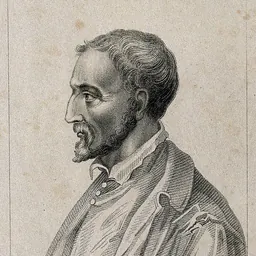
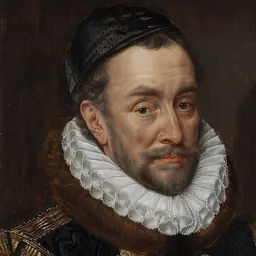
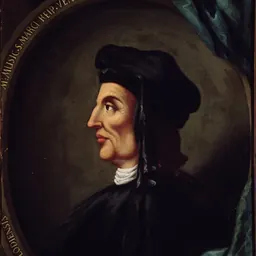

Related people
Same field, nearest in time



Contemporaries
People whose lives overlapped Simon Stevin's

Frequently asked questions
Who was Simon Stevin?
Flemish mathematician, physicist and engineer (1548–1620)
When was Simon Stevin born?
Simon Stevin was born in 1548 in Bruges.
When did Simon Stevin die?
Simon Stevin died in 1620 in The Hague.
What was Simon Stevin's occupation?
Simon Stevin was a mathematician, engineer, physicist, astronomer, architect and accountant.
What was Simon Stevin known for?
Simon Stevin was known for Decimal fractions.
What nationality was Simon Stevin?
Simon Stevin's recorded nationality: Habsburg Netherlands.
Sources & further reading
Cite this page
APA: Biography.guide. (2026). Simon Stevin. https://biography.guide/simon-stevin/
MLA: "Simon Stevin." Biography.guide, https://biography.guide/simon-stevin/.
Chicago: "Simon Stevin." Biography.guide. https://biography.guide/simon-stevin/.
Data last updated: 2026-09-23 · Spot an error? Report a correction.
Portrait: Wikimedia Commons · author & licence
Page generated 2026-09-27 05:07 UTC