
About Simon Atumano
Lived 1310 – 1380 (aged 69–70). Simon Atumano was an Italian and Byzantine catholic priest and translator.
Simon Atumano (Greek: Σίμων ὁ Ἀτουμάνος) was the Bishop of Gerace in Calabria from 23 June 1348 until 1366 and the Latin Archbishop of Thebes thereafter until 1380. Born in Constantinople, Atumano was of Greco-Turkish origin, his surname deriving from the word "Ottoman." He was a humanist and an influential Greek scholar during the Italian Renaissance.
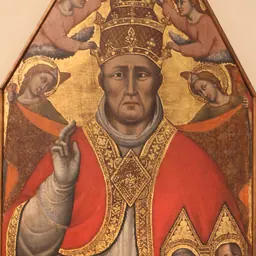
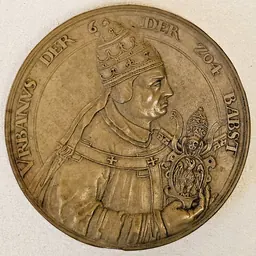
Ecclesiastical and political career On 17 April 1366, Pope Urban VI transferred Atumano to the see of Thebes in reward for his "great integrity." Atumano did not begin well with the Catalan Company which ruled Thebes as part of the Duchy of Athens at the time. He was described later as "a very lukewarm Catalan." While the Catalans supported the Avignon Papacy during the Western Schism, Atumano remained faithful to Rome.
In 1379, Atumano assisted the Navarrese Company under Juan de Urtubia to take Thebes. The details of the assistance he gave them are unknown, but it put him in further bad stead with the Catalans. However, Atumano got along no better with the Navarrese and sometime in 1380–1381 he fled to Italy, where he was at Rome in the winter of the latter year. He lost 1,500 florins of revenue from Thebes and lived thereafter in poverty "more acceptable in the sight of God," though the Peter IV of Aragon assumed that Atumano would receive a higher dignity from the Roman Pope. From Italy he wrote to Demetrius Cydonius about his worries for his flock and about the blasphemy and lack of respect for law of the Ispanoi, that is, the Navarrese.
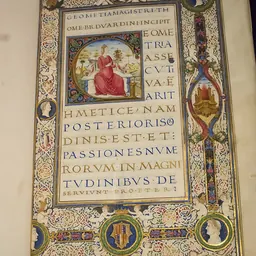
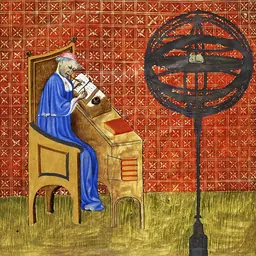
Translation work Atumano undertook studies of Hebrew while in Thebes. In the mid-late 1370s, he began the composition of a Biblia Triglotta, a polyglot Latin-Greek-Hebrew bible written a century before the Complutensian Polyglot. Whether or not Atumano's interest in Hebrew was ignited by the large Jewish presence in Thebes is unknown, since it appears that the Jewish population there had dwindled significantly by the late fourteenth century. The Biblia Triglotta, dedicated to Urban VI, was never finished. He did, however, complete a Hebrew translation of the New Testament and a Greek translation of the Old Testament.
In 1373, Atumano translated the De remediis irae of Plutarch into Latin from Greek. In 1381–2 he taught Greek to Raoul de Rivo.
Character Atumano was praised by his contemporary, Frederick III of Sicily, for his "innate goodness and praiseworthy character" and by his twentieth-century biographer as "no common scholar." Coluccio Salutati, the famous Florentine humanist, praised him to Petrarch as a vir multe venerationis: man highly venerated.
Don’t just read it —
keep it.
Full-length biographies made to live with: read them, listen on the way to work, watch them tonight.
- E-book
- Audio
- Video
Instant download · yours to keep · every purchase keeps this site free
Important facts
People in Simon Atumano's life
Named in this biography and alive at the same time


Related people
Same field, nearest in time



Contemporaries
People whose lives overlapped Simon Atumano's

Frequently asked questions
Who was Simon Atumano?
Roman Catholic archbishop
When was Simon Atumano born?
Simon Atumano was born in 1310 in Constantinople.
When did Simon Atumano die?
Simon Atumano died in 1380 in Rome.
What was Simon Atumano's occupation?
Simon Atumano was a catholic priest and translator.
What nationality was Simon Atumano?
Simon Atumano was Italian and Byzantine.
Sources & further reading
Cite this page
APA: Biography.guide. (2026). Simon Atumano. https://biography.guide/simon-atumano/
MLA: "Simon Atumano." Biography.guide, https://biography.guide/simon-atumano/.
Chicago: "Simon Atumano." Biography.guide. https://biography.guide/simon-atumano/.
Data last updated: 2026-09-20 · Spot an error? Report a correction.
Page generated 2026-09-27 05:28 UTC