
About Śīlabhadra
Lived 529 – 645 (aged 115–116). Śīlabhadra was a philosopher.
Śīlabhadra (529–645 ) was a Buddhist monk and philosopher. He is best known as being an abbot of Nālandā monastery in India, as being an expert on Yogācāra teachings, and for being the personal tutor of the Chinese Buddhist monk Xuanzang. Another notable student of his was Prabhakāramitra.
Biography
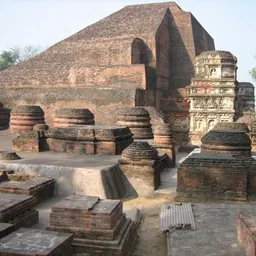
Early life Śīlabhadra was said to have originally been from Magadha. Although another source states that he "appears to have been born in a Brahman royal family of Samatata", identified through Xuanzang's accounts as being the Bhadra dynasty. As a young man, Śīlabhadra went to Nālandā, and was trained there by Dharmapāla of Nālandā, who also ordained him as a Buddhist monk. According to Xuanzang's account, Śīlabhadra gradually became famous for his learning even in foreign countries. At 30 years old, after defeating a Brahmin from southern India in a religious debate, the king insisted on giving him the revenue of a city, which Śīlabhadra accepted with reluctance, and he built a monastery there and kept it funded with the city's revenues.
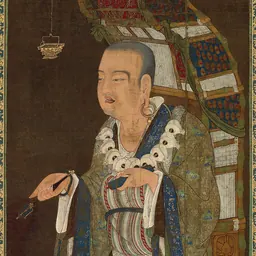
Śīlabhadra and Xuanzang At the age of 33, the Chinese Buddhist monk Xuanzang made a journey to India in order to study Buddhism there and to procure Buddhist texts for translation into Chinese. Xuanzang spent over ten years in India travelling and studying under various Buddhist masters. Śīlabhadra is described as being very old at this time and highly revered by the monks:
Xuanzang records the number of teachers at Nālandā as being around 1510. Of these, approximately 1000 were able to explain 20 collections of sūtras and śāstras, 500 were able to explain 30 collections, and only 10 teachers were able to explain 50 collections. In total, Xuanzang had procured 657 Buddhist texts from India.
In the first turning, the Buddha taught the Four Noble Truths at Vārāṇasī for those in the śravaka vehicle. It is described as marvellous and wonderful, but requiring interpretation and occasioning controversy. The doctrines of the first turning are exemplified in the Dharmacakra Pravartana Sūtra. This turning represents the earliest phase of the Buddhist teachings and the earliest period in the history of Buddhism. In the second turning, the Buddha taught the Mahāyāna teachings to the bodhisattvas, teaching that all phenomena have no-essence, no arising, no passing away, are originally quiescent, and essentially in cessation. This turning is also described as marvellous and wonderful, but requiring interpretation and occasioning controversy. In the Indian philosophical schools, the third turning is exemplified by the Yogācāra school of Asaṅga and Vasubandhu.
Śīlabhadra considered the teachings from the third turning (Yogācāra) to be the highest form of Buddhism, because it fully explains the three natures, but the Mādhyamaka teacher Jñānaprabha notably opposed this idea. Instead, Jñānaprabha regarded Yogācāra teachings to be below Mādhyamaka, because they (purportedly) posit the real existence of a mind.
Śīlabhadra composed the text Buddhabhūmivyākhyāna, which is now extant only in the Tibetan language.
Don’t just read it —
keep it.
Full-length biographies made to live with: read them, listen on the way to work, watch them tonight.
- E-book
- Audio
- Video
Instant download · yours to keep · every purchase keeps this site free
Important facts
People in Śīlabhadra's life
Named in this biography and alive at the same time
Related people
Same field, nearest in time




Contemporaries
People whose lives overlapped Śīlabhadra's


Frequently asked questions
Who was Śīlabhadra?
Indian Buddhist monk and philosopher
When was Śīlabhadra born?
Śīlabhadra was born in 529 in Magadha.
When did Śīlabhadra die?
Śīlabhadra died in 645.
What was Śīlabhadra's occupation?
Śīlabhadra was a philosopher.
Sources & further reading
Cite this page
APA: Biography.guide. (2026). Śīlabhadra. https://biography.guide/silabhadra/
MLA: "Śīlabhadra." Biography.guide, https://biography.guide/silabhadra/.
Chicago: "Śīlabhadra." Biography.guide. https://biography.guide/silabhadra/.
Data last updated: 2026-09-20 · Spot an error? Report a correction.
Page generated 2026-09-27 05:25 UTC