
About Sigurður Nordal
Lived 1886 – 1974 (aged 88). Sigurður Nordal was an Icelandic writer, poet, diplomat, university teacher, philologist and literary theorist.
Sigurður Nordal (14 September 1886 – 21 September 1974) was an Icelandic scholar, writer, and ambassador. He was influential in forming the theory of the Icelandic sagas as works of literature composed by individual authors.
Education Nordal studied Scandinavian Philology in Copenhagen where he received his MA in 1912. In 1914 he completed his doctoral thesis. He then went on to study philosophy in Berlin and Oxford.
Career In 1918 he became Professor of Icelandic Language and Literature at the University of Iceland. He retained this position until his death but was exempted from teaching duties in 1945. From 1931 to 1932 Nordal held the Charles Eliot Norton professorship at Harvard University. From 1951 to 1957 he was the Icelandic ambassador in Copenhagen. He was the editor-in-chief of the Íslenzk fornrit series from 1933 to 1951. In 1965, he coined the word "tölva" (a portmanteau made from tölu-völva / "numerical oracle") as the Icelandic word for "computer." His neologism would become the standard word.
Some of Sigurður Nordal's most influential works are: Völuspá: A treatise on the Eddic poem Völuspá, regarding the poem as a coherent work by one poet. Íslenzk menning ("Icelandic Culture"): Often considered Nordal's greatest work, this book was used as a standard text in Icelandic colleges. Hrafnkatla: A treatise on Hrafnkels saga, aiming to establish that the saga was a fictional work of art. Samhengið í íslenzkum bókmenntum ("The Continuity of Icelandic Literature"). Fyrirlestrar um íslenzka bókmenntasögu 1350-1750 ("Lectures on the History of Icelandic Literature 1350-1750"):
"In the 1920s, there was a rumour that Kvaran was considered for the Nobel Prize in Literature, but in response Sigurður Nordal disparaged him as overly focused on forgiveness and thus tolerant of things that should rather be opposed; in the spirit of Icelandic nationalism and contemporary interpretations of Nietzsche, he considered the blood feud a better ethical mode."
Sigurður Nordal also published three very influential anthologies: Íslenzk lestrarbók, 1400-1901 (1924), Íslenzk lestrarbók 1750-1930 (1st ed. 1975) and Sýnisbók íslenzkra bókmennta til miðrar átjándu aldar (1953), the latter one in collaboration with Guðrún P. Helgadóttir and Jón Jóhannesson. They deserve mention since they were required reading in Icelandic gymnasia for the better part of a century.
Don’t just read it —
keep it.
Full-length biographies made to live with: read them, listen on the way to work, watch them tonight.
- E-book
- Audio
- Video
Instant download · yours to keep · every purchase keeps this site free
Important facts
People in Sigurður Nordal's life
Named in this biography and alive at the same time
Related people
Same field, nearest in time

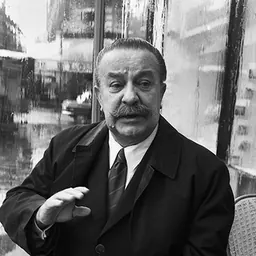

Contemporaries
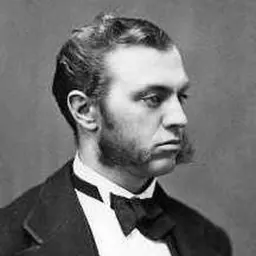
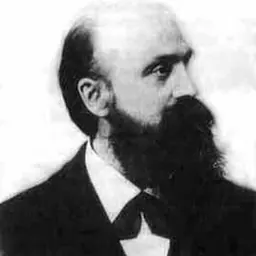
People whose lives overlapped Sigurður Nordal's




Frequently asked questions
Who was Sigurður Nordal?
Icelandic writer and diplomat (1886-1974)
When was Sigurður Nordal born?
Sigurður Nordal was born on 14 September 1886 in Eyjólfsstaðir.
When did Sigurður Nordal die?
Sigurður Nordal died on 21 September 1974.
What was Sigurður Nordal's occupation?
Sigurður Nordal was a writer, poet, diplomat, university teacher, philologist and literary theorist.
What nationality was Sigurður Nordal?
Sigurður Nordal was Icelandic.
Sources & further reading
Cite this page
APA: Biography.guide. (2026). Sigurður Nordal. https://biography.guide/sigurdur-nordal/
MLA: "Sigurður Nordal." Biography.guide, https://biography.guide/sigurdur-nordal/.
Chicago: "Sigurður Nordal." Biography.guide. https://biography.guide/sigurdur-nordal/.
Data last updated: 2026-09-20 · Spot an error? Report a correction.
Page generated 2026-09-27 05:11 UTC