
About Sigmund Romberg
Lived 1887 – 1951 (aged 64). Sigmund Romberg was an Austrian and American pianist, composer, screenwriter and film score composer.
Sigmund Romberg (July 29, 1887 – November 9, 1951) was a Hungarian-born American composer. He is best known for his musicals and operettas, particularly The Student Prince, The Desert Song (1926) and The New Moon (1928).
Early in his career, Romberg was employed by the Shubert brothers to write music for their musicals and revues, including several vehicles for Al Jolson. For the Shuberts, he also adapted several European operettas for American audiences, including the successful Maytime (1917) and Blossom Time (1921). His three hit operettas of the mid-1920s, named above, are in the style of Viennese operetta, but his other works from that time mostly employ the style of American musicals of their eras. He also composed film scores.
Biography Early life Romberg was born in Hungary as Siegmund Rosenberg to a Jewish family, Adam and Clara Rosenberg, in Gross-Kanizsa (Hungarian: Nagykanizsa), Austria-Hungary (today located in Hungary). In 1889 Romberg and his family moved to Belišće, which was then in Hungary, where he attended a primary school. Influenced by his father, Romberg learned to play the violin at six, and piano at eight years of age. He enrolled at Osijek gymnasium in 1897, where he was a member of the high school orchestra. After a brief stint working in a pencil factory in New York, he was employed as a pianist in cafés and restaurants. He also wrote the music for Love Birds (1921).
Romberg's adaptation of melodies by Franz Schubert for Blossom Time (1921, produced in the UK as Lilac Time) was a great success. He subsequently wrote his best-known operettas, The Student Prince (1924), The Desert Song (1926) and The New Moon (1928), which are in a style similar to the Viennese operettas of Franz Lehár. He also wrote Princess Flavia (1925), an operetta based on The Prisoner of Zenda. His other works, My Maryland (1927), a successful romance; Rosalie (1928), together with George Gershwin; and May Wine (1935), with lyrics by Oscar Hammerstein II, about a blackmail plot; and Up in Central Park (1945), are closer to the American musical in style. In 1948, he wrote a new score for "My Romance" after the show had folded in try-outs. Romberg also wrote a number of film scores and adapted his own work for film.
Columbia Records asked Romberg to conduct orchestral arrangements of his music (which he had played in concerts) for a series of recordings from 1945 to 1950 that were issued both on 78-rpm and 33-1/3 rpm discs. These performances are now prized by record collectors. Naxos Records digitally remastered the recordings and issued them in the U.K. (They cannot be released in the U.S. because Sony Music Entertainment, which is a parent company of Columbia Records, holds the copyright for their American release.) Much of Romberg's music, including extensive excerpts from his operettas, was released on LP during the 1950s and 1960s, especially by Columbia, Capitol, and RCA Victor. Nelson Eddy and Jeanette MacDonald, who appeared in an MGM adaptation of The New Moon in 1940, regularly recorded and performed his music. There have also been periodic revivals of the operettas.
Personal life Romberg married twice. Little is known about his first wife, Eugenia, who appears on a 1920 federal census form as being Austrian. His second wife was Lillian Harris, whom he married on March 28, 1925, in Paterson, New Jersey. They had no children. Harris was born March 8, 1898, and died April 15, 1967, in New York City.
Romberg died in 1951, aged 64, of a stroke at his Ritz Towers Hotel suite in New York City and was interred in the Ferncliff Cemetery in Hartsdale, New York.
Selected songs Her Soldier Boy – 1917 Home Again – 1916, lyrics: Augustus Barratt Won't You Send a Letter to Me? – 1917, lyrics: Harold Atteridge Music genres included "operatic arias, short symphonic works and overtures to popular songs, light classics, dance music and even a bit of outright jazz."
Honors Since 1970, Belišće organizes musical evenings in Romberg's honor; similar events are held in Osijek since 1995.
Don’t just read it —
keep it.
Full-length biographies made to live with: read them, listen on the way to work, watch them tonight.
- E-book
- Audio
- Video
Instant download · yours to keep · every purchase keeps this site free
Important facts
People in Sigmund Romberg's life
Named in this biography and alive at the same time

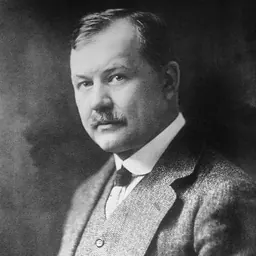


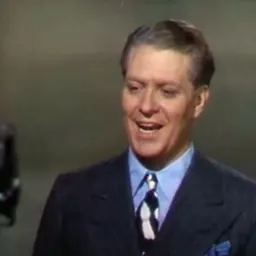
Related people
Same field, nearest in time

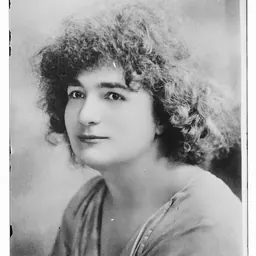
Contemporaries
People whose lives overlapped Sigmund Romberg's



Frequently asked questions
Who was Sigmund Romberg?
Hungarian-born American composer (1887–1951)
When was Sigmund Romberg born?
Sigmund Romberg was born on 29 July 1887 in Nagykanizsa.
When did Sigmund Romberg die?
Sigmund Romberg died on 9 November 1951 in New York City.
What was Sigmund Romberg's occupation?
Sigmund Romberg was a pianist, composer, screenwriter and film score composer.
What nationality was Sigmund Romberg?
Sigmund Romberg was Austrian and American.
Sources & further reading
Cite this page
APA: Biography.guide. (2026). Sigmund Romberg. https://biography.guide/sigmund-romberg/
MLA: "Sigmund Romberg." Biography.guide, https://biography.guide/sigmund-romberg/.
Chicago: "Sigmund Romberg." Biography.guide. https://biography.guide/sigmund-romberg/.
Data last updated: 2026-09-20 · Spot an error? Report a correction.
Page generated 2026-09-27 05:27 UTC