
About Sig Jakucki
Lived 1909 – 1979 (aged 69). Sig Jakucki was an American baseball player.
Sigmund Jakucki (August 20, 1909 – May 28, 1979), nicknamed "Sig" or "Jack",
In 1927, Jakucki joined the United States Army and spent most of the next four years at the Schofield Army Barracks in Honolulu, Hawaii, serving with the 11th Field Artillery. Continuing to play baseball with his regiment's team, Jakucki established a reputation as one of his team's best hitters. He was discharged from the Army in 1931 before finishing his second tour of duty with them. Officially, the discharge was for medical reasons, but a local baseball promoter may have helped attain the early release. Jakucki joined the semipro Honolulu Braves, still playing shortstop and outfield but now occasionally pitching. This brought him exposure to Major League Baseball (MLB) personnel when the Braves played an all-star team consisting of several MLB regulars. Jakucki played with another Honolulu semipro team called Asahi, even though the club was primarily for Hawaiians with Japanese ancestry. In 28 games, he had a 10–7 record and a 3.20 earned run average (ERA) in 138 innings pitched.
During the 1935 season, Jakucki hit Johnny Keane in the head with a pitch, putting the prospect in the hospital for a week with a coma. He went 15–14 for Galveston, with a 3.45 ERA. On July 16, he pitched a seven-inning no-hitter against the Oklahoma City Indians. The fine outing caught the attention of major league scouts, and the St. Louis Browns acquired his rights on August 18. Though his overall numbers with Galveston were not great, he pitched his best the final six weeks of the season.
Major league debut (1936) With the Browns, Jakucki made his debut in the second game of a doubleheader against the Washington Senators on August 30. Pitching six innings, he allowed only four hits but walked seven batters, surrendering five runs (four earned) and taking the loss in a 7–4 defeat. Jakucki started only one more game for the Browns all season but did appear in five others as a relief pitcher. He pitched poorly for the Browns, going 0–3 with an 8.71 ERA in 20 innings pitched. Team owner Larry Gilbert waited a few days before bailing him out of jail, then traded Jakucki to the PCL's Los Angeles Angels. Making his first MLB appearance in eight years on April 20, he pitched a complete game, defeating the Detroit Tigers 8–5 for his first MLB win. Buoyed by strong pitching, the historically terrible Browns found themselves unexpected contenders for the American League pennant. "Finding Jakucki was a tremendous break. It looks like he might have made the difference between success and failure," stated The Sporting News on August 17. He held the Red Sox to five hits in a 1–0 victory over them on September 26, his fourth shutout of the year, which kept St. Louis tied with Detroit for the AL lead.
Pennant-clinching game Browns manager Luke Sewell picked Jakucki to start the team's final game. Knowing his penchant for alcohol, his teammates pleaded for him not to drink the night before so he would be sharp for the game. "I went to bed at 6 in the morning and the game didn’t start until 1:30," Jakucki recalled. "I was there." He got the win, and the Tigers lost their game, giving the Browns the pennant. "Drunk or not, Big Sig was competitive," observed Bob Broeg, a sports reporter in St. Louis for many years. In 35 games (24 starts), he had a 13–9 record, a 3.55 ERA, 67 strikeouts, 54 walks, and 211 hits allowed in 198 innings pitched.
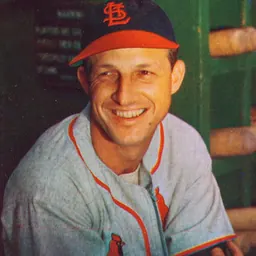
1944 World Series In the 1944 World Series, Jakucki started Game 4 on October 7, with his underdog Browns leading two games to one. But he allowed a first-inning, two-run home run to Stan Musial of the St. Louis Cardinals, permitted four runs (three earned), and lasted only three full innings. The Cardinals won the game, 5–1. That was Jakucki's only outing of the series, as the Cardinals went on to take the next two contests to deny the Browns a world championship.
Opening Day starter The Opening Day starter for the Browns in 1945, Jakucki held the Tigers to six hits in a 7–1 victory. Facing the Athletics on June 1, he threw a shutout in a 4–0 victory. He won six decisions in a row before the All-Star break.
Kicked off the team After going 9–5 with a 2.91 ERA before the All-Star Break, Jakucki went 3–5 with a 4.66 ERA in the season's second half. In his last outing of the year, on August 29 against the Tigers, he allowed four runs (two earned) in innings, through the Browns ultimately won the game 5–4. Two days later, Sewell refused to let him take a train with the team to Chicago because he showed up drunk. Jakucki challenged his manager and the Browns coaches to a fight, then slipped into a different passenger car. Discovered before the train had made it five miles, he was ejected at the Delmar Boulevard station. Still determined to reach Chicago, Jakucki rode a freight train there but was not allowed a room when he arrived at the team's hotel. The Browns suspended him for the rest of the season. Sometimes when he was not pitching, he would come watch San Antonio's games from the stands, usually with "a girl on each arm" according to Garver.
No longer wanted by the Missions, Jakucki signed with the PCL's Seattle Rainiers in 1947. He alternated between starting and relieving for the team in the first part of the season. Then, the Rainiers traded him to the PCL's Sacramento Solons on July 31, but Jakucki decided to go back to Galveston. Suspended by the Solons, he never played professionally again.
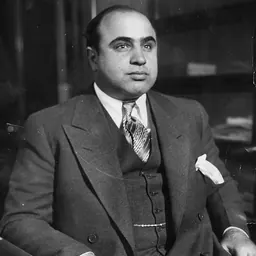
Jakucki was also known for his combativeness. "Jakucki used to spit on your shoes and dare you to do something about it," said teammate Joe Schultz Jr. While he and teammate Ellis Clary were drinking at a Manhattan bar one night, a gangster pulled a gun on the pitcher. Taking it away from him, Jakucki knocked him out. "He was like Al Capone rolling around at night," Clary described the pitcher. Garver and opposing player Jimmy Outlaw both observed that Jakucki would fight at any time. He tormented teammate Pete Gray, who had only one arm. One day, the two got into an argument, and Jakucki challenged Gray to a fight, holding one arm behind his back. However, he denied actually going through with the fight, saying "I wouldn't fight anyone who only had one arm."
Later years Back in Galveston, Jakucki continued to work different occupations, such as doing painting and laboring in the shipyards. The ex-pitcher could often be found hanging out on a park bench, which he termed his "office". He gave up drinking in 1961 because of cirrhosis. However, he smoked multiple packages of cigarettes a day. By 1978, he was suffering from emphysema. He had little money, as he had not pitched long enough to receive an MLB pension and he did not receive Social Security payments. On May 29, 1979, he was discovered dead at the age of 69 in his room at the Panama Hotel, a cheap inn in Galveston. He was buried in Galveston's Calvary Cemetery, with his surname mistakenly spelled "Jackucki".
Don’t just read it —
keep it.
Full-length biographies made to live with: read them, listen on the way to work, watch them tonight.
- E-book
- Audio
- Video
Instant download · yours to keep · every purchase keeps this site free
Important facts
People in Sig Jakucki's life
Named in this biography and alive at the same time



Related people
Same field, nearest in time

Contemporaries
People whose lives overlapped Sig Jakucki's




Frequently asked questions
Who was Sig Jakucki?
Major League Baseball pitcher
When was Sig Jakucki born?
Sig Jakucki was born on 20 August 1909 in Camden.
When did Sig Jakucki die?
Sig Jakucki died on 29 May 1979 in Galveston.
What was Sig Jakucki's occupation?
Sig Jakucki was a baseball player.
What nationality was Sig Jakucki?
Sig Jakucki was American.
Sources & further reading
Cite this page
APA: Biography.guide. (2026). Sig Jakucki. https://biography.guide/sig-jakucki/
MLA: "Sig Jakucki." Biography.guide, https://biography.guide/sig-jakucki/.
Chicago: "Sig Jakucki." Biography.guide. https://biography.guide/sig-jakucki/.
Data last updated: 2026-09-20 · Spot an error? Report a correction.
Page generated 2026-09-27 05:20 UTC