
About Siegfried Wagner
Lived 1869 – 1930 (aged 61). Siegfried Wagner was a German composer, conductor, writer, film director, opera director and director.
Siegfried Helferich Richard Wagner (6 June 18694 August 1930) was a German composer and conductor, the son of Richard Wagner. He was an opera composer and the artistic director of the Bayreuth Festival from 1908 to 1930.
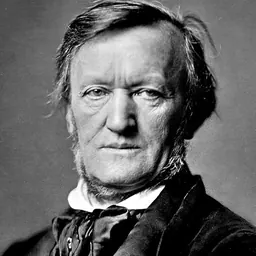
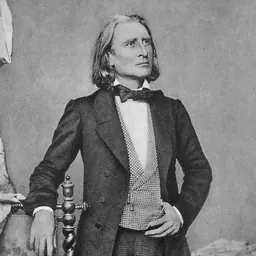
Life Siegfried Wagner was born in 1869 to Richard Wagner and his future wife Cosima (née Liszt), at Tribschen on Lake Lucerne in Switzerland. Through his mother, he was a grandson of Franz Liszt, from whom he received some instruction in harmony.
Some youthful compositions date from about 1882. After he completed his secondary education in 1889, he studied with Wagner's assistant Engelbert Humperdinck, but was more strongly drawn to a career as an architect and studied architecture in Berlin and Karlsruhe.
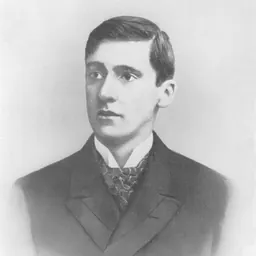
In 1892 he undertook a trip to Asia with a friend, the English composer Clement Harris. During the voyage he decided to abandon architecture and commit himself to music. Reputedly, it was also Harris who first aroused his homoerotic impulses. While on board, he sketched his first official work, the symphonic poem Sehnsucht, inspired by the poem of the same name by Friedrich Schiller. This piece was not completed until just before the concert in which Wagner conducted it in London on 6 June 1895. Though his works are numerous, none entered the standard repertory.
He made his conducting debut as an assistant conductor at Bayreuth in 1894; in 1896 he became associate conductor, sharing responsibility for conducting the Ring cycle with Felix Mottl and Hans Richter, who had conducted its premiere 20 years earlier. In 1908 he took over as artistic director of the Bayreuth Festival in succession to his mother, Cosima.
Wagner was bisexual. For years, his mother urged him to marry and provide the Wagner dynasty with heirs, but he fought off her increasingly desperate urgings.
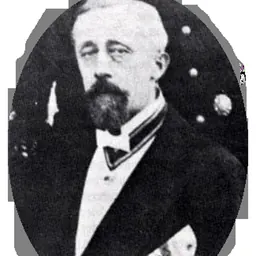
Around 1913, pressure on him increased due to the Harden–Eulenburg affair (1907–1909), in which the journalist Maximilian Harden accused several public figures, most notably Philipp, Prince of Eulenburg, a friend of Kaiser Wilhelm II, of homosexuality. In this climate, the family found it suitable to arrange a marriage with a 17-year-old Englishwoman, Winifred Klindworth, and at the Bayreuth Festival of 1914 she was introduced to the then-45-year-old Wagner. The two married on 22 September 1915.
The couple had four children: Wieland (1917–1966) Friedelind (1918–1991) Wolfgang (1919–2010) Verena (1920–2019)
Though the marriage provided for the dynastic succession, the hope that it would also bring an end to his homosexual encounters and the associated costly scandals was disappointing, as Wagner remained sexually active with other men.
, one of Siegfried's biographers, asserted that Siegfried had sired an illegitimate son, Walter Aign (1901–1977); several recent authors, such as Frederic Spotts and Brigitte Hamann, have taken it up.
Wagner died in Bayreuth in 1930 aged 61, having outlived his mother by only four months. Since his two sons were still only adolescents, he was succeeded at the helm of the Bayreuth Festival by his widow Winifred.
Works Operas See List of operas by Siegfried Wagner
Orchestral works March for Gottfried der Spielmann )
Vocal music 1890 "Abend auf dem Meere", for soprano and piano – text: Henry Thode 1890 "Frühlingsglaube", for soprano and piano – text: Ludwig Uhland 1890 "Abend am Meer" – text: Alfred Meissner 1897 "Schäfer und Schäferin" 1913 "Das Märchen vom dicken fetten Pfannekuchen", for solo voice and orchestra 1918 "Wahnfried-Idyll" 1919 "Nacht am Narocz", for tenor and piano – text: Günther Holstein 1922 "Ein Hochzeitslied für unseren Erich und seine liebe 'Dusi 1927 "Dryadenlied" 1927 "Weihnacht" "Frühlingsblick" – text: Nikolaus Lenau "Frühlingstod" – text: Nikolaus Lenau
Don’t just read it —
keep it.
Full-length biographies made to live with: read them, listen on the way to work, watch them tonight.
- E-book
- Audio
- Video
Instant download · yours to keep · every purchase keeps this site free
Important facts
People in Siegfried Wagner's life
Named in this biography and alive at the same time



Related people
Same field, nearest in time

Contemporaries
People whose lives overlapped Siegfried Wagner's





Frequently asked questions
Who was Siegfried Wagner?
German opera producer and composer, son of Richard Wagner and Cosima Liszt (1869–1930)
When was Siegfried Wagner born?
Siegfried Wagner was born on 6 June 1869 in Tribschen Manor.
When did Siegfried Wagner die?
Siegfried Wagner died on 4 August 1930 in Bayreuth.
What was Siegfried Wagner's occupation?
Siegfried Wagner was a composer, conductor, writer, film director, opera director and director.
What nationality was Siegfried Wagner?
Siegfried Wagner was German.
Sources & further reading
Cite this page
APA: Biography.guide. (2026). Siegfried Wagner. https://biography.guide/siegfried-wagner/
MLA: "Siegfried Wagner." Biography.guide, https://biography.guide/siegfried-wagner/.
Chicago: "Siegfried Wagner." Biography.guide. https://biography.guide/siegfried-wagner/.
Data last updated: 2026-09-20 · Spot an error? Report a correction.
Page generated 2026-09-27 05:20 UTC