
About Sidney Katz
Lived 1924 – 2012 (aged 87–88). Sidney Katz was an American physician, known for Activities of daily living.
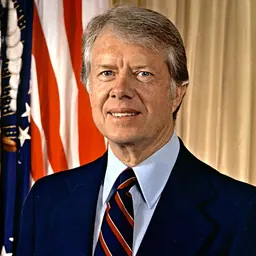
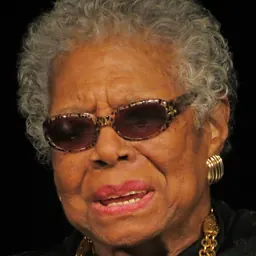
Sidney Katz, MD (1924–May 4, 2012) was a pioneering American physician, scientist, educator, author, and public servant who developed the Index of Independence of Activities for Daily Living (ADLs) in a career spanning more than sixty years. He made several other advances in geriatric care, including the U.S. Nursing Home Reform Act of 1987, which established basic rights for nursing home residents. Katz received several public and private awards, including the Maxwell A. Pollak Award and the American Geriatrics Society’s (AGS) Foundation for Health in Aging (2001). The AGS award was also won by former US President Jimmy Carter and poet Maya Angelou.
Katz held several academic positions, including Professor Emeritus of Geriatric Medicine at Columbia University, and distinguished scholar at the Benjamin Rose Institute on Aging. He was a lifetime member of the National Academy of Sciences’ Institute of Medicine (IoM), serving as the head of IoM’s Committee on Nursing Home Regulation from 1983 to 1985. During his time leading the committee, Katz initiated a review of current nursing home conditions; the committee developed a report that recommended an extensive redesign of nursing home policies, regulations, and standards. These recommendations were adopted into Omnibus Budget Reconciliation Act of 1987 (OBRA-87), commonly known as the Nursing Home Reform Act of 1987, which mandated standardized nursing home patient rights and enforced new regulatory requirements to ensure equal treatment of nursing home residents. where he studied the effect of vitamins on elderly patients.
Index of Independence of Activities for Daily Living
As Katz began to understand more about the medicine sub-specialty of long-term care for elderly adults, his team at Benjamin Rose began to gather data on how different treatments affected patient outcomes. Katz’s first attempt at formally capturing this data was to study 64 hip fracture patients during an 18-month period. Comprehensive data on treatments, patient progression, and outcomes were collected during this study. After analyzing the study data, the researchers discovered that patients that were most independent could all perform a set of basic activities, ranging from the most complex bathing activity to the least complex feeding activity. From this data, Katz developed a scale to score a patient's ability to live independently. Katz and his team at Benjamin Rose Rehabilitation Hospital spent the next ten years revising the scale, including a more, diverse patient population.
Advisory service
While still working on developing the ADL scale, Katz became involved in the national healthcare community. In 1965 he became an active member of the working groups of the National Center for Health Services Research. In 1978 he was appointed to the National Academy of Sciences' Institute of Medicine (IoM).
In 1977 and 1978 Katz sat on the Long-Term care Technical Advisory Panel of the National Center for Health Statistics, where he first introduced the Minimum Basic Data Set for Long-Term Care.
In 1981 he was appointed as a Special Advisor to the White House Conference on Aging, and a Senior Advisor to the United States Preventive Services Task Force.
In 1983 Katz was appointed for two years to lead IoM's Committee on Nursing Home Regulation. He facilitated a comprehensive review of current practice and care guidelines to base the committee's recommendations on science as far as possible. Katz's committee recommended sweeping changes to the standard of care, audit procedures, and better enforcement of quality assurance practices by both nursing home facilities and oversight organizations. The IoM committee recommendations were incorporated into OBRA-87 legislation, which was signed into law in 1987 by President Ronald Reagan. Katz's recommendations also paved the way towards the 1991 mandate, as part of the Minimum Data Set legislation, that requires nursing homes to complete the national resident assessment system to ensure quality of life for residents.
Katz became a lifetime member of the National Academy of Sciences' Institute of Medicine. He advised several legislators, the Department of Health and Human Services, and non-profit organizations on healthcare issues. He also provided international consultation for the United Nations and for several countries including Sweden, France, and the United Kingdom.
Representative papers and technical reports Katz, S., & Stroud, M. W., 3rd. (1989). "Functional assessment in geriatrics: a review of progress and directions" Journal of the American Geriatrics Society 37, 267–71.
Stroud, M. W., Katz, S., & Gooding, B. A. (1985). Rehabilitation of the elderly: A tale of two hospitals. East Lansing, MI: Michigan State University Press.
U.S. National Committee on Vital and Health Statistics Technical Consultant Panel on the Long-Term Health Care Data Set. (1980). Long-term health care: Minimum data set (DHHS Publication No. [PHS] 80–1158). Hyattsville, MD: U.S. Dept. of Health and Human Services, Public Health Service, Office of Health Research, Statistics, and Technology, National Center for Health Statistics. Papsidero, J. A., Katz, S., Kroger, M. H., & Akpom, C. A. (Eds.). (1979). Chance for change: Implications of a chronic disease module study. East Lansing, MI: Michigan State University Press.
Katz, S., Ford, A. B., Downs, T. D., Adams, M., & Rusby, D. I. (1972). Effects of continued care: A study of chronic illness in the home DHEW Publication No. [HSM] 73–3010). Rockville, MD: National Center for Health Services Research and Development.
Don’t just read it —
keep it.
Full-length biographies made to live with: read them, listen on the way to work, watch them tonight.
- E-book
- Audio
- Video
Instant download · yours to keep · every purchase keeps this site free
Important facts
People in Sidney Katz's life
Named in this biography and alive at the same time


Related people
Same field, nearest in time

Contemporaries
People whose lives overlapped Sidney Katz's


Frequently asked questions
Who was Sidney Katz?
American scientist
When was Sidney Katz born?
Sidney Katz was born in 1924 in Cleveland.
When did Sidney Katz die?
Sidney Katz died on 4 May 2012.
What was Sidney Katz's occupation?
Sidney Katz was a physician.
What was Sidney Katz known for?
Sidney Katz was known for Activities of daily living.
What nationality was Sidney Katz?
Sidney Katz was American.
Sources & further reading
Cite this page
APA: Biography.guide. (2026). Sidney Katz. https://biography.guide/sidney-katz/
MLA: "Sidney Katz." Biography.guide, https://biography.guide/sidney-katz/.
Chicago: "Sidney Katz." Biography.guide. https://biography.guide/sidney-katz/.
Data last updated: 2026-09-20 · Spot an error? Report a correction.
Page generated 2026-09-27 05:12 UTC