
Sidney J. Kaplan
American attorney; International Military Tribunal prosecutor
About Sidney J. Kaplan
Lived 1909 – 1962 (aged 53). Sidney J. Kaplan was an American lawyer and military personnel.
Sidney Joseph Kaplan (February 16, 1909 – June 19, 1962) was an American attorney best known for his role in the prosecution of war criminals at the Nuremberg Trials.
Early life and education Kaplan was born in Minneapolis, Minnesota to Max Julius Kaplan, a Jewish immigrant from Viduklė, Lithuania, and his wife Hattie Wolfson Kaplan. He grew up in Near North, Minneapolis, in the neighborhood then known as Homewood. By 1940, the family had moved permanently to their summer home on Lake Minnetonka, one of two matching houses that Max Kaplan and his business partner, Benjamin Weisberg, had built together.
Kaplan’s grandfather, Abraham Kaplan, who came to America in 1891, was one of the founders of the Kenesseth Israel Synagogue and served as the first chairman of the Minneapolis Jewish Cemetery Association until his death in 1933. Max Kaplan became chairman of the same organization in 1941. in 1925 and went on to earn a degree from the University of Minnesota won Phi Beta Kappa honors He then attended Harvard Law School, graduating with an LL.B. magna cum laude in 1931, where he was on the editorial board of the Harvard Law Review. In 1929, Kaplan was one of four Harvard Law students to win the Sears Prize, "awarded annually to students in the School who shall have done the most brilliant work in their class during the year."
With a fellow classmate, George Rosier, he co-authored a thesis titled “Operative Theory in Judicial Interpretations of the Diversity Jurisdiction” under the supervision of Professor Felix Frankfurter, who later served as an Associate Justice of the Supreme Court.
Legal career Following law school, Kaplan joined the New York law firm Rumsey & Morgan, whose name was changed to Morgan & Lockwood in 1934. He gained national attention in 1935 when he represented Professor Lienhard Bergel of Rutgers University, who had been fired for opposing Nazi propaganda. and as a special assistant to the United States Attorney General. The commission was chaired by Senator Harry S. Truman. On October 18, 1945 he was in Berlin for the filing of the indictment before leaving for Nuremberg for the opening of the trial.
Kaplan was instrumental in organizing the evidence and drafting the sections of the indictment that linked top Nazi officials to the aggressive planning of war. His colleagues at Nuremberg included prominent figures Supreme Court Justice Robert H. Jackson, Telford Taylor, Benjamin Kaplan (no relation), Sidney Alderman, and Thomas Dodd, a future senator from Connecticut. His work on the Nuremberg prosecution helped shape the legal framework for post-war international law. A key figure in the preparation of the trial materials, at a time when Jewish lawyers were not generally hired by law firms in that city. In 1956, the three lawyers expanded their practice to become Maslon, Kaplan, Edelman, Joseph and Borman. As of March 2025, that firm, now known as Maslon LLP, is the ninth largest law practice in Minnesota. Through the late 1940s and 1950s, Kaplan’s legal practice continued to grow, and he was particularly known for his skills as a court room litigator and legal strategist. He was appointed a visiting professor of jurisprudence at the University of Minnesota Law School in 1961.
Personal life Kaplan was married to Leonore Yaeger, also of Minneapolis. Kaplan died unexpectedly from a heart attack he suffered at the lake on June 19, 1962, at the age of 53.
Legacy Kaplan's legacy as a legal scholar and prosecutor at Nuremberg endures through his contributions to the establishment of international law and the prosecution of crimes against humanity. A legal scholarship fund at the University of Minnesota established after his death in 1962 continues to support law students at that university today. His meticulous approach to legal work and his advocacy for justice made him a respected figure both in the legal community and a reference in Nuremberg history, biography and jurisprudence.
Don’t just read it —
keep it.
Full-length biographies made to live with: read them, listen on the way to work, watch them tonight.
- E-book
- Audio
- Video
Instant download · yours to keep · every purchase keeps this site free
Important facts
People in Sidney J. Kaplan's life
Named in this biography and alive at the same time

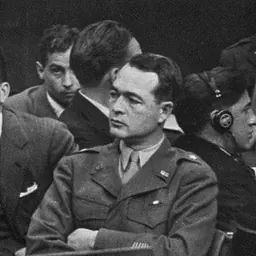



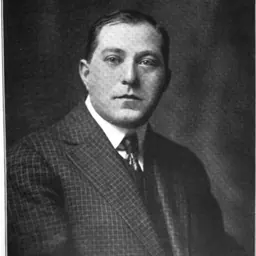


Related people
Same field, nearest in time
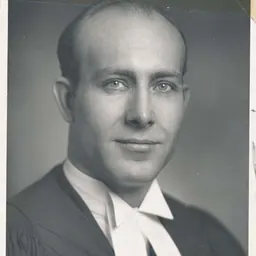

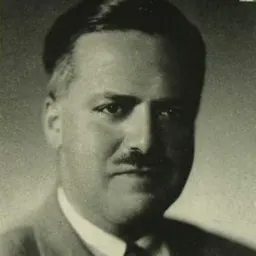
Contemporaries
People whose lives overlapped Sidney J. Kaplan's


Frequently asked questions
Who was Sidney J. Kaplan?
American attorney; International Military Tribunal prosecutor
When was Sidney J. Kaplan born?
Sidney J. Kaplan was born on 16 February 1909 in Minneapolis.
When did Sidney J. Kaplan die?
Sidney J. Kaplan died on 19 June 1962.
What was Sidney J. Kaplan's occupation?
Sidney J. Kaplan was a lawyer and military personnel.
What nationality was Sidney J. Kaplan?
Sidney J. Kaplan was American.
Sources & further reading
Cite this page
APA: Biography.guide. (2026). Sidney J. Kaplan. https://biography.guide/sidney-j-kaplan/
MLA: "Sidney J. Kaplan." Biography.guide, https://biography.guide/sidney-j-kaplan/.
Chicago: "Sidney J. Kaplan." Biography.guide. https://biography.guide/sidney-j-kaplan/.
Data last updated: 2026-09-20 · Spot an error? Report a correction.
Page generated 2026-09-27 05:27 UTC