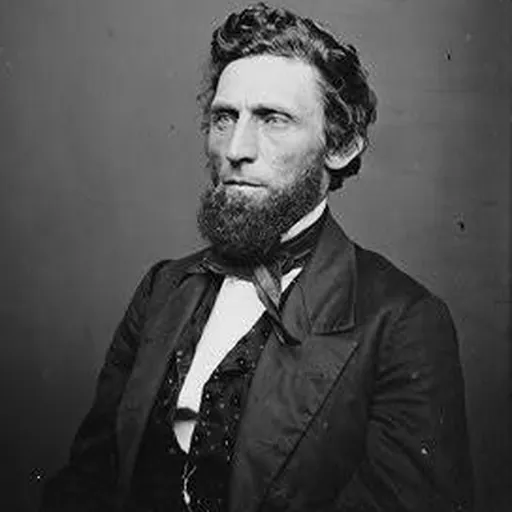
About Sidney Edgerton
Lived 1818 – 1900 (aged 81). Sidney Edgerton was an American politician, lawyer and judge.
Sidney Edgerton (August 17, 1818 – July 19, 1900) was an American politician, lawyer, judge and teacher from Ohio. He served during the American Civil War, as a Squirrel Hunter. During this time, Edgerton served as a U.S. Congressman. In 1863, Abraham Lincoln appointed him the first Chief justice of the Idaho Territorial Supreme Court. Edgerton lobbied for the creation of separate territories, out of the Idaho Territory, and in 1864, Abraham Lincoln appointed Edgerton as the first Territorial Governor of Montana. During his term as Territorial Governor, he was an alleged member of the infamous Montana Vigilantes, and was reputedly among its founders.
He was a sickly child that was not expected to survive; burial clothing was ordered for him. He survived and, eventually, moved to Ohio. He became a lawyer, and was involved in both the Free Soil Party and the Republican Party. After John Brown's raid on Harpers Ferry, Edgerton was invited, by Brown's family, to settle Brown's affairs. He never was able to meet with Brown. He had a successful career as a politician, and after his term ended in the Territory of Montana, Edgerton returned to Ohio. He served as a lawyer in his home state until his death in 1900.
Early life Edgerton was born in Cazenovia, New York, on August 17, 1818. His parents were Amos and Zerviah (Graham) Edgerton, both of Connecticut. Zerviah was a cousin of millionaire philanthropist Anson Greene Phelps. As a child, Edgerton was so sickly and frail that burial clothes were prepared for him. Whereas the young Edgerton avoided death, the same could not be said for his father, a teacher by trade who had been blind for years. Amos Edgerton died when Sidney was still an infant. Left with six children to raise, Zerviah Edgerton struggled to maintain her family. By age eight, young Sidney was out of the home and working himself through school. He eventually attended the Genesee Wesleyan Seminary in Lima, New York, where his cousin taught, and where he would later become an instructor as well. alt=Sidney Edgerton during the time of his political career.
Early career In 1844, he moved to Ohio and began working in the law office of Rufus P. Spalding. Edgerton also taught in an academy in Tallmadge, Ohio, the same year. He studied law and graduated from the Cincinnati Law School in 1845. During this time, Edgerton declared himself an Agnostic. He married Mary Wright (1827–1885) of Tallmadge on May 18, 1848, but Mary almost ended the relationship, because of Edgerton's religious views. He then served as prosecuting attorney of Summit County, Ohio, from 1852 to 1856. Later in 1856, Edgerton was a delegate to the first Republican National Convention. That same year, he was nominated for probate judge, but he declined the nomination. As an ardent anti-slavery member of the House of Representatives, Edgerton made numerous speeches about its abolition. After John Brown's raid on Harpers Ferry, Edgerton was asked by Brown's family to come and settle his affairs. This was very dangerous, as Edgerton was anti-slavery. Edgerton went by train, and was joined by Congressman Alexander Boteler and Congressman H. G. Blake. While on the Baltimore & Ohio Railroad, Boteler was told that the men did not need to go on. Boteler and Blake listened to the advice, but Edgerton refused to go back.
On his arrival at Charles Town, Edgerton found the commander of Harper's Ferry, General William Taliaferro. Edgerton served as both a U.S. Congressman and soldier at the same time, during the first few years of the war. His salary was to be $2,500 a year (about $34,000 in 2009). Edgerton requested the designation of courts and districts, but no court was designated for his district. Wallace appointed Edgerton to one of the farthest and most remote places away from the capitol. When he arrived there was no administrator to administer the oath of office. He never took the oath of office and therefore he never legally took his position as Chief Justice. The Edgerton's then bought a home at a Sheriff's sale for $400. The one room home became the first Montana Governor's Residence. He was then chosen, by the local population, to go to Washington D.C. His mission was to lobby for the split of the Territory of Idaho. Edgerton and Sanders then left in a stagecoach for Washington. Edgerton arrived with $2,500 in gold nuggets in his pockets He presented this to President Abraham Lincoln and numerous members of Congress. His lobbying paid off in 1864. That year the Territory of Idaho split into three parts. The three parts included the Territory of Idaho, the Territory of Montana, and the Territory of Dakota. Edgerton was not supported by many settlers and miners in the Territory, as the majority were from border states and either supported the Confederacy or were Democrats who abhorred radical Republicans like him. There were even death threats for those who flew an American Flag. Edgerton put together a quick census, so that an election could be held. The elections would be for the State Council, State House, and for the Delegate of the Territory of Montana to the House of Representatives. After the elections of 1865, Democrats took power in the House, and took the Delegate seat in the House of Representatives. While the Republicans took the Council. Numerous engagements between the Governor and Democrats occurred, causing troubles for the Montana Legislature.
In 1865, Edgerton began to have to deal with threats from Native Americans. General Patrick Connor was sent to handle these threats. He led an expedition against the Sioux and Cheyenne Indians, who were disrupting travelers along the Bozeman Trail.
In 1865, Edgerton was forced to go East to secure funds for the territory. Edgerton left the Territory, in September 1865. While he was away, Thomas Francis Meagher served as the acting Territorial Governor of Montana. To express their dislike for Edgerton, the state legislature changed the name of Edgerton County to Lewis and Clark County. alt= Henry Plummer, Sheriff of Bannack, Montana, before his death.
Montana Vigilantes After numerous acts of lawlessness, and with no established court system, Edgerton supported his nephew, Wilbur F. Sanders, and other residents of Bannack and Virginia City as they organized the Vigilantes. Along with the lynching of Plummer, the Montana Vigilantes hanged 22 road agents. After these actions Edgerton's nephew, Wilbur F. Sanders, was forced to defend the group in Utah courts. He was involved in his law practice until his death on July 19, 1900. He is buried in Tallmadge Cemetery in Tallmadge, Ohio.
Don’t just read it —
keep it.
Full-length biographies made to live with: read them, listen on the way to work, watch them tonight.
- E-book
- Audio
- Video
Instant download · yours to keep · every purchase keeps this site free
Important facts
Family & relationships
People in Sidney Edgerton's life
Named in this biography and alive at the same time

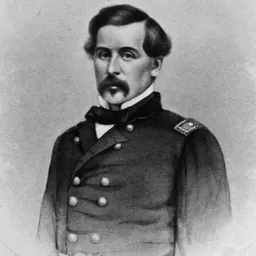


Related people
Same field, nearest in time


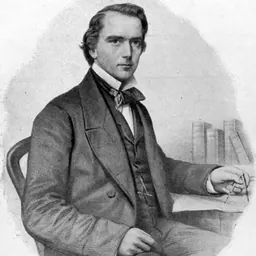

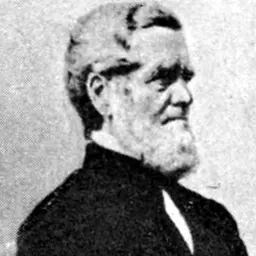

Contemporaries
People whose lives overlapped Sidney Edgerton's



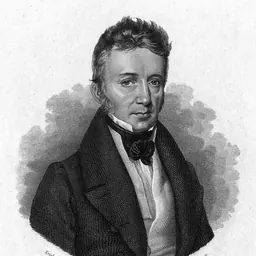

Frequently asked questions
Who was Sidney Edgerton?
United States lawyer and politician (1818-1900)
When was Sidney Edgerton born?
Sidney Edgerton was born on 17 August 1818 in Cazenovia.
When did Sidney Edgerton die?
Sidney Edgerton died on 19 July 1900 in Akron.
What was Sidney Edgerton's occupation?
Sidney Edgerton was a politician, lawyer and judge.
What nationality was Sidney Edgerton?
Sidney Edgerton was American.
Sources & further reading
Cite this page
APA: Biography.guide. (2026). Sidney Edgerton. https://biography.guide/sidney-edgerton/
MLA: "Sidney Edgerton." Biography.guide, https://biography.guide/sidney-edgerton/.
Chicago: "Sidney Edgerton." Biography.guide. https://biography.guide/sidney-edgerton/.
Data last updated: 2026-09-21 · Spot an error? Report a correction.
Portrait: Wikimedia Commons · author & licence
Page generated 2026-09-27 04:58 UTC