
Sianne Ngai
American aesthetic theorist and literary critic
About Sianne Ngai
Born 1971. Sianne Ngai is an American cultural studies scholar, university teacher, philosopher, literary critic, scholar of English and author.
Sianne Ngai is an American cultural theorist, literary critic, and feminist scholar, and is a professor at the University of Chicago.
Ngai has published the books Our Aesthetic Categories: Zany, Cute, Interesting (2012), and Ugly Feelings (2005), both released by Harvard University Press. Sections of both books have been translated into Swedish, Italian, German, Slovenian, Portuguese, Japanese, and Korean. After her book Theory of the Gimmick was published in 2020, she was called "the most influential literary theorist of her time" in a feature on her work in The Chronicle of Higher Education,
Career Ngai earned her B.A. from Brown University in 1993 and her Ph.D from Harvard University in 2000. When her book Our Aesthetic Categories came out in 2012, she was professor at Stanford University where she worked from 2000–2007 and 2011–2017. She was associate professor at UCLA from 2007–2011.
Publications
Ugly Feelings (2005)
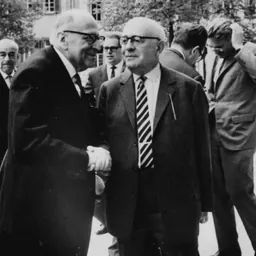
In her book Ugly Feelings, Sianne Ngai constructs a theoretical framework for analyzing and mobilizing affective concepts and presents a series of studies in the aesthetics of negative emotions, examining their politically ambiguous work in a range of cultural artifacts produced in what Theodor W. Adorno and Max Horkheimer refer to in Dialectic of Enlightenment as the "fully administered world of late modernity."
In contrast to powerful and dynamic negative emotions like anger, non-cathartic states of feeling like envy, irritation, and paranoia are associated with situations in which action is blocked or suspended. In her examination of the cultural forms to which these affects give rise, Ngai suggests that these minor and more politically ambiguous feelings become more suited for diagnosing the character of late modernity.
Our Aesthetic Categories (2012)
In her book Our Aesthetic Categories, Ngai argues that the zany, the cute, and the interesting, despite their marginality to aesthetic theory and to genealogies of postmodernism, are best suited to grasping how aesthetic experience has been transformed by the hyper-commodified, information-saturated, performance-driven conditions of late capitalism.
Using the example of a frog-shaped baby's bath toy, Ngai illustrates that cuteness is an aestheticization of powerlessness, as the purpose of the cute bath toy is for it to be pressed against a baby's body, and squished in a way guaranteed to repeatedly crush and deform its formless face. The nonaesthetic properties associated with cuteness (smallness, compactness, formal simplicity, softness or pliancy) thus also index minor negative affects such as helplessness, pitifulness, and despondency. Ngai also argues that the term "cute" is a way of sexualizing beings while simultaneously rendering them unthreatening. She illustrates this by providing several examples of poems that deploy cuteness as a means of rendering the overtly aggressive and sexual dimension of the theme unthreatening.
Theory of the Gimmick (2020) Her book Theory of the Gimmick argues that the "gimmick" is a crucial form for modern capitalist society, and is both an aesthetic category and an aesthetic judgement, where calling something a gimmick is a performative act. A gimmick is a gadget that flatters to deceive. The book explores the gimmick as encoding a relation to labor, and as the inverted image of the modernist "device" celebrated by Victor Shklovsky.
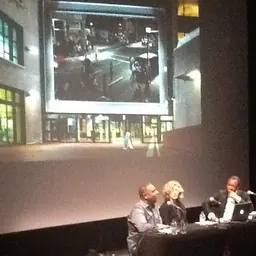
Extending the focus in Ngai's second book on the historical significance of the rise of equivocal aesthetic categories, Theory of the Gimmick explores the mix of attraction and repulsion produced by the gimmick across a range of forms specific to capitalist society. twentieth-century poetic stunts; the video installations of contemporary artist Stan Douglas; She was a fellow at the Berlin Institute for Advanced Study in 2014–15. She was awarded an honorary doctorate in philosophy from the University of Copenhagen in 2015, and won a Guggenheim Fellowship in 2024. Her book Our Aesthetic Categories: Zany, Cute, Interesting was the winner of the James Russell Lowell Prize (2012).
Don’t just read it —
keep it.
Full-length biographies made to live with: read them, listen on the way to work, watch them tonight.
- E-book
- Audio
- Video
Instant download · yours to keep · every purchase keeps this site free
Important facts
People in Sianne Ngai's life
Named in this biography and alive at the same time


Related people
Same field, nearest in time





Contemporaries
People whose lives overlapped Sianne Ngai's




Frequently asked questions
Who is Sianne Ngai?
American aesthetic theorist and literary critic
When was Sianne Ngai born?
Sianne Ngai was born in 1971 in Washington, D.C..
What is Sianne Ngai's occupation?
Sianne Ngai is a cultural studies scholar, university teacher, philosopher, literary critic, scholar of English and author.
What nationality is Sianne Ngai?
Sianne Ngai is American.
Sources & further reading
Cite this page
APA: Biography.guide. (2026). Sianne Ngai. https://biography.guide/sianne-ngai/
MLA: "Sianne Ngai." Biography.guide, https://biography.guide/sianne-ngai/.
Chicago: "Sianne Ngai." Biography.guide. https://biography.guide/sianne-ngai/.
Data last updated: 2026-09-20 · Spot an error? Report a correction.
Page generated 2026-09-27 05:24 UTC