
About Shukri al-Asali
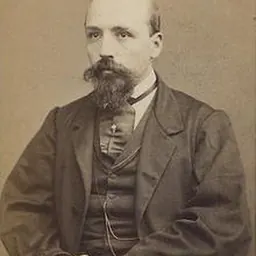
Lived 1868 – 1916 (aged 47–48). Shukri al-Asali was a lawyer, politician, journal editor and journalist.
Shukri al-Asali (; 1868 – May 6, 1916) was a prominent Syrian politician, nationalist leader, and senior inspector in the Ottoman government, in addition to being a ranking member of the Council of Notables. He served in the Ottoman parliament from 1911 until April 1912. He was executed with other Syrian nationalists by the Ottoman governor Jamal Pasha.
Early life Shukri was born in Damascus in 1868 and belonged to the wealthy, landowning al-Asali family. The Al-Asalis originated from the village of Yalda in the outskirts of Damascus, known as the Al-Charkatli family. They relocated to Damascus in the year 1063 AH (Islamic calendar), and they still have endowments in Yalda. In Shukri's time, the family was in the al-Midan quarter of Damascus. Shukri's father Ali Agha (died 1930) and grandfather Muhammad Agha (died 1873) were both landowners who served on the provincial council of Syria Vilayet (Ottoman province of Syria) and in the municipal council of Damascus. Shukri studied at the Syrian Protestant College in Beirut. He graduated in 1902 and began his service in the provincial bureaucracy of Syria. The large land sale raised ire not only in Palestine, but also in Damascus and Beirut, because of the high quality of the land and the Saladin-era fortress located within it. The constitution and parliament had been suspended by Sultan Abdul Hamid II in 1877 but was reinstated by the Committee of Union and Progress (CUP) which seized power in 1908; this permitted political activists such as al-Asali an opportunity to express their grievances and nationalist views.
He condemned the alleged reticence of the CUP to appoint Arabs to high-ranking administrative posts; no government ministers or provincial governors were Arabs and fifteen percent of high-ranking bureaucratic posts were filled by Arabs. He raised this matter backed by the aforementioned statistics in a parliamentary debate on 5 April 1911 and was lauded for it by activists in Damascus and Beirut and the Syrian community in Cairo. The Syrian intellectual Abd al-Rahman Shahbandar stated that al-Asali had done away with the image of meek Arab parliamentarians who simply stood by state policies without a voice of their own. Al-Asali asserted that Jews moving to Palestine were adopting Ottoman citizenship whilst maintaining the citizenship of their countries of origin which proved useful in case of legal troubles. He further accused the CUP of brutality in its suppression of popular disturbances in the Hauran and al-Karak and for failing to prevent the Italian invasion of Libya.
Al-Asali's parliamentary activism effectively galvanized Syrian-Arab opposition to the CUP.
Al-Asali had become an early member of the secretive Arab Renaissance Society, Following his defeat, al-Asali founded and became the editor of the ardently Arabist Al Qabas newspaper which first appeared in 1913 and called for greater autonomy for the Arabic-speaking provinces of the empire. Instead, al-Asali advocated that the citizens of the non-Turkish provinces, such as Syria, reserved the right to culturally express themselves on their own terms and in their native language. The governor of Syria at the time, Jamal Pasha, stated his wish that al-Asali and other notables arrested “would one day repent”, he allowed the Damascus military tribunal to continue their proceeding despite the absence of any evidence. His nephew, Sabri al-Asali, later became a three-time prime minister of a post-independent Syria during the 1950s.
Don’t just read it —
keep it.
Full-length biographies made to live with: read them, listen on the way to work, watch them tonight.
- E-book
- Audio
- Video
Instant download · yours to keep · every purchase keeps this site free
Important facts
Related people
Same field, nearest in time

Contemporaries
People whose lives overlapped Shukri al-Asali's




Frequently asked questions
Who was Shukri al-Asali?
Syrian nationalist politician
When was Shukri al-Asali born?
Shukri al-Asali was born in 1868 in Damascus.
When did Shukri al-Asali die?
Shukri al-Asali died on 6 May 1916 in Damascus.
What was Shukri al-Asali's occupation?
Shukri al-Asali was a lawyer, politician, journal editor and journalist.
Sources & further reading
Cite this page
APA: Biography.guide. (2026). Shukri al-Asali. https://biography.guide/shukri-al-asali/
MLA: "Shukri al-Asali." Biography.guide, https://biography.guide/shukri-al-asali/.
Chicago: "Shukri al-Asali." Biography.guide. https://biography.guide/shukri-al-asali/.
Data last updated: 2026-09-22 · Spot an error? Report a correction.
Page generated 2026-09-27 05:26 UTC