
About Shouqian Tang
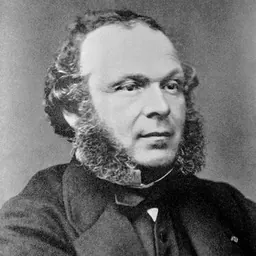
Lived 1856 – 1917 (aged 60). Shouqian Tang was a Chinese entrepreneur, politician, beamter and scholar.
Tang Shouqian (July 3, 1856 — June 6, 1917), courtesy name Zhexian (also written Zhexian), commonly known as Tang Zhe Lao, was a native of Tianle Township, Shanyin County, Zhejiang Province (present-day Xiaoshan District, Hangzhou), with ancestral origins in (present-day Fuzhou).
In April 1890, the sixteenth year of the Guangxu reign, Tang Shouqian published Dangerous Words (Wei Yan). In this work, he advocated relocating the capital to Chang'an, establishing a parliament, abolishing the Eight Banners, and building railways. The work was warmly received by society, went through multiple printings, and was said by contemporaries to compare favourably with Tang Zhen and Feng Guifen; Weng Tonghe also recommended the book to the Guangxu Emperor. That same year, he left Zhang Yao's service in Shandong and travelled north to sit the metropolitan examinations; after failing, he went to Shanghai and led a group of examination candidates in studying statecraft. In 1892, the eighteenth year of the Guangxu reign, he passed the imperial examinations and was selected as a Hanlin Academy Shujishi. After three years, his term expired; he was initially appointed as magistrate of Xiangning County, Shanxi, but requested a transfer closer to home to care for his parents and was reassigned to Qingyang County, Anhui in the neighbouring province. In July, the Zhejiang Railway Company was established, with Tang Shouqian as company director-general; after receiving approval from the Qing government's Ministry of Commerce and Agriculture, the imperial court issued an edict ordering Sheng Xuanhuai to recover the Su-Hang-Yong Railway rights that had already been sold—but Sheng Xuanhuai outwardly complied while inwardly resisting. In August, Tang Shouqian joined Zhang Jian, Xia Zengyou, Zhang Yuanji, and others in mobilising the Shanghai Chamber of Commerce to call for a boycott of American goods. In 1906, the Zhejiang Railway Company began constructing the Su-Hang-Yong Railway, but even as construction was underway, the Qing government, under British pressure, again sold the railway rights—using the pretext of borrowing from Britain to loan funds to the Zhejiang Railway Company, while in fact attempting to pledge the self-financed Zhejiang railway to Britain. Tang Shouqian and all staff of the Zhejiang Railway Company were unable to accept this, and organised the "Zhejiang Citizens' Loan Rejection Association" to oppose Qing government interference in the Zhejiang Railway. In 1907, Foreign Ministry official Wang Daxie proposed separating the borrowing and construction matters, suggesting maintaining the Zhejiang Railway construction programme while changing the funding source from self-raised capital to a British loan. The Zhejiang Railway Company voted to organise a loan rejection association in resistance; revolutionary party members also participated and organised suicide squads, and the situation in Jiangsu and Zhejiang took on the character of a rebellion. As the completion of the Shanghai-Hangzhou Railway drew near, Tang Shouqian and Chen Sanli prepared a Chinese merchant-operated railway company and appealed for the southeastern provinces to jointly build railways, travelling to Shantou and Guangzhou to promote the idea. In 1908, the Qing government appointed the rights-selling Sheng Xuanhuai as head of the Ministry of Posts and Communications; Sheng issued orders to ban the loan rejection association, secretly moved troops to attempt to suppress the Zhejiang railway agitation, forced the Zhejiang and Jiangsu railways to accept the loans, and simultaneously established the Shanghai-Hangzhou-Ningbo Railway Bureau to try to marginalise the Zhejiang and Jiangsu railway companies. In response to the court's repeated attempts to impose loans, Tang Shouqian sent a public telegram in the name of the Zhejiang Railway Company expressing opposition, and directly attacked Wang Daxie, Sheng Xuanhuai, and Yuan Shikai behind them, opposing the Qing court's employment of these men. The Qing government viewed him as a thorn in its side, appointing Tang Shouqian as Provincial Judge of Yunnan and Superintendent of Education of Jiangxi in attempts to remove him from the Zhejiang Railway, but Tang Shouqian consistently refused. As the Railway Protection Movement spread across the country, more and more officials, like Tang Shouqian, resisted the Qing government's sale of rights; Shanghai's Min Hu Ribao declared "China has ever more Tang Zhexians", and Tang Shouqian had become an iconic figure of the national Railway Protection Movement.
On 10 October 1911, the Wuchang uprising broke out. The following day Tang Shouqian arrived in Wuchang; witnessing the rising response from across the country, he set out on 13 October to return to Shanghai, and on 22 October made contact with revolutionary party members to prepare a provisional government. On 29 October, in an attempt to stabilise the situation in Zhejiang, the Qing government invited Tang Shouqian to take general charge of the Zhejiang militia forces; Tang Shouqian immediately consulted with the revolutionary party members in Hangzhou, including Ma Xulun, to establish a militia bureau in coordination with the Wuchang uprising, but this was aborted when Zengyu, the Zhejiang Governor, intercepted the communications. On 2 November, the revolutionary party in Hangzhou invited Tang Shouqian to Shanghai to ask him to serve as Military Governor of Zhejiang, hoping to inspire a larger national response. On 5 November, Hangzhou was liberated; early that morning, Shen Junru, Chen Fuxu, and Ma Xulun sent a telegram urging Tang Shouqian to return to Hangzhou quickly. Tang arrived at the Zhejiang Advisory Council venue in Hangzhou in the afternoon, shortly after 3 o'clock, and was immediately elected Military Governor of Zhejiang. At the time, the revolutionary army was negotiating with the Qing garrison troops of the ; the Hangzhou Bannermen commander Guilin, who was serving as negotiating representative, had been an ally of Tang Shouqian during the Zhejiang railway dispute, and thus as soon as Tang appeared both sides reached an agreement to cease hostilities. However, the following day the revolutionary party used the Military Governor's Office as cover to execute Guilin. Tang Shouqian expressed dissatisfaction with these self-aggrandising and reckless revolutionary party members, submitted his resignation, but was persuaded to remain in office.
Tang Shouqian worried that "the great nation being newly founded, the coming days would be full of difficulties, while powerful neighbours to the east and west were eyeing it like tigers", fearing that imperialism would take advantage of the situation to carve up China; he therefore vigorously promoted the establishment of a national republican government, sending multiple telegrams to revolutionary leaders in the various provinces. On 11 November, Tang Shouqian invited Jiangsu Military Governor Cheng Dequan and Shanghai Military Governor Chen Qimei to jointly send a telegram to the whole nation proposing a conference of representatives from all provinces. On 9 November, Li Yuanhong telegraphed all provinces calling for national representatives to come to Hubei to organise a government; Tang Shouqian thus called a meeting on 16 November proposing that he himself go to Wuchang to determine national policy, but the meeting later resolved to send Zhang Yuanji instead. On 20 November, the joint conference of provincial representatives in Shanghai resolved to recognise the Wuchang government as the central government; Li Yuanhong also telegraphed the whole nation that day announcing cabinet appointments, and Tang Shouqian recommended Cheng Dequan as Minister of Internal Affairs, Zhang Taiyan as Minister of Education, Zhang Jian as Minister of Finance, Zhan Tianyou as Minister of Communications, Huang Xing as Minister of Military Affairs, and Wang Jingwei as Minister of Justice. On 2 December, the Jiangsu-Zhejiang allied forces captured Nanjing. The following day, Tang Shouqian arrived in Shanghai and met with representatives from Jiangsu, Shanghai, and Fujian—who had arrived earlier—to discuss establishing a provisional government, proposing to establish it in Nanjing; on the same day, the Wuchang side, under pressure from the fall of Hankou to Yuan Shikai, also resolved to make Nanjing the capital. On 4 December, the provincial representatives in Shanghai resolved to elect a Grand Marshal; the Shanghai and Jiangsu representatives strongly advocated Huang Xing as Grand Marshal and Li Yuanhong as Vice-Marshal. Tang Shouqian, dissatisfied that the Shanghai side was proceeding with elections behind Li Yuanhong's back after it had already been decided to recognise Wuchang as the central government, made an excuse to leave the meeting. On 17 December, Shanghai and Wuchang representatives gathered in Nanjing and elected Li Yuanhong as Grand Marshal and Huang Xing as Vice-Marshal. That same year, Yuan Shikai declared himself emperor, and Tang Shouqian sent a public telegram in opposition. In January 1917, public assemblies were held across Zhejiang society protesting against the Beiyang government's dispatch of the warlord Yang Shande to govern Zhejiang; the organisers of the gathering used Tang Shouqian's name without authorisation as one of the conveners. Tang Shouqian issued a statement praising his fellow townspeople's love for their homeland but firmly demanded that his name be removed from the assembly to demonstrate his resolve to stay out of politics. On 6 June, he died of illness in Linpu, Shaoxing, leaving as his last words: "Competing for profit is the mark of a petty man; coveting fame is no mark of a worthy man either." After his death, the Beiyang government allocated 2,000 yuan for funeral arrangements; he was buried at Yangshan Ban, Zhisu Township, Tonglu County, Zhejiang (present-day Yangshan Fan Village, Hengcun Town, Tonglu County, Hangzhou).
Achievements Tang Shouqian was an early thinker of the Reform Movement, and was among the earliest thinkers in the late Qing reform movement to propose relocating the capital. In Dangerous Words, he elaborated on the threats posed by Russia and Japan on China's frontiers and maritime borders, pinning his hopes on using the relocation of the capital to reshape the political landscape dominated by conservative officials and create an environment for further reforms. In Dangerous Words, he also attacked the low efficiency of Self-Strengthening Movement enterprises such as the China Merchants' Steam Navigation Company, proposing replacing government-supervised merchant enterprises with privately owned enterprises in the economic sphere, and advocating the adoption of Western systems of government bonds, free trade, and intellectual property protection. Tang Shouqian believed that railways were the lifeblood of commerce, that railways were beneficial for consolidating national defence, that they should not be built by foreigners, and that China should build a national railway network as quickly as possible—ideas he put into practice during the Zhejiang railway dispute. Tang Shouqian also believed that education was the foundation of reform; criticising the imperial examination system for producing talents that lacked practical applicability and specific skills, he argued for reforming the education system to cultivate specialist talents and establish a modern educational system.
Beyond the late Qing reform movement and constitutionalist movement, Tang Shouqian also conducted profound research in the field of historical scholarship. From his youth, Tang Shouqian spent twenty years studying the Wenxian Tongkao, the Xu Wenxian Tongkao, and the Qing Chao Wenxian Tongkao—the three Tongkao works totalling 898 juan and approximately 12.94 million characters. Since these books were not available in his hometown, Tang Shouqian had to travel to Hangzhou to borrow and transcribe them, studying changes in Chinese institutions from the Han dynasty onwards as a reference for contemporary reform; he compiled and published the Santong Kao Jiyao. Yu Yue, Liu Jinzao, and others greatly praised this work, and contemporaries ranked Tang Shouqian alongside the historian Xia Zengyou as the "Two Pillars of Zhejiang". In 1901, Tang Shouqian published Xianfa Xinyi (New Meaning of the Constitution), drawing on his historical scholarship to unearth historical sources and propagating the ideas that "the constitution has always existed in China" and "it cannot be said that in ancient China there was not a single person who knew of constitutions, nor a single word spoken about them", thereby supporting the rising constitutionalist movement. In his later years, Tang Shouqian entrusted his son-in-law Ma Yifu with compiling the works of Zhu Zhiyu (Zhu Shunshui), jointly editing and publishing the Shunshui Yishu (Posthumous Works of Shunshui) (now renamed Zhu Shunshui Quanji, the Complete Works of Zhu Shunshui).
Family
Source:
Don’t just read it —
keep it.
Full-length biographies made to live with: read them, listen on the way to work, watch them tonight.
- E-book
- Audio
- Video
Instant download · yours to keep · every purchase keeps this site free
Important facts
People in Shouqian Tang's life
Named in this biography and alive at the same time




Related people
Same field, nearest in time


Contemporaries
People whose lives overlapped Shouqian Tang's




Frequently asked questions
Who was Shouqian Tang?
Republic of China person CBDB = 63571
When was Shouqian Tang born?
Shouqian Tang was born on 3 July 1856 in Qing dynasty.
When did Shouqian Tang die?
Shouqian Tang died on 6 June 1917.
What was Shouqian Tang's occupation?
Shouqian Tang was an entrepreneur, politician, beamter and scholar.
What nationality was Shouqian Tang?
Shouqian Tang was Chinese.
Sources & further reading
Cite this page
APA: Biography.guide. (2026). Shouqian Tang. https://biography.guide/shouqian-tang/
MLA: "Shouqian Tang." Biography.guide, https://biography.guide/shouqian-tang/.
Chicago: "Shouqian Tang." Biography.guide. https://biography.guide/shouqian-tang/.
Data last updated: 2026-09-20 · Spot an error? Report a correction.
Page generated 2026-09-27 05:28 UTC