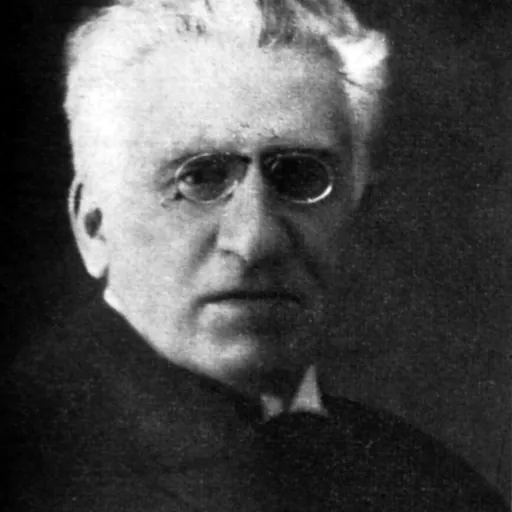
About Shneor Zalman Bychowski
Lived 1865 – 1934 (aged 69). Shneor Zalman Bychowski was a Polish psychiatrist and neurologist.
Zygmunt Bychowski (also known as Szneur Zalman Bychowski; ; 18 August 1865 – 13 September 1934) was a Polish Jewish neurologist, social activist, and politician. He served as a magistrate of the City of Warsaw (1923–1934) and was a Jewish and Zionist leader in Poland.
Biography He was born in Korzec (now Korets, Ukraine) in Volhynia as the son of Samuel (Szmul) and Fejga, a wealthy hasidic family. His father was a prominent Talmudist.
Until the age of 17, Bychowski received a traditional Orthodox religious education, attending a cheder, a Talmud Torah, and a yeshiva in Korzec. After passing his matriculation exams, he went to Austria to study natural sciences and philosophy at the University of Vienna. He later returned to Warsaw to study medicine at the Imperial University of Warsaw. Upon his return, as a member of a Zionist association, he was arrested at his home on Grzybowska Street in Warsaw and imprisoned for a long period in the jail at the City Hall.
From 1892, he worked at the Hospital of the Transfiguration in the Praga district of Warsaw in the ward of Jan Raum. In 1912, he was dismissed from his position due to his Jewish background. During World War I, from December 1916 to April 1918, he worked at the Traumatology Institute in Moscow.
He died of esophageal cancer in 1934. He was buried on 16 September at the Jewish Cemetery on Okopowa Street. After completing his studies, he traveled to Palestine for a time with Ignacy Bernstein. He corresponded with Theodor Herzl and participated in the First Zionist Congress in Basel in 1897 and many subsequent congresses; he was a member of the organizing committee for the Fifth Zionist Congress and the committee for cultural affairs. In 1905, he was imprisoned in Russia for his Zionist activities.
In the early 1920s, he was a member of the Party Council of the Zionist Organization in Poland. He was a candidate and deputy for the Legislative Sejm on the list of the Temporary Jewish National Council in Warsaw. He served as a member of the Central Election Committee of Et Livnot for the 13th Zionist Congress in Karlsbad in 1923 and was a member of the central committee of HaHalutz. In 1925, he was a member of the Organizing Committee for the Palestinian Exhibition in Warsaw.
From 1923 to 1934, Bychowski served as a magistrate (assessor) of the Warsaw City Council, where he headed the hospital and public health department as well as the supply department. He sat on the Council of the Jewish Religious Community (1924–1931) and the first board of the Committee for the Promotion of Judaic Sciences (1925), and was a research fellow at the Institute for Judaic Sciences in Warsaw. He was also a member of the Warsaw lodge of B'nai B'rith.
For many years, he chaired the Jewish Anti-Tuberculosis Society "Brijus-Zdrowie." He was a member of the editorial committees for Neurologia Polska (Polish Neurology) and Warszawskie Czasopismo Lekarskie (Warsaw Medical Journal). He collaborated with Jewish journals, including Nasz Przegląd, the weekly Ewa, and the bi-weekly Cjonistisze Welt. He served as vice president of the Warsaw Neurological Society. He was a board and scientific council member of the Association of Physicians of the Republic of Poland and a board member of the Society for the Protection of the Health of the Jewish Population in Poland (TOZ). He was a co-founder and board member of the Society for the Study of the Physical and Mental State of Jews. Furthermore, he served as a curator for the Care Home for Abandoned Jewish Children and was founder and first President of the Jewish Gymnastic and Sports Society "Maccabi" in Warsaw.
Scientific contributions Bychowski was the author of approximately 100 works in Polish, German, French, and Russian. On his initiative, the first neurosurgical operations in Poland were conducted, including the Anton-Bramann operation. Bychowski was the first in Poland to qualify a patient for surgery on a pituitary tumor.
He authored numerous studies on epilepsy and endocrinology. He is cited as an author of works describing a neurological sign later known as Hoover's sign. Another sign he described, present in hemiparesis, is known as the Grasset-Bychowski sign.
Works
O chorobie Parkinson’a (On Parkinson's Disease). Medycyna 22 (1894) Przyczynek do kazuistyki uchyłków przełyku (diverticulum oesophagi) (Contribution to the Casuistry of Esophageal Diverticula). Medycyna 23 (1895)
Przyczynek do patogenezy padaczki (Contribution to the Pathogenesis of Epilepsy). Medycyna, 1895 Przypadek pląsawicy miękkiej czyli paralitycznej (A Case of Chorea Mollis or Paralytic Chorea). Medycyna, 1895 Przypadek myxoedematu leczonego tyreoidyną oraz kilka uwag o myxoedemacie w ogóle (A Case of Myxedema Treated with Thyroidin). Przegląd Chirurgiczny, 1896
Leczenie w naszych szpitalach (Treatment in Our Hospitals). Zdrowie, 1901
Ein "Archiv für Zionismus" : (Vorschlag für die Mitglieder der Cultur-Commission). Die Welt 21, 1902 Czy bywa nierówność źrenic u ludzi zupełnie zdrowych? (Is There Pupil Inequality in Completely Healthy People?). Gazeta Lekarska, 1902 Ueber Hypotonie und Hypertonie bei einer und derselben Kranken. Neurologiches Centralblatt 23, pp. 786–792, 1904 O rozpoznaniu i operacyjnem leczeniu nowotworów przysadki mózgowej (On the Diagnosis and Surgical Treatment of Brain Pituitary Tumors). Medycyna 44, p. 628, 1909
Dzieci kaleki i opieka nad niemi (Crippled Children and Their Care). Warsaw, 1914
25-lecie objawu Babińskiego (25 Years of the Babinski Sign). Neurologia Polska 6, p. 169, 1922 Higiena u Żydów (Hygiene among Jews). Miesięcznik Żydowski 2, pp. 191-192, 1931 Dr Samuel Goldflam, lekarz i uczony (Dr. Samuel Goldflam, Physician and Scholar), 1933 Ubój rytualny z punktu widzenia humanitarnego i sanitarnego (Ritual Slaughter from a Humanitarian and Sanitary Point of View). Warsaw: Monolit, 1936
Don’t just read it —
keep it.
Full-length biographies made to live with: read them, listen on the way to work, watch them tonight.
- E-book
- Audio
- Video
Instant download · yours to keep · every purchase keeps this site free
Important facts
People in Shneor Zalman Bychowski's life
Named in this biography and alive at the same time

Related people
Same field, nearest in time



Contemporaries
People whose lives overlapped Shneor Zalman Bychowski's



Frequently asked questions
Who was Shneor Zalman Bychowski?
Polish physician, neurologist (1865–1934)
When was Shneor Zalman Bychowski born?
Shneor Zalman Bychowski was born on 18 August 1865 in Korets.
When did Shneor Zalman Bychowski die?
Shneor Zalman Bychowski died on 13 September 1934 in Warsaw.
What was Shneor Zalman Bychowski's occupation?
Shneor Zalman Bychowski was a psychiatrist and neurologist.
What nationality was Shneor Zalman Bychowski?
Shneor Zalman Bychowski was Polish.
Sources & further reading
· Wikipedia: Shneor Zalman Bychowski
· DBpedia: Szneur Zalman Bychowski
Cite this page
APA: Biography.guide. (2026). Shneor Zalman Bychowski. https://biography.guide/shneor-zalman-bychowski/
MLA: "Shneor Zalman Bychowski." Biography.guide, https://biography.guide/shneor-zalman-bychowski/.
Chicago: "Shneor Zalman Bychowski." Biography.guide. https://biography.guide/shneor-zalman-bychowski/.
Data last updated: 2026-09-22 · Spot an error? Report a correction.
Portrait: Wikimedia Commons · author & licence
Page generated 2026-09-27 05:03 UTC