
About Shmuel Eisenstadt
Lived 1923 – 2010 (aged 86). Shmuel Eisenstadt was a Polish and Israeli sociologist and university teacher.
Shmuel Noah Eisenstadt (; 10 September 1923 – 2 September 2010) was an Israeli sociologist and writer. He was particularly known as a "sociologist of youth," an analyst of civilizations, and a theorist of "multiple modernities." He was the named chair Rose Isaacs profesor of sociology at the Hebrew University in Jerusalem from 1949 to his retirement emeritus in 1990, after which he continued to write and teach. He received awards including the Israel Prize, the Balzan Prize (1988), the Humboldt Research Award (2002), and the Holberg Prize (2006).
Early life and education Eisenstadt was born in 1923 in Warsaw, Poland. In the early 1930s, his widowed mother took him to Jerusalem and he was educated in Palestine from the age of 12. In 1940, Eisenstadt studied at the Hebrew University of Jerusalem where he received his M.A. (1944) and Ph.D. (1947) in sociology under the advisorship of Martin Buber.
Career After the 1947–48 school year, Eisenstadt returned to the Hebrew University of Jerusalem to be an assistant lecturer. Eisenstadt researched broad themes of social change, modernities and civilizations.
In honor of Eisenstadt's contributions to sociology Erik Cohen, Moshe Lissak, and Uri Almagor compiled Comparative Social Dynamics: Essays in Honor of S.N Eisenstadt. The contributions of this book were written by Eisenstadt's former students and colleagues at the Department of Sociology and Social Anthropology of the Hebrew University of Jerusalem. The articles relate to Eisenstadt's major themes in the study of cultures, modernization, and social and political change. Eisenstadt's work touches many different fields of sociology, time periods, and cultures and the editors felt the leading concept of Eisenstadt's work was social dynamics.
Honors The McIver Prize of the American Sociological Association in 1964; The Rothschild Prize in Social Sciences in 1970; The Israel Prize in social sciences in 1973; The International Balzan Prize in 1988; The Max Planck Award for Social Sciences in 1994; The Amalfi Prize for Sociology and Social Sciences in 2001; The Humboldt Research Award in 2002; The EMET Prize in Sociology in 2005; The Holberg International Memorial Prize in 2006 from the Norwegian Parliament. This prize awarded Eisenstadt for outstanding scholarly work in the fields of the arts and humanities, social sciences, law and theology; An honorary doctorate from Warsaw University in 2005; An Honorary Degree from Harvard University. Eisenstadt was a member of: Israeli Academy of Sciences, Honorary Foreign Members of the American Philosophical Society (1973), Foreign Associates of the National Academy of Sciences in the U.S., Honorary Foreign Members at the American Academy of Arts and Sciences, Honorary Foreign Research Fellows at the Institute of Sociology of the Chinese Academy of Social Sciences, Honorary Fellows of the London School of Economics and Political Sciences.
In 2010 a festschrift, Collective Identities, States and Globalization; Essays in honour of S.N. Eisenstadt was published in Eisenstadt's honor.
Selected works The Political System of Empires (1963) Modernization, Protest, and Change (1966) Revolution and the Transformation of Societies (1978) Tradition, Wandel und Modernität (1979) Patrons, Clients and Friends: Interpersonal Relations and the Structure of Trust in Society, with Luis Roniger (1984) European Civilization in a Comparative Perspective (1987) Die Transformation der israelischen Gesellschaft (1987) Kulturen der Achsenzeit (Hrsg.), five volumes (1987 and 1992) Japanese Civilization – A Comparative View (1996) Die Antinomien der Moderne Die Vielfalt der Moderne Theorie und Moderne (2006)
Don’t just read it —
keep it.
Full-length biographies made to live with: read them, listen on the way to work, watch them tonight.
- E-book
- Audio
- Video
Instant download · yours to keep · every purchase keeps this site free
Important facts
People in Shmuel Eisenstadt's life
Named in this biography and alive at the same time

Related people
Same field, nearest in time

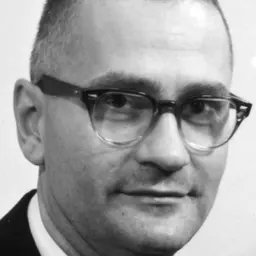




Contemporaries
People whose lives overlapped Shmuel Eisenstadt's
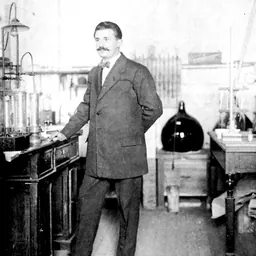
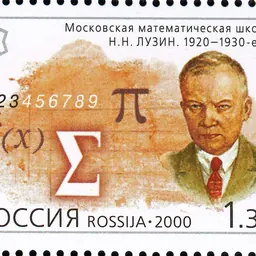
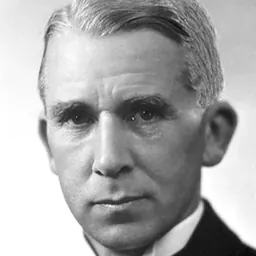
Frequently asked questions
Who was Shmuel Eisenstadt?
Israeli sociologist (1923–2010)
When was Shmuel Eisenstadt born?
Shmuel Eisenstadt was born on 10 September 1923 in Warsaw.
When did Shmuel Eisenstadt die?
Shmuel Eisenstadt died on 2 September 2010 in Jerusalem.
What was Shmuel Eisenstadt's occupation?
Shmuel Eisenstadt was a sociologist and university teacher.
What nationality was Shmuel Eisenstadt?
Shmuel Eisenstadt was Polish and Israeli.
Sources & further reading
· Wikipedia: Shmuel Eisenstadt
Cite this page
APA: Biography.guide. (2026). Shmuel Eisenstadt. https://biography.guide/shmuel-eisenstadt/
MLA: "Shmuel Eisenstadt." Biography.guide, https://biography.guide/shmuel-eisenstadt/.
Chicago: "Shmuel Eisenstadt." Biography.guide. https://biography.guide/shmuel-eisenstadt/.
Data last updated: 2026-09-20 · Spot an error? Report a correction.
Page generated 2026-09-27 05:31 UTC