
About Shlomo Moussaieff
Lived 1852 – 1922 (aged 69–70). Shlomo Moussaieff was a Turkish rabbi, known for Bukharim.
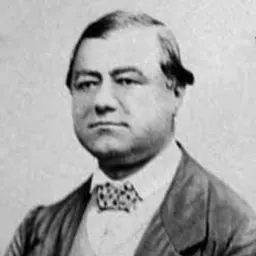
Shlomo Moussaieff (; 1852 – 1922) was a rabbi and gemstone trader, from Bukhara, in what is today Uzbekistan. He was one of the founders of the Bukharim neighborhood in Jerusalem.
Early life Moussaieff was born in the city of Bukhara in 1852, to a family of wealthy Bukharan traders, who had been trading in Jerusalem for five generations. Bukhara is part of the old Silk Road in Central Asia, located in what is now Uzbekistan, and Moussaieff's ancestors had grown rich on precious stones in the caravan trade.
As a child, he learned under Rabbi David Chafin and Joshua Shushan. Joining him in his studies were Yosef Kohjinoff, Rafael Potihaloff, Moshe Cheh Yizhakoff, Avraham Aminoff Talmudi, and Aba Shimon Gaon. He had an honorary title of rabbi. As a merchant he engaged in the tea trade and real estate, and is said to have started one of the first banks in Bukhara. In 1888, motivated by religious convictions, he made aliyah to Israel and was one of several Bukharan Jews responsible for founding the new Jerusalem neighborhood of Rehovot HaBukharim (later shortened to Bukharim) in 1891. He built a complex of apartments for use by 25 poor families, which included four synagogues. Today the Moussaieff complex of synagogues, which now numbers eight synagogues, is in continuous use.
In the prayer book which he authored, Hukat Olam, Moussaieff described his motivation in moving to Jerusalem and his religious conviction:
"I, Shlomo Moussaieff, native of Bukhara.. My spirit moved me to leave the land of my birth, in which I grew up, and to ascend to the Holy Land, the land in which our ancestors dwelled in happiness, the land whose memory passes before us ten times each day in our prayers...We do not have any festive occasion without a memorial to Jerusalem....There is no doubt that I am required to thank God for all the good he has done for me. He has brought me across the sea three times. He has kept me alive, and has brought me to the place of my desire for the good life and peace to see the pleasantness of God and to visit his sanctuary. If the temple was standing, I would bring a sacrifice of thanksgiving. Now because of our sins there is no temple and no priest to bring the sacrifice. Therefore I had the idea to help the many and publish these prayer books for the weekdays and Sabbath and holidays. Prayer is a substitute for sacrifice. Prayer to God is what connects Israel to their Father in Heaven, although the Israelite nation has been vanquished in exile for more than eighteen hundred years".
From the late 19th century until World War I, the Bukharim neighborhood was one of the most affluent sections of the city, populated by Bukharan Jewish merchants and religious scholars supported primarily by various trading activities such as cotton, gemstones, and tea in Central Asia and Russia. After World War I and the 1917 Bolshevik Revolution, however, the neighborhood fell into decline as overseas sources of income were cut off and residents were left with just their homes in Jerusalem, forcing them to subdivide and rent out rooms to bring in income. Later Jews from Persia and Iran joined the mix, and overcrowding became rife. From being lauded as one of the most beautiful neighborhoods of Jerusalem, Bukharim earned the opposite sobriquet, of being the poorest neighborhood of Jerusalem. The population profile has also changed: today most residents are Haredi. Maurice, Rehavia (who was named after the neighborhood Moussaieff helped found, Rehovot HaBukharim, Sarah, and Bat Sheva.
Moussaieff's sons mostly moved abroad, to France, England and then to the United States. They primarily engaged in trade in pearls and precious stones. His son Sam (Shlomo), a millionaire and Judaica mogul, was offered by Haim Schneebalg about 90 pages of the Aleppo Codex, but Moussaieff was greedy and tried to have a better price.
Death Moussaieff was devoutly religious and committed to living in the Land of Israel. On his deathbed, he stipulated in his oral will that only those of his sons who lived in the Land of Israel would receive his inheritance. Much of his property in the Bukharim quarter was declared a "religious endowment" (hekdesh in Hebrew and waqf in Arabic), which could not be sold for perpetuity. Till this day, proceeds from rentals of his property are received by the direct male descendants of Moussaieff who live in Israel.
Moussaieff died at the age of 70 in 1922. He and several of his sons are buried on the Mount of Olives in Jerusalem.
Don’t just read it —
keep it.
Full-length biographies made to live with: read them, listen on the way to work, watch them tonight.
- E-book
- Audio
- Video
Instant download · yours to keep · every purchase keeps this site free
Important facts
Related people
Same field, nearest in time
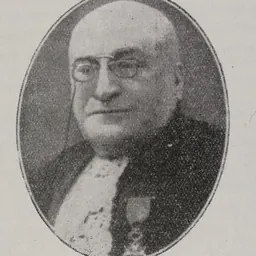
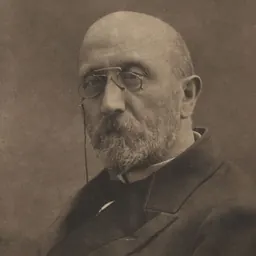
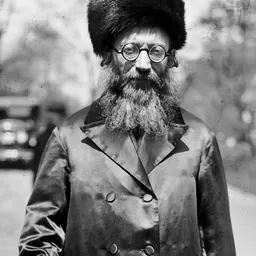

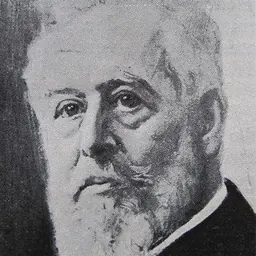
Contemporaries
People whose lives overlapped Shlomo Moussaieff's


Frequently asked questions
Who was Shlomo Moussaieff?
Ottoman rabbi
When was Shlomo Moussaieff born?
Shlomo Moussaieff was born on 14 January 1852 in Bukhara.
When did Shlomo Moussaieff die?
Shlomo Moussaieff died in 1922 in Jerusalem.
What was Shlomo Moussaieff's occupation?
Shlomo Moussaieff was a rabbi.
What was Shlomo Moussaieff known for?
Shlomo Moussaieff was known for Bukharim.
What nationality was Shlomo Moussaieff?
Shlomo Moussaieff was Turkish.
Sources & further reading
· Wikipedia: Shlomo Moussaieff
· DBpedia: Shlomo Moussaieff (rabbi)
Cite this page
APA: Biography.guide. (2026). Shlomo Moussaieff. https://biography.guide/shlomo-moussaieff-rabbi/
MLA: "Shlomo Moussaieff." Biography.guide, https://biography.guide/shlomo-moussaieff-rabbi/.
Chicago: "Shlomo Moussaieff." Biography.guide. https://biography.guide/shlomo-moussaieff-rabbi/.
Data last updated: 2026-09-22 · Spot an error? Report a correction.
Page generated 2026-09-27 05:24 UTC