
About Shivarudra Balayogi
Born 1954. Shivarudra Balayogi is an Indian writer and yogi.
Shivarudra Balayogi Maharaj (born 20 September 1954), born Srinivas (Seenu) Dikshitar in Kolar in the South Indian state of Karnataka, is a self realised Yogi and a direct disciple of Shivabalayogi.
After meeting his Guru at the age of sixteen, Seenu performed 20 years of vigorous service and meditation under Shivabalayogi's guidance at his Dehradun ashram in the foothills of the Himalayas. Soon after the death of his Guru in 1994, Srinivas entered a stage known as tapas—intense and unbroken dhyana (meditation) in which the mind is kept in perfect thoughtlessness. By performing tapas for around 20 hours a day continuously for five years, he achieved self-realization.
Hinduism Today has written that, "Thousands have been inspired by his influence" and "When the famous Sri Sri Sri Shivabalayogi Maharaj passed away in 1994, meditators around the world wondered who would take his place." Shivarudra Balayogi is counted as one of the few disciples who completed at least five years of tapas, and is revered by many followers as the successor of his Guru's legacy. In his book on Indian spirituality, renowned Vedanta scholar Adwaita P. Ganguly writes, "Baba Shivarudra Balayogi is the embodiment of gentleness, compassion and service to humanity. He is also resolute and immovable as Silence itself".
Life
Beginning Shivarudra Balayogi was born Srinivas Dikshitar on 20 September 1954 to a pious Brahmin family in Kolar in the South Indian state of Karnataka. His father, Shankara Dikshitar, was a doctor who dedicated much of his time to serving the poor without charge. Seenu drew inspiration from a young age from his mother's example of fervent devotion and inner strength.
Awakening Srinivas had begun to experience an acute spiritual hunger by the age of five. At the age of six or seven, he became mesmerised upon hearing his sister singing Bhaja Govindam, composed by the great Yogi-teacher Adi Shankaracharya.
Taking Swamiji's darshan the next day, Seenu fell in love with his Guru at first sight, and his mind became totally concentrated on the form of Shivabalayogi. Shivabalayogi sent Seenu to manage his ashram in Dehradun, in the foothills of the Himalayas, and trained him in a close Guru-disciple relationship. Thinking that this might be an illusion created by his grieving mind, Seenu ignored the vision. On 10 November 1994, after the evening arathi (salute with lights ceremony), Seenu witnessed the shining figure of Sri Shivabalayogi manifesting from the photo kept on the dais in the darshan hall, and leading him into a neighbouring room:
Deep meditation continued unbroken for two or three days.
In the fourth year of tapas, the name "Shiva Rudra Balayogi" was bestowed upon him by Shri Shivabalayogi.
Shivabalayogi then directed his Yogi-disciple, "After you come out of tapas, inspire the people of this world to practice this dhyana meditation and know themselves. Through this practice they can achieve total Peace." On 23 November 1999, Babaji emerged from his room as the Yogi, Shri Shivarudra Balayogi Maharaj.
Mission
As word of his tapas spread, spiritual seekers from various parts of the world sought Babaji out at his base in the Dehradun ashram, at the foothills of the Himalayas. He now travels the world at the invitation of devotees to continue Shri Shivabalayogi's mission, as directed by his Guru.
Teachings
The teachings of Shri Shivarudra Balayogi are difficult to define because they are based on his direct experience rather than any particular scripture or school of Indian philosophy. In practical terms, his teaching is based on the Jangama dhyana meditation technique, which was taught to him by his Guru Shri Shivabalayogi Maharaj. He also guides students on the bhakti marga (path of devotion) and karma marga (path of service), according to their temperament.
On meditation: "It is only a purifying process when you try to meditate. The mind is the tape which has acquired habits and brain acts as tape recorder. When you sit for meditation the mind gets applied (sucked) onto the brain because of its habits. Purifying process starts when the vasanas (impressions) are getting evaporated. Visions and sounds get created by a decodifying method from the brain. Then is the time you require enormous patience to allow it to happen. Then you should not analyze or judge what it is, good or bad just allow it to happen. Then only the mind can recede." On mind and brain: "The brain is in touch with the nervous system and the universe. Through its reflections, the mind, which is a spark of the Supreme Consciousness called the Self, comes into existence. The mind assumes everything that is reflected by the brain is real, recognizes and absorbs as an imprint, and starts wandering in the universe aimlessly – getting pampered, losing control, losing consciousness of the Self." On karma yoga: "When you are doing karma (any work), do it without trying to analyze or judge anything. Then your Mind would surrender to the Divine Guru and that action (all such work) can get converted into sadhana. Specifically if you are trying to repeat any name of the Divine Guru, just concentrate on the name (or japa or chant) and observe from where it is coming. Your mind gets absorbed there, converting such action (sadhana) into deeper and deeper sadhana. While you try to meditate also do the same. Allow the mind to get purified without trying to imagine what it is. When vision or any experience happens do not try to see whether it is good or bad, right or wrong. Remember either way the mind gets involved and is in existence always. If you simply watch and do not bother what it is, then the mind recedes. When it recedes it is going towards its original abode, the Divine, which is beyond all imaginations and explanations."
Don’t just read it —
keep it.
Full-length biographies made to live with: read them, listen on the way to work, watch them tonight.
- E-book
- Audio
- Video
Instant download · yours to keep · every purchase keeps this site free
Important facts
People in Shivarudra Balayogi's life
Named in this biography and alive at the same time

Related people
Same field, nearest in time


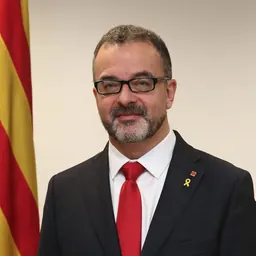
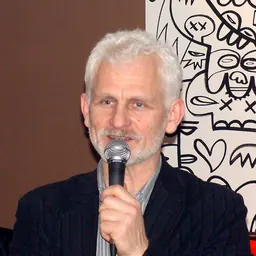
Contemporaries
People whose lives overlapped Shivarudra Balayogi's
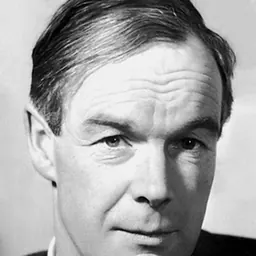



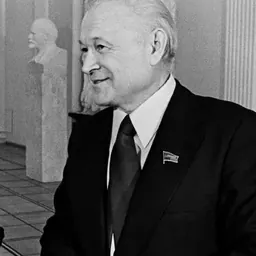
Frequently asked questions
Who is Shivarudra Balayogi?
Indian yogi
When was Shivarudra Balayogi born?
Shivarudra Balayogi was born on 20 September 1954.
What is Shivarudra Balayogi's occupation?
Shivarudra Balayogi is a writer and yogi.
What nationality is Shivarudra Balayogi?
Shivarudra Balayogi is Indian.
Sources & further reading
· Wikipedia: Shivarudra Balayogi
· DBpedia: Shivarudra Balayogi
Cite this page
APA: Biography.guide. (2026). Shivarudra Balayogi. https://biography.guide/shivarudra-balayogi/
MLA: "Shivarudra Balayogi." Biography.guide, https://biography.guide/shivarudra-balayogi/.
Chicago: "Shivarudra Balayogi." Biography.guide. https://biography.guide/shivarudra-balayogi/.
Data last updated: 2026-09-20 · Spot an error? Report a correction.
Page generated 2026-09-27 05:33 UTC