
About Shi Zhecun
Lived 1905 – 2003 (aged 97). Shi Zhecun was a Chinese translator, poet, writer, editor and essayist.
Shi Zhecun (; December 3, 1905 – November 19, 2003) was a Chinese essayist, poet, short story writer, and translator in Shanghai during the 1930s. He was known for his poetry and essays, but is most known for his modernist short stories exploring the psychological conditions of Shanghai urbanites (see New Sensationists). From the 1940s onwards, he translated western novels into Chinese and worked as a scholar of classical Chinese literature.
Early life and education Shi Zhecun was born in Zhejiang, but later he moved to Songjiang in Jiangsu following his father who was a teacher. He showed an early interest in poetry and started publishing his works from his youth. He studied English in Shanghai and a little French at Aurora university, which was founded by French Jesuits in 1903. It was there that he met several writers with whom he later founded the journal Xiandai.
Creative work and career Shi Zhecun was active on the Shanghai literary scene. He worked as the chief editor of Les Contemporains (Xiandai 现代 1932–1935). It was a monthly literary journal "which published a hundred translations from foreign literature (primarily U.S. and Japanese)". The journal introduced Chinese readers to trends in modern literature and art. It covered foreign and Chinese topics and promoted the works of Shi Zhecun's friends, such as Mu Shiying and Dai Wangshu.
Shi's short stories (about 70) were written between 1928 and 1937. They cover a range of topics, from absurdist ghost stories to gentler pieces on the strains faced by modern couples in Shanghai. His most famous short story is probably "An Evening of Spring Rain" (Meiyu zhi xi 梅雨之夕). His works set in Shanghai frequently deal with the inner lives of the protagonists as they are beset by irrational fears and desires.
In 1937, after the Japanese invasion of Shanghai, Shi Zhecun moved to Yunnan. He held university posts and translated novels by Arthur Schnitzler among others. He became a scholar on classical culture and did research on Tang dynasty poetry and stele inscriptions.
In 1947, he returned to Shanghai and began writing essays, and after the Cultural Revolution, his memoirs.
During the Chinese Cultural Revolution period, Shi Zhecun's works were banned because he was defined as a rightist writer (the second type of person who opposes the Communist Party and socialism). His works did not re-enter public's attention until 1980
His creative works were long considered politically suspect by the Chinese government because in 1957 he published the essay Talent and Morality and was classified as a rightist and subjected to persecution. From that time and onwards he bid farewell to literary creation and translation and turned to the study of classical literature and tablet inscriptions jobs. But there has been mounting interest since the 1980s due to the influx of modernist thoughts into China. His works have been republished in recent years.
He died on 19 November 2003 in Shanghai.
Shi Zhecun's writing style Modernism is a branch of literature that represents the new style and new kinds of expression, and Shi Zhecun, is one of the greatest Chinese representative authors of modernism . Under the historical background happened in 1919, which is the May Fourth Movement, anti-feudal and anti-old ideas became the main trend among the younger generations. During this period, more and more fictions about new thoughts or breaking the past were published. The General's Head (Jiangjun de tou 将军底头1932) is one of them. Being influenced by Sigmund Freud, Shi's articles emphasize on psychoanalytic, he uses such method to subvert the perception of history of ordinary people and attempt to give a new understanding of history.
Selected works An Evening of Spring Rain (Meiyu zhi xi 梅雨之夕) is a story about a married man who suddenly encountered heavy rain on his way home from get off work and met a beautiful girl without an umbrella. It has a short plot and focuses more on the psychological description of this man. When he saw this woman and found that she looked like his first love, he felt happy. Then the rain stopped and he had to part with the woman, and when he finally got home, his heart is full of loss and melancholy. Such a description technique shows the readers the psychological path of the protagonist in the text, which can attract readers and make the characters more vivid.
The General's Head (Jiangjun de tou 将军底头1932) writes about General Hua of the Tang dynasty. He was commanded by the emperor to conquer Tubo. During the conquest, he fell in love with a woman and this woman made him yearn for sex for the first time in his life. However, General Hua's head was cut off by the enemy's general and the enemy's general's head was cut off by General Hua. When General Hua rode his horse back to the camp and brought the enemy general's head to meet the girl he loved, the headless General Hua was laughed at by his beloved girl. General Hua fell to his horse and died on the ground. At the end of the article, the Tibetan General's head was smiling, by contrast, General Hua's head on the ground was crying.
Shi Zhecun's famous books
Short stories The General's Head (Jiangjun de tou; 将军的头1932), An Evening of Spring Raina (Meiyu zhi xi; 梅雨之夕), Spring Festival Lamp (Shangyuan Deng; 上元灯)
Translation works Pelle the Conqueror (By Martin Andersen Nexø 1910), Under the Yoke (By Ivan Vazov 1893)
Shi Zhecun's work translated into English and French
Mes amis (Hermits United, 2026)
Awards In view of his contribution to the literary creation and academic research, Shi Zhecun was awarded the Outstanding Contribution to Shanghai Literature and Art Award (1993) He also obtained the Asian Chinese Writer Literary Foundation Consolation Award.
Don’t just read it —
keep it.
Full-length biographies made to live with: read them, listen on the way to work, watch them tonight.
- E-book
- Audio
- Video
Instant download · yours to keep · every purchase keeps this site free
Important facts
People in Shi Zhecun's life
Named in this biography and alive at the same time

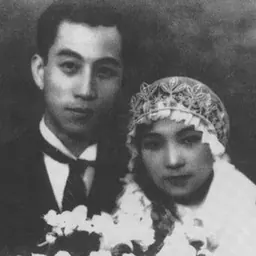
Related people
Same field, nearest in time





Contemporaries
People whose lives overlapped Shi Zhecun's
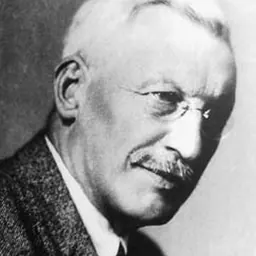

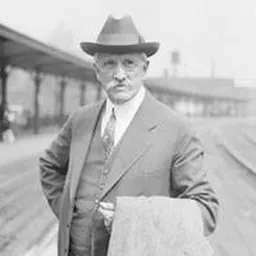

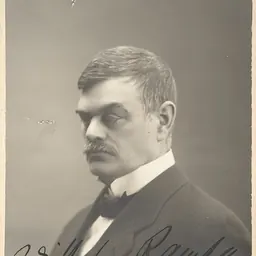

Frequently asked questions
Who was Shi Zhecun?
Chinese writer
When was Shi Zhecun born?
Shi Zhecun was born on 3 December 1905 in Zhejiang.
When did Shi Zhecun die?
Shi Zhecun died on 19 November 2003 in Shanghai.
What was Shi Zhecun's occupation?
Shi Zhecun was a translator, poet, writer, editor and essayist.
What nationality was Shi Zhecun?
Shi Zhecun was Chinese.
Sources & further reading
Cite this page
APA: Biography.guide. (2026). Shi Zhecun. https://biography.guide/shi-zhecun/
MLA: "Shi Zhecun." Biography.guide, https://biography.guide/shi-zhecun/.
Chicago: "Shi Zhecun." Biography.guide. https://biography.guide/shi-zhecun/.
Data last updated: 2026-09-20 · Spot an error? Report a correction.
Page generated 2026-09-27 05:31 UTC