
Sher Afghan Quli Khan
Nobility of the Mughal Empire
About Sher Afghan Quli Khan
Lived 1600 – 1607.
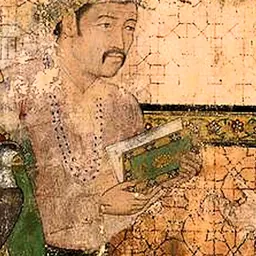
Ali Quli Istajlu, commonly known as Sherafghan Khan , initially served as the safarchi of Safavids, and later became a Mughal courtier, becoming the jagirdar of Burdwan in West Bengal (1605–1607). He was also the first husband of Nur Jahan (Mehrunissa), who later married Jahangir after Ali Quli Khan's death and became Empress of India and the power behind the emperor.
He was given the title Sherafghan Khan by Prince Salim, Jahangir after his meritorious actions during a war with the Rana of Mewar. Like his wife, Sher Afghan was also an immigrant from Persia, who fled from Iran to Kandahar, then in India.
Biography
Life Ali Quli Khan Istajlu was a member of the Turkoman Ustajlu tribe, and was the safarchi (table-attendant) of Ismail II, the third Safavid king (shah) of Iran (1576–78). After the Shah's death, Ali Quli came to Kandahar, and at Multan he met Abdul Rahim Khan-i-Khanan who made him a royal employee while in the field.
Later, on Khan-i-Khanan's recommendation, Ali Quli received a mansab, Thatta (in present-day Pakistan). During the following years he rendered distinguished services to Akbar, and moved to the royal courts at Lahore.
Soon after his arrival at the royal courts in 1594, Ain-e-Akbari suggests, Akbar ordered his marriage to the seventeen-year-old Mehrunissa (the future Empress Nur Jahan), daughter of Mirza Ghias Beg. Ghias’s wife had access to the royal harem, and on her visits there she was often accompanied by Mehrunissa. There Prince Salim reportedly saw her and fell in love with her, and to avoid scandal, Akbar quickly married her to Ali Quli.
Qutbuddin, who was fatally wounded, died later in the night. This caused much grief to Jahangir as he mentions in his memoirs, Tuzk-e-Jahangiri, where he also mentions his elation at the death of Ali Quli and hopes that "the blackfaced wretch will forever remain in hell".
The claim that Ali Quli was killed because the emperor coveted his wife has been discounted by many later historians, who cite the fact that if Jahangir had had any such intentions, he wouldn't have bestowed upon Ali Quli the title Sher Afghan, or pardoned him after he ascended the throne, or given him Bardhaman.
Another historical writer, Khafi Khan, mentions another tale about Ali Quli's death, which is said to have been related by Nur Jahan's mother. According to her, Sher Aghan did not die immediately when he was attacked by Qutbuddin's men, but wounded as he was, he managed to get to the door of his house with the intention of killing his wife, whom he did not wish to fall into the emperor's hands. But her mother would not let him enter, and told him to mind his wounds, especially as Mehrunissa had committed suicide by throwing herself into a well. "Having heard the sad news, Sher Afghan went to the heavenly mansions." Historians do not credit this tale, however.
Nur Jahan's remarriage
After Ali Quli's death, his wife Mehrunissa, was sent to the royal harem, where she spent next four years as lady-in-waiting to Ruqaiya Sultan Begum. As the story progresses, in March 1611, during the New Year Day Nauroz celebrations, Prince Salim happened to see Mehrunissa at Meena Bazar Agra and immediately proposed her for marriage but actually their connection was even before the marriage of Nurjahan and Ali Quli. Mehrunissa and Prince Salim were married two months later, on 25 May 1611, which made her Jahangir's twentieth wife as Nur Mahal, 'Light of the castle', and in 1616, she was given the title Nur Jahan, 'the Light of the World'. After marrying Jahangir, Nur Jahan slowly gathered the all powers of the government in her hands and became the active and dominant force behind the Mughal throne.
Ali Quli's daughter, Mihr-un-nissa Begum, was married to Prince Shahryar, Jahangir's fifth son in 1620. Shahryar went on to briefly occupy the Mughal throne at Lahore, under the manoeuvring of Nur Jahan, after the death of Jahangir on 27 October 1627. He was later captured by Mughal forces led by Asaf Khan, and − first blinded by the orders of Prince Dawar − was later executed by Asaf Khan, at the order of Shah Jahan, who finally ascended the Mughal throne after executing all his remaining brothers. After Qutubuddin Koka's and Sher Afghan Khan's death, the next subedar of Bengal was Jahāngīr Qulī Beg or Jahāngīr Qulī Khān (1607–1608) and when he died, Islam Khan (June 1608–died August 1613) was made the subhadar of bengal.
Don’t just read it —
keep it.
Full-length biographies made to live with: read them, listen on the way to work, watch them tonight.
- E-book
- Audio
- Video
Instant download · yours to keep · every purchase keeps this site free
Important facts
People in Sher Afghan Quli Khan's life
Named in this biography and alive at the same time




Frequently asked questions
Who was Sher Afghan Quli Khan?
Nobility of the Mughal Empire
When was Sher Afghan Quli Khan born?
Sher Afghan Quli Khan was born in 1600 in Safavid Iran.
When did Sher Afghan Quli Khan die?
Sher Afghan Quli Khan died in 1607 in Bardhaman.
Sources & further reading
· Wikipedia: Sher Afghan Quli Khan
Cite this page
APA: Biography.guide. (2026). Sher Afghan Quli Khan. https://biography.guide/sher-afghan-quli-khan/
MLA: "Sher Afghan Quli Khan." Biography.guide, https://biography.guide/sher-afghan-quli-khan/.
Chicago: "Sher Afghan Quli Khan." Biography.guide. https://biography.guide/sher-afghan-quli-khan/.
Data last updated: 2026-09-20 · Spot an error? Report a correction.
Page generated 2026-09-27 05:12 UTC