
About Sheikh Ahmad Rouhi
Lived 1855 – 1878 (aged 23). Sheikh Ahmad Rouhi was a writer and philosopher.
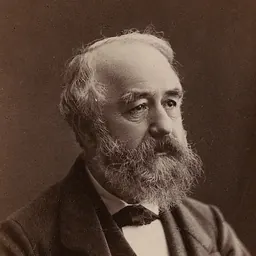
Sheikh Ahmad Rouhi (Persian: شیخ احمد روحی) was an Iranian writer, political thinker, and libertarian. He is best known for his work with Mirza Aqa Khan Kermani and Jamāl al-Dīn al-Afghānī in Istanbul and for writing nationalist and libertarian works. His famous book, Hasht Behesht, is about Bábism beliefs and critiques of Baháʼí Faith.
Life Sheikh Ahmad Rouhi was born in Kerman in 1847, he was the second son of one of the prominent Bábist figures of Kerman.
In Kerman, he married one of Subh-i-Azal's daughters, Tal'at Azal. he was a preacher of Bábism and became popular among the people because of his kindness and trustworthiness.
In 1875 he went to Isfahan, Tehran, Rasht and Najaf with Mirza Aqa Khan Kermani and Mirza Hassan Khan Tabrizi and emigrated to Istanbul and continued his activities there.
His acquaintance with Jamāl al-Dīn al-Afghānī led them to political and social activities, and they worked with Mirza Hassan Khan Tabrizi to promote freedom-seeking ideas in their works. Letters sent by Mirza Aqa Khan Kermani and Sheikh Ahmad Rouhi, to Sheikh Hadi Najmabadi in Iran were sometimes so sensitive that, if discovered, the correspondents would be killed. After the assassination of Naser al-Din Shah, the Ottomans extradited Ahmad Rouhi, Mirza Hassan Khan, and Mirza Aga Khan, who had been imprisoned in Trabzon, to Iran. On July 17, 1896, Crown Prince Mohammad Ali Mirza beheaded them in the northern garden of Tabriz on charges of being Bábist and sent their heads full of straw to Tehran.
Hasht Behesht In Najaf, Sheikh Ahmad wrote his famous book, Hasht Behesht (The Eight Heavens). Hasht Behesht is one of the reference books on the beliefs of Bábism and a critical book on Baháʼí Faith and Baháʼu'lláh. Also in this book, Sheikh Ahmad Rouhi sees the Constitutional Revolution as the downfall for the Qajar dynasty.
Sheikh Ahmad Rouhi named the book based on the poem Hasht-Bihisht written by Amir Khusrau and praised him in one of the chapters of the book.
Most copies of Hasht Behesht were destroyed by Shia Islam fanatics in Iran, and Sheikh Ahmad Rouhi's family was persecuted for this book. But a copy was brought to Britain by the historian and orientalist Edward Grenville Brown.
Don’t just read it —
keep it.
Full-length biographies made to live with: read them, listen on the way to work, watch them tonight.
- E-book
- Audio
- Video
Instant download · yours to keep · every purchase keeps this site free
Important facts
Family & relationships
People in Sheikh Ahmad Rouhi's life
Named in this biography and alive at the same time
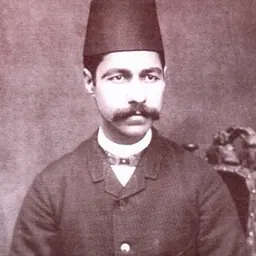
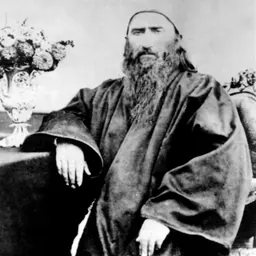
Related people
Same field, nearest in time
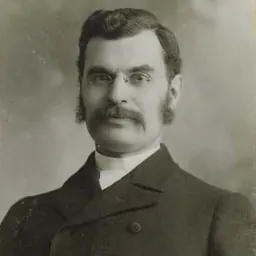


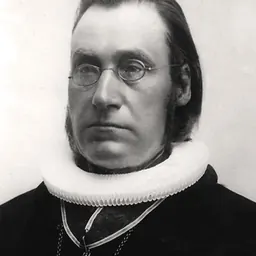

Contemporaries
People whose lives overlapped Sheikh Ahmad Rouhi's





Frequently asked questions
Who was Sheikh Ahmad Rouhi?
Iranian Bábist writer
When was Sheikh Ahmad Rouhi born?
Sheikh Ahmad Rouhi was born on 15 April 1855 in Kerman.
When did Sheikh Ahmad Rouhi die?
Sheikh Ahmad Rouhi died on 17 July 1878 in Tabriz.
What was Sheikh Ahmad Rouhi's occupation?
Sheikh Ahmad Rouhi was a writer and philosopher.
Sources & further reading
· Wikipedia: Sheikh Ahmad Rouhi
Cite this page
APA: Biography.guide. (2026). Sheikh Ahmad Rouhi. https://biography.guide/sheikh-ahmad-rouhi/
MLA: "Sheikh Ahmad Rouhi." Biography.guide, https://biography.guide/sheikh-ahmad-rouhi/.
Chicago: "Sheikh Ahmad Rouhi." Biography.guide. https://biography.guide/sheikh-ahmad-rouhi/.
Data last updated: 2026-09-20 · Spot an error? Report a correction.
Page generated 2026-09-27 05:32 UTC