
About Shamail Nadwi
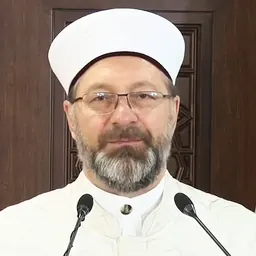
Born 1998. Shamail Nadwi is an Indian ulema and mufti.
Career Nadwi is engaged in religious instruction and educational outreach. In 2021, he founded Markaz al-Wahyain, an online platform that offers courses in Qur’anic studies, hadith, Islamic jurisprudence, and related subjects. The initiative offers structured religious education programmes for adult learners.
He has served as a khateeb at the Kobi Bagan Mosque in Kolkata, where he delivered sermons and conducted Qur’anic tafsir sessions.
Public debate with Javed Akhtar In August 2025, Several Muslim organisations, including the Jamiat Ulema-e-Hind, objected to an invitation extended to Javed Akhtar for a literary programme organised by the West Bengal Urdu Academy, linking the objections to Akhtar's publicly stated atheistic views and remarks perceived as critical of religion. Media reports also noted that the Wahyahin Foundation, led by Nadwi, publicly invited Akhtar to participate in a debate on the existence of God. Nadwi was also reported as stating that the Foundation had not issued threats and had expressed its position through an invitation to debate.
In December 2025, Nadwi took part in a nearly two-hour public debate called Does God Exist?, moderated by journalist Saurabh Dwivedi and held at the Constitution Club of India, New Delhi. The debate featured Nadwi and poet–lyricist Akhtar. The debate was broadcast on YouTube, quickly becoming a viral video
Nadwi stated in an interview that he had received messages from young people and non-Muslims following the debate, describing renewed interest in religious questions. He added that while some individuals reported personal changes in belief, no official data was available to substantiate broader claims.
Writing in The Indian Express, political theorist Yogendra Yadav argued that framing the exchange primarily as a debate on the existence of God risked shifting attention away from other questions he considered more pressing in contemporary India, such as the declining intellectual and moral quality of religious leadership and the increasing entanglement of religion with political power. While expressing respect for the debate's civility and its wide public interest, he characterised such discussions as less relevant to the broader challenges facing religion and religiosity today.
Writing in The Indian Express, scientist and writer Gauhar Raza defended the relevance of the debate, describing it as an example of civil and restrained public disagreement. He argued that, in a contemporary context where scientific rationality and secular values face challenges, public discussion on the existence of God continues to hold social significance. Raza suggested that such exchanges can encourage dialogue on the role of faith, belief, and rationality in shaping social and political life.
Public statements and media discussion Following his increased media visibility in December 2025, an undated video clip of Nadwi's earlier remarks circulated on social media. In the clip, he is reported to have expressed theological views emphasising religious principles (deen or Shariah) in relation to questions of governance and law, which prompted wider media discussion on religious freedom, constitutional values, and secularism in India.
According to a report by Khabargaon, Nadwi questioned the prioritisation of secular institutions over Islamic law and discussed whether religious believers should accept court verdicts that conflict with Shariah. The report noted that these remarks circulated widely online and became the subject of public discussion.
Indian National Congress leader Rajiv Shukla was reported to have criticised the remarks, stating that the Constitution must remain supreme. The Muslim Students Organisation (MSO) was also reported as saying that Nadwi's views did not represent Indian Muslims and conflicted with constitutional principles.
In separate media reports, Nadwi was also quoted commenting on Pakistan, stating that it could not be regarded as an Islamic state due to what he described as the lack of effective implementation of Islamic law. These remarks were discussed by commentators in India and Pakistan.
Don’t just read it —
keep it.
Full-length biographies made to live with: read them, listen on the way to work, watch them tonight.
- E-book
- Audio
- Video
Instant download · yours to keep · every purchase keeps this site free
Important facts
People in Shamail Nadwi's life
Named in this biography and alive at the same time


Related people
Same field, nearest in time



Contemporaries
People whose lives overlapped Shamail Nadwi's


Frequently asked questions
Who is Shamail Nadwi?
Indian Islamic scholar
When was Shamail Nadwi born?
Shamail Nadwi was born on 7 June 1998 in Srinagar.
What is Shamail Nadwi's occupation?
Shamail Nadwi is an ulema and mufti.
What nationality is Shamail Nadwi?
Shamail Nadwi is Indian.
Sources & further reading
Cite this page
APA: Biography.guide. (2026). Shamail Nadwi. https://biography.guide/shamail-nadwi/
MLA: "Shamail Nadwi." Biography.guide, https://biography.guide/shamail-nadwi/.
Chicago: "Shamail Nadwi." Biography.guide. https://biography.guide/shamail-nadwi/.
Data last updated: 2026-09-20 · Spot an error? Report a correction.
Page generated 2026-09-27 05:30 UTC