
About Shaimaa Sabagh
Lived 1984 – 2015 (aged 30–31). Shaimaa Sabagh was an Egyptian poet and activist.
Shaimaa al-Sabbagh (; January 1984 – 24 January 2015) was an Egyptian poet and human rights activist. A prominent member of the Socialist Popular Alliance Party, she participated in demonstrations during and after the 2011 Egyptian revolution. Al-Sabbagh was killed during a demonstration to commemorate the fourth anniversary of the revolution in 2015, which led to her being given the title Martyr of the Rose among activists and reformers.
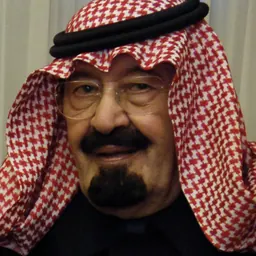
Personal life Al-Sabbagh was born and raised in the Gheit el-Saidi neighbourhood of Alexandria. She was married to Osama el-Sahli, a professor, with whom she had a son, Bilal. Al-Sabbagh had studied folklore, primarily the traditions of villages along the Nile. She wrote poetry, primarily in Egyptian Arabic, that commented on her daily life but also the social and political situation in Egypt, particularly following the 2011 revolution. Through the party, she participated in many protests and demonstrations calling for reform in Egypt, becoming one of the party's most prominent members. In 2014, al-Sabbagh had co-founded the Workers' Bloc , which advocated for workers in Alexandira, particularly around political participation both as voters and candidates. She also advocated for the rights of street children and people living in slums in Alexandria. The actual anniversary of the revolution was the following day; however, the party decided not to do the march on the anniversary itself, due to worries about retaliation from the State anti demonstration forces, as the government who had announced that commemorations would be limited as a "mark of respect" for the death of King Abdullah of Saudi Arabia, who had died on 23 January.
The march started at party's headquarters; it quickly reached Talaat Harb Street, where entry to Tahrir Square was blocked off by the local police for Qasr El Nil. Tear gas and birdshots were quickly used to disperse the demonstration around ten minutes after it started. She collapsed into the arms of her friend and fellow activist Sayyed Abu el-Ela, who carried her to a sidewalk; her body was shortly afterwards placed on chairs outside of a nearby café. Activists attempted to get medical attention for al-Sabbagh, with an ambulance reportedly being prevented from being able to reach her by police, while her fellow marchers were arrested, leaving her body alone outside the café. A doctor at the café offered support but stated that she had died; an anonymous driver in the area, reported by some in the Egyptian media to be linked to the police, transported al-Sabbagh's body to the Cairo Kidney Centre, where it was left in a wheelchair. Al-Sabbagh was formally pronounced dead by doctors at the hospital.
Aftermath Al-Sabbagh's death was captured on camera by Egyptian photographer Islam Osama, who had been covering the march for the newspaper Youm El Sabea. Osama's sequence of six photos shows Sabbagh collapsing and being cradled by el-Ala. Osama fled the scene after the shooting due to concerns that his camera would be confiscated; the photos were published by Youm El Sabea and quickly went viral on social media and became republished in Egyptian media outlets.
On 10 February, the public prosecutor of Qasr El Nil announced that a suspect was in police custody. Salaheddin had denied having ammunition in his weapon, while his lawyer stated that 2013 government legislation effectively banning street demonstrations had caused "confusion" amongst police officers during the march. On 19 June 2017, Salaheddin was sentenced to ten years' imprisonment with hard labour.
Legacy In 2015, Osama won the Shawkan Photo Award for Photojournalism for his sequence on al-Sabbagh's death.
Following her death, Time described al-Sabbagh as a "symbol against Egypt's military rule"; it likened the impact of footage of her death to that of Neda Agha-Soltan, an Iranian woman whose death during the 2009 Iranian protests was similarly widely seen online. In 2017, Sabbagh's story was featured in the short story "Mahliya and Mauhub and the White-Footed Gazelle" by Sofia Samatar, featured in The Starlit Woods: New Fairy Tales.
Don’t just read it —
keep it.
Full-length biographies made to live with: read them, listen on the way to work, watch them tonight.
- E-book
- Audio
- Video
Instant download · yours to keep · every purchase keeps this site free
Important facts
People in Shaimaa Sabagh's life
Named in this biography and alive at the same time



Related people
Same field, nearest in time



Contemporaries
People whose lives overlapped Shaimaa Sabagh's


Frequently asked questions
Who was Shaimaa Sabagh?
Egyptian civil rights activist, poet
When was Shaimaa Sabagh born?
Shaimaa Sabagh was born in 1984.
When did Shaimaa Sabagh die?
Shaimaa Sabagh died on 24 January 2015 in Tahrir Square.
What was Shaimaa Sabagh's occupation?
Shaimaa Sabagh was a poet and activist.
What nationality was Shaimaa Sabagh?
Shaimaa Sabagh was Egyptian.
Sources & further reading
Cite this page
APA: Biography.guide. (2026). Shaimaa Sabagh. https://biography.guide/shaimaa-sabagh/
MLA: "Shaimaa Sabagh." Biography.guide, https://biography.guide/shaimaa-sabagh/.
Chicago: "Shaimaa Sabagh." Biography.guide. https://biography.guide/shaimaa-sabagh/.
Data last updated: 2026-09-20 · Spot an error? Report a correction.
Page generated 2026-09-27 05:22 UTC