
About Shah A M S Kibria
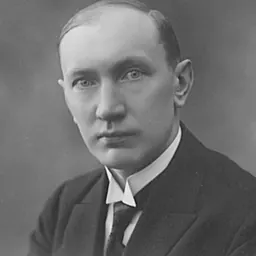
Lived 1931 – 2005 (aged 73). Shah A M S Kibria was a Bangladeshi, Indian and Pakistani economist, diplomat and politician.
Shah Abu Muhammad Shamsul Kibria (; 1 May 193127 January 2005), known as SAMS Kibria or Shams Kibria, was a Bangladeshi economist, diplomat and politician.
Joining the Foreign Service of Pakistan in 1954, Kibria served in a number of diplomatic missions for Pakistan. In 1971, at the height of the Bangladesh Liberation War, Kibria, an ethnic Sylheti, dissociated himself from the Pakistani foreign service and declared allegiance to the Mujibnagar government. After the independence of Bangladesh, he served as the Director General of the Political Affairs department of the Ministry of Foreign Affairs of Bangladesh and twice as the foreign secretary of Bangladesh. Between 1981 and 1992, Kibria was the Executive Secretary of UN Economic and Social Commission for Asia and the Pacific (ESCAP).
Kibria joined Bangladesh Awami League in 1992. He served as the Minister of Finance of the Bangladesh government led by Sheikh Hasina from 1996 to 2001. In the 2001 general election of Bangladesh, he was elected a member of the parliament from his constituency Habiganj-3 in 2001 until his assassination in 2005. Kibria topped the Central Superior Services Examination of Pakistan government in 1954 and was selected for the Pakistan Foreign Service. He received training for diplomatic service at the Fletcher School of Law and Diplomacy at Tufts University in Boston, USA and British Foreign Office in London, UK. He also held the post of foreign secretary in the Ministry of Administration. In January 1973, he was appointed High commissioner to Australia, New Zealand and Fiji. He was appointed the Permanent Representative of Bangladesh to the European office of the UN in Geneva in 1976. He returned to Bangladesh as Foreign Secretary in 1978. During this time, he authored the concept paper for SAARC and helped drive it to fruition. In 1979, Kibria served as the elected Chairman of the Group of 77 Preparatory Committee for United Nations Conference on Trade and Development V held in Manila. From May 1981 to March 1992, Kibria held the post of Executive Secretary of UN Economic and Social Commission for Asia and the Pacific (ESCAP). He also assumed the additional assignment of special representative of the UN Secretary-General for Cambodian humanitarian relief in 1986. At the same time he started writing columns on economic and political issues in the national dailies. In 1994, he was appointed Political Advisor to the Awami League President. After the general election on 12 June 1996, Kibria joined the cabinet of Prime Minister Sheikh Hasina as Minister of Finance. He served in this capacity until the government's term expired in July 2001.
Kibria was elected Chairman of the Economic and Social Commission for Asia and the Pacific, 1997 annual session. He was also elected President of the Governing Council of International Fund for Agricultural Development 1998.
In the general election on 1 October 2001, Kibria was elected a member of parliament from Habiganj-3 constituency.
Term as Finance Minister Kibria's five-year term was marked by economic progress and stability, the only exception being a stock market failure in 1996. During his term (1996–2001) Bangladesh achieved, for the first time, a GDP growth at average rate of 5.83%. Average rate of inflation was well below 5%. The inflation rate in June 2001 was only 1.53%. Exports rose from $3884m in 1995–96 to $6477m in 2000–2001. Investment in the social sector, (education, health etc.) increased from 21.02% of the total budget in 1995–96 to 24.7% in 2000–2001. The rate of national savings increased over the five-year period of the Awami League from 20.17 to 23.78 percent. Similarly, rate of investment increased from 19.99% in 1995–96 to 23.63% in 2000–2001. The physical infrastructure was improved and modernized. Electricity generating capacity rose from 2105 megawatts to 3600 megawatts. Rice and wheat production in 1995–96 was 190.6 m metric tons. In 2000–2001 the figure rose to 264.91 tons and for the first time in half a century, Bangladesh achieved food self- sufficiency.
Expectation of life at birth rose from 58.7 years in 1995–96 to 61.8 years in 2000–2001. Per capita calorie intake went up from 2206.1 to 2274.2 kilocalories in rural areas and from 2220.2 to 2283.3 kilocalories in urban areas during his term as finance minister. Literacy rate for 15 old and above was 47.3 percent in 1995–96; the rate went up to 64 percent in 2000. Infant mortality rate, which was 67 per thousand in 1995–96, went down in 1998 to 57 per thousand live births.
Death
On the afternoon of 27 January 2005, Kibria addressed a political rally at Boidder Bazar primary school, Habiganj. After the speech, as he was exiting the grounds through the school gate, two Arges grenades exploded in quick succession. Three of his companions including his nephew Shah Manjurul Huda died instantly. Kibria was taken to hospitals at Habiganj and Madhabpur, but no treatment was possible because of lack of personnel and medical supplies. He was then taken to the BIRDEM hospital in Dhaka, about 105 miles away from the place of occurrence. As the ambulance carrying Kibria reached BIRDEM, the doctors on duty declared him dead.
The role of the security forces, government officials and medical personnel of Habiganj spurred controversy. Bangladesh Awami League, Kibria's party, organised anti-government protests and countrywide strikes in protest of the killing. The family members of Kibria called for a non-violent movement in Dhaka demanding justice. On 21 March 2005 the police charged ten people with the Habiganj bombing. Kibria's denounced the charges, alleging that they were part of a cover up to protect the real culprits. One of the accused assassins was Ariful Haque Choudhury. Choudhury, when arrested in 2014 after a trial took place in Habiganj, was Mayor of the Sylhet City Corporation.
Writings Kibria regularly wrote columns in national dailies addressing economic and political issues. He was the founder and editor of the weekly Mridu Bhashan. He authored four books – Mridubhashan (1997) The Emerging New World Order (1999) Bangladesh at the Crossroads (1999) Chitta Jetha Bhoyshunya
Personal life Kibria was married to Asma Kibria (19372015). Their son Reza Kibria is an economist and daughter Nazli Kibria is a professor of sociology at Boston University.
Legacy
Sylhet Agricultural University has a residential hall named after Kibria.
Don’t just read it —
keep it.
Full-length biographies made to live with: read them, listen on the way to work, watch them tonight.
- E-book
- Audio
- Video
Instant download · yours to keep · every purchase keeps this site free
Important facts
People in Shah A M S Kibria's life
Named in this biography and alive at the same time
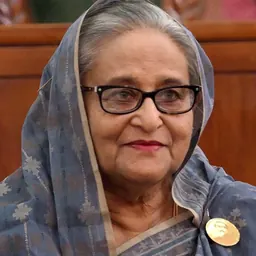

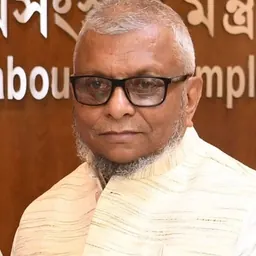
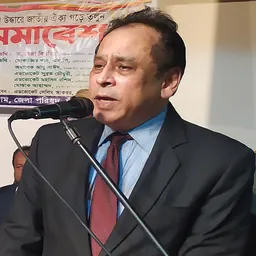

Related people
Same field, nearest in time


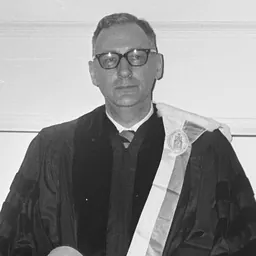
Contemporaries
People whose lives overlapped Shah A M S Kibria's

Frequently asked questions
Who was Shah A M S Kibria?
Bangladeshi politician (1931-2005)
When was Shah A M S Kibria born?
Shah A M S Kibria was born on 1 May 1931 in Sylhet District.
When did Shah A M S Kibria die?
Shah A M S Kibria died on 27 January 2005 in Habiganj District.
What was Shah A M S Kibria's occupation?
Shah A M S Kibria was an economist, diplomat and politician.
What nationality was Shah A M S Kibria?
Shah A M S Kibria was Bangladeshi, Indian and Pakistani.
Sources & further reading
· Wikipedia: Shah A M S Kibria
Cite this page
APA: Biography.guide. (2026). Shah A M S Kibria. https://biography.guide/shah-a-m-s-kibria/
MLA: "Shah A M S Kibria." Biography.guide, https://biography.guide/shah-a-m-s-kibria/.
Chicago: "Shah A M S Kibria." Biography.guide. https://biography.guide/shah-a-m-s-kibria/.
Data last updated: 2026-09-20 · Spot an error? Report a correction.
Page generated 2026-09-27 05:24 UTC