
About Shadi Abdel Salam
Lived 1930 – 1986 (aged 56). Shadi Abdel Salam was an Egyptian film director, screenwriter, writer, theatre designer, costume designer and director.
Shadi Abdel Salam (, 15 March 1930 – 8 October 1986) was an Egyptian interdisciplinary artist, architect, film director, screenwriter and costume and set designer.
Early life and education Born in Alexandria on 15 March 1930, Shadi graduated from Victoria College, Alexandria, 1948, Abdel Salam received a diverse education in both Egypt and the United Kingdom. Between 1949 and 1950, he studied theatre arts, drama, philosophy, and law in London. He later returned to Britain in 1956 to continue his studies in drama. In Egypt, he attended the Faculty of Fine Arts in Cairo, graduating with distinction from the Department of Architecture in 1955. During his studies, he was mentored by the influential architect Hassan Fathy, whose emphasis on traditional Egyptian culture, heritage, and design would have a lasting impact on Abdel Salam's artistic and cinematic vision. He worked as assistant to the artistic architect, Ramsis W. Wassef, 1957, and designed the decorations and costumes of some of the most famous historical Egyptian films among which are; Wa Islamah, Maww’ed fil Bourg, Al Nasser Salah Ad-Din, Almaz wa Abdu El Hamouly. He worked as a historical consultant and supervisor of the decoration, costumes and accessories sections of the Polish film, Pharaoh, directed by Jerzy Kawalerowicz.
He also directed the long drama film entitled The Night of Counting the Years (Al-Momiaa), 1968–1969, and he received many film awards for this work. Also directed the Ancient Egyptian short drama film entitled The Eloquent Peasant. Notably, he once worked as the Director of the Ministry of Culture Center for experimental films in 1970. He also wrote the scenario of the long drama film entitled "Ikhnatoun" and finalized the relevant designs from 1974–1985. He has taught at the Cinema Higher Institute of Egypt in the Departments of Decorations, Costumes and Film Direction from 1963–1969. He died on 8 October 1986.
Career Shadi Abdel Salam began his career in Egyptian cinema during the late 1950s and 1960s as a set and costume designer, contributing to several major historical productions, most notably Saladin the Victorious. His meticulous research into Egyptian history, architecture, and visual culture established his reputation as one of the most distinguished art directors in Egyptian cinema.
In 1969, Abdel Salam made his directorial debut with The Night of Counting the Years (Al-Mummia), a historical drama inspired by the discovery of the Royal Cache at Deir el-Bahari in 1881. The film follows a young member of a tribe that has secretly looted royal tombs for generations and explores themes of cultural identity, historical memory, and national heritage. Widely regarded as one of the greatest Egyptian films ever made, it remains Abdel Salam's best-known work.
The same year, he directed the short film The Eloquent Peasant, an adaptation of the ancient Egyptian tale of the same name. During the 1970s and 1980s, he focused primarily on documentary and educational films dedicated to Egyptian history and culture. These included Afaq, which examined contemporary Egyptian cultural life, and Goyoush El Shams, documenting the spirit of Egyptian soldiers following the October War of 1973. He later directed a series of historical docudramas, including Korssy Tout Ankh Amun El Zahaby, Al Ahramat Wama Kablaha, and Ann Ramses El Thany, all intended to promote awareness of ancient Egyptian civilization and heritage.
For much of the final decade of his life, Abdel Salam devoted himself to an ambitious historical epic about the reign of Pharaoh Akhenaten, known as The Tragedy of the Great House (Akhenaten). He spent nearly ten years researching and developing the project, producing multiple script revisions and completing extensive costume, set, including casting Mohamed Sobhi and Sawsan Badr as Akhantun and Nefertiti, and working on production designs. Despite receiving offers of foreign financing, he insisted that a film about Egyptian history should be funded entirely by Egyptians. The project remained unfinished at the time of his death in 1986.
Abdel Salam's reputation grew significantly after the restoration of The Night of Counting the Years in 2009 by the World Cinema Project of Martin Scorsese. Scorsese described the film as "an astonishing piece of cinema" that is "stately, poetic, with a powerful grasp of time and the sadness it carries," praising its unique sense of history and its meditation on identity, memory, and cultural heritage. He also called the film a masterpiece and one of the greatest Egyptian films ever made, helping introduce Abdel Salam's work to a new international audience.
Material from this unfinished work later formed the basis of The Road to God (Al-Tariq ila Allah), a posthumously completed trilogy consisting of The Fortress, The Dandarawiya, and The Tragedy of the Great House – Akhenaten. Drawing upon Abdel Salam's notes, designs, and surviving footage, the trilogy continued his lifelong exploration of ancient Egyptian spirituality, philosophy, and cultural identity, and was later screened publicly in Egypt by cultural institutions including the Egyptian Opera House and the National Cinema Center.
Filmography
Filmography as Director
Other film work
Museum The Shadi Abdelsalam Museum and Exhibition is a permanent museum and archive dedicated to the life and work of Egyptian filmmaker, artist, and production designer. Located within the Bibliotheca Alexandrina in Alexandria, the museum preserves a large collection of his original sketches, paintings, costume and set designs, photographs, manuscripts, personal belongings, and archival materials related to his films and unrealized projects, particularly his long-planned epic Akhenaten (The Tragedy of the Great House). The museum also features screenings of his films and documentaries about his life and career, serving as an important center for the preservation and study of his artistic legacy and his contribution to Egyptian and world cinema.
Tribute On 15 March 2015, Google celebrated his 85th birthday with a Google Doodle.
Don’t just read it —
keep it.
Full-length biographies made to live with: read them, listen on the way to work, watch them tonight.
- E-book
- Audio
- Video
Instant download · yours to keep · every purchase keeps this site free
Important facts
People in Shadi Abdel Salam's life
Named in this biography and alive at the same time

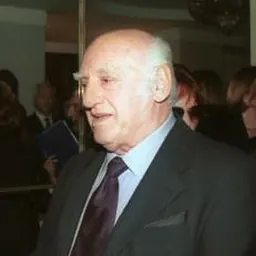


Related people
Same field, nearest in time


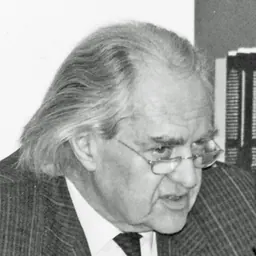


Contemporaries
People whose lives overlapped Shadi Abdel Salam's

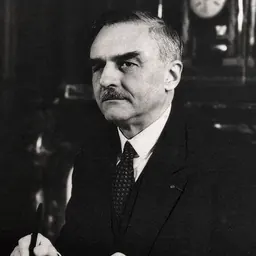

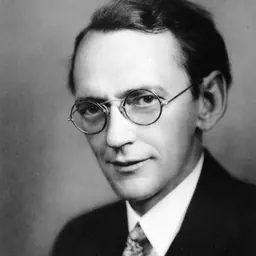
Frequently asked questions
Who was Shadi Abdel Salam?
Egyptian film director (1930–1986)
When was Shadi Abdel Salam born?
Shadi Abdel Salam was born on 15 March 1930 in Alexandria.
When did Shadi Abdel Salam die?
Shadi Abdel Salam died on 8 October 1986 in Cairo.
What was Shadi Abdel Salam's occupation?
Shadi Abdel Salam was a film director, screenwriter, writer, theatre designer, costume designer and director.
What nationality was Shadi Abdel Salam?
Shadi Abdel Salam was Egyptian.
Sources & further reading
· Wikipedia: Shadi Abdel Salam
Cite this page
APA: Biography.guide. (2026). Shadi Abdel Salam. https://biography.guide/shadi-abdel-salam/
MLA: "Shadi Abdel Salam." Biography.guide, https://biography.guide/shadi-abdel-salam/.
Chicago: "Shadi Abdel Salam." Biography.guide. https://biography.guide/shadi-abdel-salam/.
Data last updated: 2026-09-20 · Spot an error? Report a correction.
Page generated 2026-09-27 05:21 UTC