
About Shabeg Singh
Lived 1925 – 1984 (aged 58–59). Shabeg Singh was a military leader.
Major General Shabeg Singh, PVSM, AVSM (1 May 1924 – 6 June 1984), was a Sikh Indian military officer-turned militant. He had previously served in the British Indian Army followed by the Indian Army, but later joined the movement of Jarnail Singh Bhindranwale.
Shabeg Singh fought in several wars including World War II, 1947 Indo-Pak War, Sino-Indian War, 1965 Indo-Pakistan War, and notably in the Bangladesh Liberation War in which he trained the Mukti Bahini. In 1983, Singh joined Sikh movement for rights in Punjab, named Dharam Yudh Morcha. He was killed during Operation Blue Star launched by Indian Army at Golden Temple in 1984.
Early life and education Singh was born in 1924 in Bhangu Jat Sikh family of Khiala village (earlier known as Khiala Nand Singhwala), about from the Amritsar-Chogawan Road. He was the oldest son of Sardar Bhagwan Singh and Pritam Kaur, and had three brothers and a sister. He enrolled in Khalsa College in Amritsar, and later in Government College in Lahore. Shabeg was a descendant of Mehtab Singh who was one of two who killed Massa Ranghar after he captured the Golden Temple.
Military career
British India
World War II In 1942, an officer-selection team visiting Lahore colleges recruited Singh to the British Indian Army officers cadre. After studying in the Indian Military Academy, he was commissioned in the Garhwal Rifles as a second lieutenant. Within a few days the regiment moved to Burma and later to Malaya. In 1945 when the war ended, Singh was in Malaya with his unit. His battalion reportedly captured freedom fighter Prem Sahgal and he ordered him not to be shot and instead taken to trial. He was noted to have snuck past Pakistani lines and gave information to the Akal Regiment about the Pakistani plans.
Sino-Indian War of 1962
In 1962, during the India-China war, he was a Lt. Col. in IV Corps and fought in Bomdi-La. he later commanded the 3rd Battalion, 11 Gorkha Rifles, and was given command of a brigade on 4 January 1968.
Soon after the 1965 operations, Singh became Col G.S. of an infantry division, after which he was given command of the crack 19 Infantry brigade in Jammu Sector. Major General Shabeg Singh, Hero of Bangladesh War, Charcoal on Paper Portrait by Amitabh Mitra Indo-Pakistan War of 1971 Singh was a notable figure with the press for his service in the Indo-Pakistani War of 1971. According to general A. A. K. Niazi, writing in his The Betrayal of East Pakistan, Singh met him after the fall of Dhaka and openly claimed mistreatment of the Sikhs in India, and showed him a sketched map of Khalistan. On 6 July 1972, he was appointed GOC, Madhya Bharat Area (MP, Bihar and Orissa) of Central Command, with the acting rank of major-general, and promoted to substantive major-general on 2 April 1974.
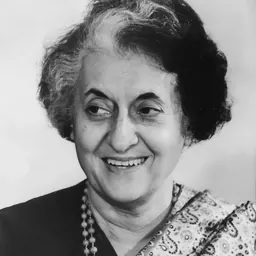
The Emergency In 1975 Shabeg Singh was asked by Indira Gandhi to suppress the Bihar Movement through harsh measures and arrest Jayaprakash Narayan. Shabeg Singh wrote a letter back stating that the Indian Army should not be involved in political matters. Shabeg Singh was assigned a command at area headquarters in Bareilly.
Shabeg Singh was stripped of his rank without court-martial and thus denied his full pension. Two charge sheets in an anti-corruption court were brought against him in Lucknow by India's Central Bureau of Investigation.
Shabeg Singh was mentioned in a speech by Jarnail Singh Bhindranwale while highlighting injustices to various Sikhs in 1983. He participated in the Amritsar Rally in the Golden Rail Morcha where over 10,000 ex-servicemen participated. The Sikh political party Akali Dal allowed Jarnail Singh Bhindranwale to take up residence in the Golden Temple complex. Singh and his military expertise is credited with the creation of effective defences of the temple complex that made the possibility of a commando operation on foot impossible. He organised the Sikh forces present at the Harmandir Sahib in Amritsar in June 1984. Indian government forces launched Operation Blue Star in the same month. Four weeks before Operation Blue Star, Shabeg Singh had an interview with Telegraph Calcutta near Shahid Ganj Baba Deep Singh outside the Golden Temple.At the later stages of the operation, Singh was killed in firing between the Akal Takht and Darshani Ḍeorhi. The amount of Indian casualties his defences incurred are debated, but considered to be higher than Indian Army officials initially expected before the operation. His body was later found and identified when the operation was over. Singh was cremated according to Sikh rites and with full military honours. Sikh narrative claims his family was not allowed to attend his cremation, such as his son Prabhpal Singh. A photograph of Shabeg Singh's corpse is in the collection of the Sikh Reference Library.
Don’t just read it —
keep it.
Full-length biographies made to live with: read them, listen on the way to work, watch them tonight.
- E-book
- Audio
- Video
Instant download · yours to keep · every purchase keeps this site free
Important facts
People in Shabeg Singh's life
Named in this biography and alive at the same time





Related people
Same field, nearest in time




Contemporaries
People whose lives overlapped Shabeg Singh's





Frequently asked questions
Who was Shabeg Singh?
Indian general
When was Shabeg Singh born?
Shabeg Singh was born in 1925 in Punjab.
When did Shabeg Singh die?
Shabeg Singh died on 6 June 1984 in Akal Takht.
What was Shabeg Singh's occupation?
Shabeg Singh was a military leader.
Sources & further reading
Cite this page
APA: Biography.guide. (2026). Shabeg Singh. https://biography.guide/shabeg-singh/
MLA: "Shabeg Singh." Biography.guide, https://biography.guide/shabeg-singh/.
Chicago: "Shabeg Singh." Biography.guide. https://biography.guide/shabeg-singh/.
Data last updated: 2026-09-20 · Spot an error? Report a correction.
Page generated 2026-09-27 04:57 UTC