About Seyyid Lokman
Lived 1600 – 1601. Seyyid Lokman was a Turkish writer.
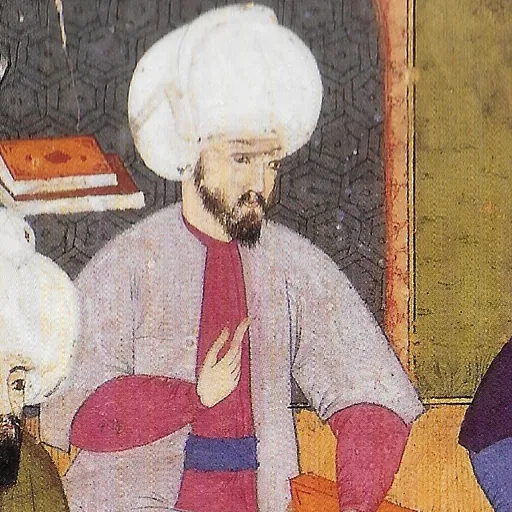
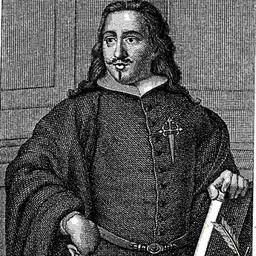
Portrait of Seyyid Lokman. Şahname-ı Selim Han, 1581 (TSMK A.3595, folio 9a). Sayyid Loqman ibn Hoseyn al-Ashuri al-Hoseyni al-Ormavi, better simply known as Seyyid Lokman , was an Ottoman writer, who collaborated with different artists to create numerous notable works in the genre of , or "king's books".
During the second half of the sixteenth century, the Ottoman Empire was at its artistic prime. Among its most precious objects were illustrated manuscripts that are called şehnames, or "king's books". Most şehnames consist of Ottoman dynastic history, glorious deeds of the sultans, and miniature paintings. Sehnames can be viewed as symbols of Ottoman imperial culture in book form. In order to create a series of şehnames, the Ottoman sultans employed şehnamecis, or official court historians who composed the text. The most important requirement in şehnamecis appointment was literary ability. In the process of producing the şehnames, şehnamecis chose their team of calligraphers, painters, gilders, bookbinders, and miniaturists to create the work.
Life
Seyyid Lokman was originally from Urmia in the northwestern Iranian region of Azerbaijan. Persian was his native language. It is unknown whether he himself or his family before him migrated to the Ottoman Empire. In the early stages of his career, Lokman served as a judge, or , in provinces of the empire. As an administrative officer, he was in charge of the application of Islamic law. Lokman later held a position of private secretary for Grand Vizier Sokollu Mehmed Pasha, who worked under Sultan Süleyman from 1565 to 1579, when he was murdered. Sokollu Mehmed Pasha’s influence and patronage was a stepping stone in securing his position as a şehnameci. Lokman was the third şehnameci, after Arif Celebi (c. 1550s – 1563) and Eflatûn-ı Şirvan-ı (c. 1562 – 1569). He took the office from 1569 after Eflatûn’s death. As a şehnameci, he not only oversaw all aspects of the production of the manuscripts but also looked out for his family members as his fortunes improved. He had a son who joined the elite corps in 1589, and a nephew who was appointed to the scribal corps in 1584. During his final years as a şehnameci, Lokman had two assistants, Nutkî and Taliki-zade Mehmed (c. 1591–1600), who helped him in his work. In 1596–1597, Lokman resigned, ending his long career as the head şehnameci in the Ottoman court.
Creative work While Seyyid Lokman held posts as a judge and personal secretary in his early years, his most notable position was as the şehnameci. The Grand Vizier Sokollu Mehmed Pasha was the primary patron for Lokman’s work while he was şehnameci. He began his post in office during the end of the reign of Sultan Selim II (reigned 1566–1574), though most of his work was produced during the rule of Murad III (reigned 1574–1595).
The position of şehnameci came to fruition after the rise in popularity of the şehname genre in the Ottoman Empire. The original Shahnama was an epic poem written by the Iranian poet Firdawsi and contained the history and legendary actions of Iranian kings and heroes. The content was mostly about the representations of various kinds of terrains around the Mediterranean and peoples with different ethnic backgrounds. More than half of the illustrations were about the battles of Selim II’s commanders suppressing its rivals, underlining Ottoman superiority and heroic efforts. The manuscript also emphasized the accomplishments of the viziers Sinan Paşa and Lala Mystafa Paşa.
Kiyafetu’l-ins aniye fi sema’il-u’l-Osmaniye (Human Physiognomy and the Disposition of the Ottomans) The Semailname (, "Human Physiognomy and the Disposition of the Ottomans") was created in 1579 by Lokman and illustrated by Nakkaş Osman. It is a portrait album that describing the facial and physical features of the twelve rulers of the Ottoman dynasty from its founder to Murad III. The manuscript also indicates the role of the sultan and the vizier. The Elogia contained oil painted portraits of Ottoman sultans, which interested Sokollu Mehmed Pasha, the grand vizier of the time. Using European models as inspiration shows how Lokman wanted to show the international knowledge that the Ottoman Empire had, while also emphasizing the Ottoman Empire as superior. The paintings featured in Lokman’s works, including in the Şema’ilname (1579), show a direct correlation to the European accounts because of the artistic differentiation of rulers illustrated in the paintings. Both the European accounts and Lokman’s accounts look to ancient historical examples for physiognomy inspiration, meaning both empires used facial features to differentiate ethnicities in paintings. However, the actual content of the accounts differed. The Ottoman histories contained only Ottoman genealogy while European accounts included international rulers too. The Şema’ilname was a work produced by Lokman that ultimately was made for the sultan in power at the time, known as Murad III.
Drawing from Ottoman content rather than foreign content, Lokman only included Ottoman Sultans in the Şema’ilname, to show the lineage and importance of Islamic leaders and them only. This is an aspect that differs from the European examples because they typically included leaders from external geographies, and even Ottoman sultans. Persian artistic culture was also used as inspiration for the historical accounts because of their tradition of exclusive genealogy and mention of Ottomans as their heirs. Historical works such as Hünername and Zubtedu’t tevarih, written by Lokman, show an emphasis on the history of Ottoman leaders. Additionally, Lokman uses past Islamic historical accounts, such as the şehname, as resources to model the new stories after. Specifically, he uses these works to help portray the sultans as military and political heroes, which comes from the şehname writings.
Seyyid Lokman’s work and position inspired historical accounts to follow in Islamic and foreign cultures. Lokman’s work as an appointed historian was influential because of his hand in shaping the Ottoman style of historical accounts. The use of both past and foreign ideas created a new Ottoman style, which gave examples of how to or how not to document history. European empires in the 16th and 17th centuries, such as Kings of England, Scotland, and France, were familiar with the Ottoman Empire having a court historian and used this as a model to create a historian job position in their own empires. Moreover, Lokman’s historical accounts were both for history and propaganda, since the works mainly included the historical accounts that the historians and sultans thought would be most impressive and positive to current external cultures and future Islamic cultures.
Conclusion In the later 16th century, Ottoman sultans were less visibly active in participation of warfare and government. Throughout Lokman’s career, Selim II and Murad III had ceased to go to war with their armies. After Murad III, Mehmed III (1595–1603) and Ahmed I (1603–1617) paid little attention to şehname writing. Therefore, the increasing impossibility of depicting the Ottoman sultan as a war hero and the decline of the composition of şehname started to undermine the position of şehnameci. After Lokman’s appointment as şehnameci, there were only two successors left: Taliki-zade and Hasan Hukmi (1601) respectively. After them, the post of şehnameci was terminated. Although the post only existed for about 50 years, the five successive şehnamecis produced fifteen notable history works in total. Lokman was the most prolific one who composed ten out of the fifteen şehnames.
Seyyid Lokman was considered a treasure to the Ottoman Empire and the modern world. He played a key role in the court since he held an administrative and creative position. Lokman also oversaw all aspects of production, from the composition of the text to the presentation of the final projects, showing his competency. On top of that, taking the inspirations of historical works from Europe and combining the idea with his own, Lokman’s work and position inspired historical accounts. He shaped the Ottoman style of historical accounts utilizing both past and foreign ideas. The şahnames Lokman produced can be considered as propaganda which glorifies and eulogizes sultans as heroes as well. Overall, Seyyid Lokman had a significant role in history because of his devotion to documenting history and creating a series of şahnames.
Don’t just read it —
keep it.
Full-length biographies made to live with: read them, listen on the way to work, watch them tonight.
- E-book
- Audio
- Video
Instant download · yours to keep · every purchase keeps this site free
Important facts
Related people
Same field, nearest in time

Frequently asked questions
Who was Seyyid Lokman?
Ottoman author
When was Seyyid Lokman born?
Seyyid Lokman was born in 1600 in Urmia.
When did Seyyid Lokman die?
Seyyid Lokman died in 1601.
What was Seyyid Lokman's occupation?
Seyyid Lokman was a writer.
What nationality was Seyyid Lokman?
Seyyid Lokman was Turkish.
Sources & further reading
Cite this page
APA: Biography.guide. (2026). Seyyid Lokman. https://biography.guide/seyyid-lokman/
MLA: "Seyyid Lokman." Biography.guide, https://biography.guide/seyyid-lokman/.
Chicago: "Seyyid Lokman." Biography.guide. https://biography.guide/seyyid-lokman/.
Data last updated: 2026-09-23 · Spot an error? Report a correction.
Portrait: Wikimedia Commons · author & licence
Page generated 2026-09-27 05:08 UTC