
About Severino Di Giovanni
Lived 1901 – 1931 (aged 29). Severino Di Giovanni was an Italian journalist, typographer and poet.
Severino Di Giovanni (17 March 1901 – 1 February 1931) was an Italian anarchist who immigrated to Argentina, where he became the best-known anarchist figure in that country for his campaign of violence in support of Sacco and Vanzetti and antifascism.
Italy Di Giovanni was born on 17 March 1901, in Chieti, Abruzzo. Raised right after World War I in a period of deprivations, such as hunger and poverty, his upbringing had a huge impact on his politics. He attended courses to become a teacher, and soon started teaching, before graduating, in a school in his town. He was self taught in the art of typography and read, in his free time, Mikhail Bakunin, Malatesta, Proudhon, and Élisée Reclus.
Arrival in Argentina Di Giovanni arrived in Buenos Aires with the last big wave of Italian immigrants before World War II. He lived in Morón and travelled daily to Buenos Aires Capital to participate in meetings and plan actions against fascism and Italian fascist supporters in Argentina.
Culmine, Sacco and Vanzetti, and Propaganda of the Deed After being quickly released, Di Giovanni took part in international protests against the arrest and trial of Sacco and Vanzetti, members of the Galleanist anarchist group, who were accused of a robbery and murder of two payroll guards. At the time, Di Giovanni was one of the most active anarchists in Argentina defending the two Italian immigrants, writing in various newspapers, including his own, founded in August 1925 and titled Culmine, and in the New York publication L' Adunata dei refrattari. Culmine advocated direct action and propaganda of the deed. Di Giovanni worked at it at nighttime, supporting his activism and family by working in factories and as a typesetter. He summarized Culmine objectives:
To spread anarchist ideals among Italian workers; To fight the propaganda of pseudo-revolutionary political parties, which use fake anti-fascism as a tool for winning political elections; To start anarchist agitation among Italian workers and keep anti-fascism alive; To interest Italian workers in Argentina in protest and expropriation; To establish an intense and active collaboration between anarchist groups, isolated partners and the regional anarchist movement.
On 16 May 1926, several hours after Sacco and Vanzetti's death sentence was announced, Di Giovanni bombed the U.S. embassy in Buenos Aires, destroying the front of the building. The following day, President Alvear ordered several police searches of those suspected in the attack, and the police requested assistance from the Italian embassy to identify suspects. The embassy immediately named Giovanni, who had disturbed the celebrations of the Teatro Colón. He was soon arrested by the police and tortured for five days, but would not provide information. Di Giovanni was released for lack of evidence.
Meanwhile, in Massachusetts, the defense counsel for Sacco and Vanzetti managed to postpone their executions until 23 August 1927. A movement in support of the Galleanist anarchists continued to agitate for their pardon and release. On 21 July 1927, the U.S. embassy published an article in the conservative newspaper La Nación, which described the two Italian anarchists as common criminals. On the following day, Di Giovanni and two of his anarchist comrades, Alejandro and Paulino Scarfó, blew up a statue of George Washington in Palermo, Buenos Aires, and several hours later, exploded a bomb at the Ford Motor Company.
On 23 August 1927, Sacco and Vanzetti were executed; in response, a 24-hour general strike was proclaimed in Buenos Aires, as well as many other capitals of the world. Several days after the executions, Di Giovanni received a letter from Sacco's widow, which thanked him for his work, and informed him that the director of the tobacco firm Combinados had proposed her a contract to produce a cigarette brand named "Sacco & Vanzetti". Di Giovanni and his comrades continued their anti-U.S. campaign of terror. The headquarters of Citibank and the Bank of Boston were severely damaged in a bombing on 24 December 1927, killing two people and injuring twenty-three others. Opponents of the Italian fascist government claimed derisively that the funerals of the consular employees were performed in accordance with the "fascist funeral rite", in the presence of the ambassador, the state delegate of Italian fascists in Argentina (Romualdo Matarelli), President Alvear (and his wife, Regina), and General Agustín P. Justo. On the same day, Di Giovanni attempted to bomb Benjamín Mastronardi's pharmacy, in La Boca. Mastronardi was the president of the Fascist Committee of La Boca. The bomb was deactivated by Mastronardi's son. took an openly anti-Di Giovanni line, which hardened as the bombings got more indiscriminate. La Antorcha was more ambiguous in its criticism. Neither paper pleased Di Giovanni, and both were denounced by Culmine. The war of words escalated. On 25 October 1929, someone assassinated Emilio López Arango, an editor of La Protesta. At first a group of bakers who were members of the same union as Arango were suspected of the killing but were never charged with the crime. Di Giovanni and his group were reportedly the prime suspects in the assassination. The criticism had no effect. Three days after the Italian consulate bombing, Di Giovanni struck again in Caballito, bombing the home of Cesare Afeltra, a member of Mussolini's secret police. Alfeltra was accused by Italian anarchist exiles of having practiced torture on members of various radical anarchist and anti-fascist groups in Italy. U.S. President-elect Herbert Hoover visited Argentina in December 1928. Di Giovanni wanted to bomb Hoover's train in revenge for the execution of Sacco and Vanzetti, but the bomber, Alejandro Scarfó, was detained shortly before installing the explosives on the rails.
Following the September 1930 military coup, which overthrew Hipólito Yrigoyen, replaced by General José Félix Uriburu and Agustín P. Justo, Giovanni made plans to free his comrade Alejandro Scarfó from prison. Needing funds to bribe the prison guards, he assaulted Obras Sanitarias de la Nación on 2 October 1930, achieving the most important robbery until then in Argentina, taking with him 286,000 pesos. However, the planned breakout never occurred, and Scarfó remained in prison.
Capture and execution
In 1927, Giovanni left his wife, and commenced an affair with América Josefina ("Fina") Scarfó, the 15-year-old sister of the Scarfó brothers, Alejandro and Paulino. Fina had married anarchist Silvio Astolfi to remain with Giovanni, but was promptly cut off from all contact with her family. At the beginning of the Infamous Decade initiated by the military coup, Di Giovanni passed long periods of his time in seclusion, working on Elisée Reclus's complete works. The police attempted to arrest him at a printing shop, but Di Giovanni managed to escape during a gun battle in which one policeman was killed and another injured.
In January 1931, Di Giovanni was arrested after being seriously injured in yet another gun battle, along with Fina and Paulino Scarfó. Two other anarchists were killed in the firefight. Di Giovanni announced that the 300 chickens found in their house were to be given to the poor of Burzaco. Franco's spirited defence of his client caused his own arrest after the trial; he was later dismissed from the ranks of the armed forces and briefly imprisoned before his deportation from Argentina. It was to no avail; the evidence against Di Giovanni was overwhelming. Both he and Paulino Scarfó were sentenced to death; Fina, being underage, was freed.
Postscript After Di Giovanni's execution, Fina abandoned her husband Silvio Astolfi, and eventually remarried, settling down to a quiet life in Buenos Aires. After serving a lengthy prison term, Astolfi returned to Europe and carried on with his antifascist activity: he was later killed during the civil war in Spain. Teresa Masciulli, Di Giovanni's widow, remarried, and Di Giovanni's children changed their names. Alejandro Scarfó, after serving a term of imprisonment for the attempted assassination of President Hoover, was released from prison in 1935.
Don’t just read it —
keep it.
Full-length biographies made to live with: read them, listen on the way to work, watch them tonight.
- E-book
- Audio
- Video
Instant download · yours to keep · every purchase keeps this site free
Important facts
People in Severino Di Giovanni's life
Named in this biography and alive at the same time
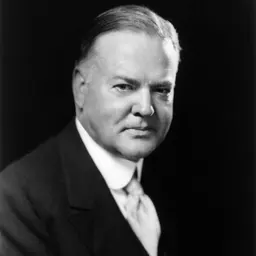



Related people
Same field, nearest in time
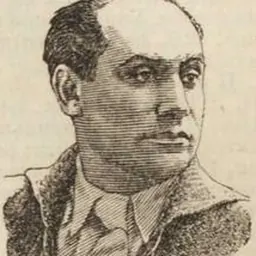




Contemporaries
People whose lives overlapped Severino Di Giovanni's
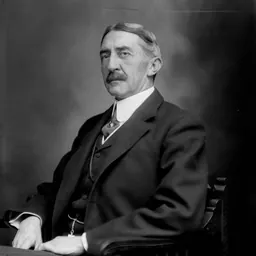
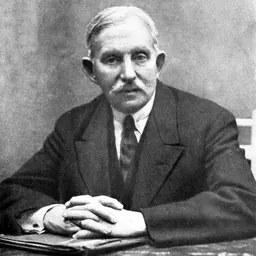

Frequently asked questions
Who was Severino Di Giovanni?
Italian anarchist, executed in Argentina
When was Severino Di Giovanni born?
Severino Di Giovanni was born on 16 March 1901 in Chieti.
When did Severino Di Giovanni die?
Severino Di Giovanni died on 1 February 1931 in Buenos Aires.
What was Severino Di Giovanni's occupation?
Severino Di Giovanni was a journalist, typographer and poet.
What nationality was Severino Di Giovanni?
Severino Di Giovanni was Italian.
Sources & further reading
· Wikipedia: Severino Di Giovanni
· DBpedia: Severino Di Giovanni
Cite this page
APA: Biography.guide. (2026). Severino Di Giovanni. https://biography.guide/severino-di-giovanni/
MLA: "Severino Di Giovanni." Biography.guide, https://biography.guide/severino-di-giovanni/.
Chicago: "Severino Di Giovanni." Biography.guide. https://biography.guide/severino-di-giovanni/.
Data last updated: 2026-09-20 · Spot an error? Report a correction.
Page generated 2026-09-27 05:24 UTC