
About Sergio González Rodríguez
Lived 1950 – 2017 (aged 67). Sergio González Rodríguez was a Mexican journalist, literary scholar, writer and literary critic.
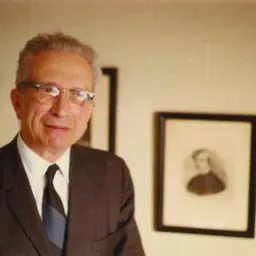
Sergio González Rodríguez (26 January 1950 – 3 April 2017) was a Mexican journalist and writer who was best known for his works on the femicides in Ciudad Juárez from the 1990s to the 2000s, such as (Bones in the Desert) and The Femicide Machine. González Rodríguez was a writer who worked in many literary genres, producing literary journalism or crónicas [es], novels, essays, and screenplays for documentaries. His writing was recognized with several awards in Mexico and Spain.
Life
González Rodríguez was born in Mexico City in 1950. His mother died while he was in the third grade and his father abandoned his family, forming another family. González Rodríguez studied modern literature at the National Autonomous University of Mexico (UNAM) from 1978 to 1982. Apart from his writing career he was a rock musician, playing bass with some of his brothers in a band named Enigma.
González Rodríguez died in hospital on 3 April 2017 from a heart attack.
Career
González Rodríguez made his career as a critic, narrator, essayist, literary historian and scriptwriter.
González Rodríguez was best known for his investigative work about the femicides in Ciudad Juárez, Chihuahua, in the 1990s and 2000s. He began as an investigative reporter, making his first trip to the area in 1995 for Reforma. His series of articles served as the basis for the book Huesos en el desierto (Bones in the Desert), published in 2002, which mixes reporting, essay and reflective writing.
As a screenwriter, he wrote for the television series México, Siglo XX, and a documentary called Nacional Dominical which he also directed with Roberto Diego Ortega. also contributing to the Anales de Literatura Hispanoamericana of the Universidad Complutense, Biblioteca de México, El Nacional Dominical, Ínsula (Spain), a supplement of Siempre! magazine called La Cultura en México, La Jornada Semanal, Letras Libres, Nexos, and the . Other titles included the essays Los bajos fondos, el antro, la bohemia y el café (1988), El Centauro en el paisaje (1992), The Iguala 43 (Los 43 de Iguala) and Field of Battle (Campo de guerra). The latter two books were originally published in Spanish by Anagrama, and all three books were translated into English and published as entries in the Semiotext(e) Intervention Series. González Rodríguez wrote The Femicide Machine specifically for the Intervention Series; and the impact of NAFTA which incentivized the growth of maquiladoras along the border. These factories provided employment opportunities for women; according to González Rodríguez, this provoked a misogynistic resentment in Mexico's culture of machismo. In González Rodríguez's account, the confluence of these factors gave rise to a process which resulted in Ciudad Juárez's high rate of female murder victims; the process itself can be likened to a machine.
The text concludes with an account of the 2001 kidnapping and murder of Lilia Alejandra García Andrade, a factory worker and resident of Ciudad Juárez; following the murder, her mother Norma Andrade began activism against the femicides in Ciudad Juárez and was herself attacked.
The Iguala 43
The Iguala 43 examines the kidnapping of 43 male students in Iguala, Guerrero, which ended with their presumptive murders. As in The Femicide Machine, González Rodríguez considers a series of historical circumstances which informed the tragedy—this time affecting male victims in Mexico's south, as opposed to female victims in its north.
On 26 September 2014, a group of male students from the Ayotzinapa Rural Teachers' College commandeered two local buses which they drove to nearby Iguala, where they took another three. Their plan was to travel to Mexico City to participate in protests commemorating the 1968 Tlatelolco massacre, after which they would return the buses. In one account of following events, local police attacked the students, killing some, and then apprehended the survivors, turning them over to the Guerreros Unidos, a local criminal drug trafficking organization. The Guerreros Unidos then killed the surviving students and burned their bodies, disposing of the remains.
González Rodríguez explains the historical circumstances that led to the atrocity. Located in Mexico's south, the Ayotzinapa Rural Teachers' college has a far-left political tradition, producing alumni such as Lucio Cabañas and Genaro Vázquez Rojas who subsequently became guerrillas opposed to the Institutional Revolutionary Party's regime; a historical antagonism between Mexican authorities and Ayotzinapa personnel was formed. Further, there was an existing tradition of the forced disappearance and killing of activists; González Rodríguez cites the case of , an activist who was stopped at a military checkpoint near the Guerrero coast in 1974 and never seen again. Taken together with the overall societal corruption and increased violence during the Mexican drug war, González Rodríguez assigns blame for the massacre jointly to the governments of Mexico and the United States, on account of internal corruption and ongoing CIA operations within Mexico, respectively.
Field of Battle
González Rodríguez uses the metaphor of anamorphosis to describe the altered reality experienced by victims of violent crime, citing the distorted skull in Hans Holbein the Younger's The Ambassadors.
In Field of Battle, González Rodríguez examines the contemporary militarization of Mexican society in response to drug-related violence. The central argument of the book is that the de facto absence of the rule of law is the root cause for ongoing violent crime and suffering within Mexico. This absence of the rule of law is generated by corruption which begins by eroding the legitimacy of the rule of law itself, and which ends by creating an "a-legal" world in which the distinction between legality and illegality becomes meaningless because crimes are rarely punished and law enforcement themselves often do not enforce or respect the law. Given these circumstances, González Rodríguez uses the visual phenomenon of anamorphosis as a metaphor to describe the subjectively distorted reality experienced by victims of violent crime in Mexico who are often caught between police corruption, an inefficient legal system, and the violence of gangs or drug cartels.
González Rodríguez concludes the text by advocating nonviolence and respect for the rule of law as antidotes both to drug violence and also to the militarization of Mexican society because unlike the latter, the former represent peaceful means which are consistent with their peaceful end.
Most of the passages from The Femicide Machine's third chapter War City/Mexico-USA are recycled throughout Field of Battle. In particular, the fourth chapter of Field of Battle, Global War on Drug Trafficking, rephrases and slightly permutes the latter two-thirds of War City/Mexico-USA. In both cases the material covers the geopolitical interests of the United States via CIA operations within Mexico and Latin America, and the expansion of Mexican drug trafficking to Europe via West Africa.
Recognition In 1993, González Rodríguez was a finalist at the in Barcelona, Spain, with the work El centauro en el paisaje.
The work Huesos en el desierto was a finalist at the Lettre Ulysses International Prize of Literary Reporting in Germany and a finalist in the Herralde Novel Prize in 2004.
González Rodríguez's work was supported by grants from FONCA (1990–1991), two from the Rockefeller Foundation and from the history department of the Universidad Iberoamericana (1990–1999).
He was a member of Mexico's Sistema Nacional de Creadores de Arte since 1996.
Don’t just read it —
keep it.
Full-length biographies made to live with: read them, listen on the way to work, watch them tonight.
- E-book
- Audio
- Video
Instant download · yours to keep · every purchase keeps this site free
Important facts
People in Sergio González Rodríguez's life
Named in this biography and alive at the same time
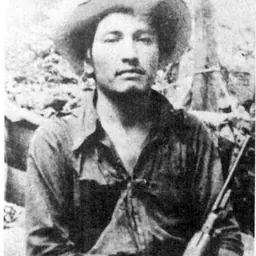



Related people
Same field, nearest in time


Contemporaries
People whose lives overlapped Sergio González Rodríguez's


Frequently asked questions
Who was Sergio González Rodríguez?
Mexican journalist
When was Sergio González Rodríguez born?
Sergio González Rodríguez was born on 26 January 1950 in Mexico City.
When did Sergio González Rodríguez die?
Sergio González Rodríguez died on 3 April 2017 in Mexico City.
What was Sergio González Rodríguez's occupation?
Sergio González Rodríguez was a journalist, literary scholar, writer and literary critic.
What nationality was Sergio González Rodríguez?
Sergio González Rodríguez was Mexican.
Sources & further reading
· Wikipedia: Sergio González Rodríguez
· DBpedia: Sergio González Rodríguez
Cite this page
APA: Biography.guide. (2026). Sergio González Rodríguez. https://biography.guide/sergio-gonzalez-rodriguez/
MLA: "Sergio González Rodríguez." Biography.guide, https://biography.guide/sergio-gonzalez-rodriguez/.
Chicago: "Sergio González Rodríguez." Biography.guide. https://biography.guide/sergio-gonzalez-rodriguez/.
Data last updated: 2026-09-20 · Spot an error? Report a correction.
Page generated 2026-09-27 05:18 UTC