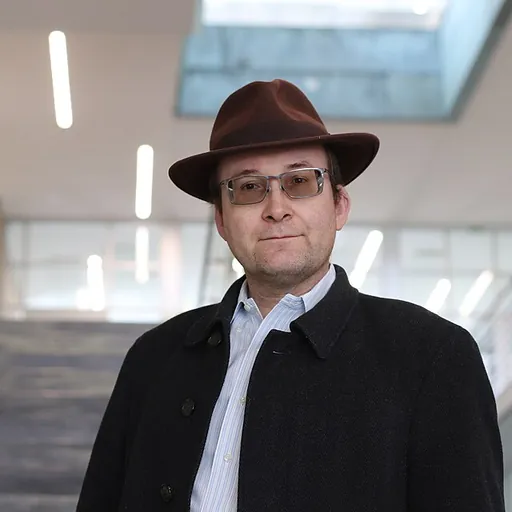
Sergei V. Kalinin
American materials scientist
About Sergei V. Kalinin
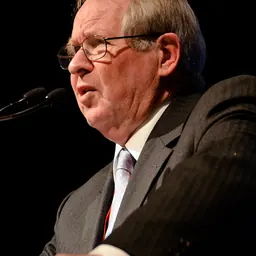
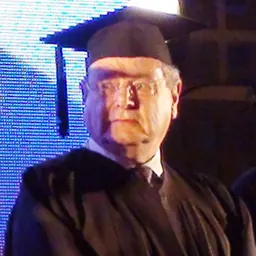
Born 1976. Sergei V. Kalinin is a Russian and American materials scientist.
Sergei V. Kalinin is a materials scientist known for pioneering the integration of artificial intelligence, atomic-scale fabrication, and high-resolution microscopy. He is a Chief Scientist for AI/ML in the Physical Sciences at the Pacific Northwest National Laboratory and a Weston Fulton Chair Professor of Materials Science and Engineering at the University of Tennessee-Knoxville . Kalinin is recognized for developing data-driven microscopy methods and for advancing the concept of atom-by-atom manufacturing .
Kalinin co-authored 27 patents, over 800 publications that have been cited over 61,000 times with h-index of 121 (as of Nov 2025) . Kalinin’s research sits at the intersection of automation, AI-accelerated discovery, and nanotechnology, making his work influential to emerging innovation sectors including quantum materials, advanced energy systems, and next-generation information technologies.
Early life and education Kalinin obtained his bachelor's and master's degrees in Materials Science from Moscow State University in 1998. He received his Ph.D. in Materials Science and Engineering from the University of Pennsylvania in 2002 under Prof. Dawn Bonnell. His early academic work focused on ferroelectric materials and scanning probe techniques, laying the foundation for his later contributions to multimodal imaging and data analytics.
Career
Oak Ridge National Laboratory Kalinin spent nearly two decades at Oak Ridge National Laboratory (ORNL), where he became a Corporate Fellow and directed the Institute for Functional Imaging of Materials. Kalinin has been a research staff member at ORNL since October 2004. He became a senior member since 2007, a distinguished staff member since 2013, and progressed onto the Corporate Fellow and Group Leader in 2020. He was Theme leader for Electronic and Ionic Functionality at the Center for Nanophase Materials Sciences during 2007–2015 and a recipient of Eugene P. Wigner Fellowship during 2002–2004. His group developed methods combining scanning probe microscopy, electron microscopy, and machine learning to extract physical parameters from large experimental datasets.
University of Tennesse, Knoxville Kalinin became Joint faculty at the Center for Interdisciplinary Research and Graduate Education at the University of Tennessee, Knoxville in December 2010. After his assignment at Amazon (see below) he resumed his role at University of Tennessee, Knoxville as the Weston Fulton Chair Professor in the department of Materials Science and Engineering.
AI-Driven microscopy Kalinin is credited with helping establish the field of machine learning–enhanced microscopy, in which algorithms are used to interpret images, infer physical properties, and guide experiments in real time. These tools aim to significantly reduce human intervention and increase throughput in scientific analysis.
He has contributed to frameworks that merge large experimental datasets with physical modeling, enabling predictive understanding of material behavior. His publications explore how AI systems can uncover hidden causal relationships in complex materials.
Nanoscale electromechanics
Kalinin has contributed to the field of nanoscale electromechanics, exploring the coupling between electrical and mechanical phenomena on the nanoscale. He has made significant contributions to piezoresponse force microscopy (PFM), including the first PFM imaging in liquid and vacuum, PFM of biological tissues, and the observation of nanoscale ferroelectricity in molecular systems.
He has also pioneered the development of spectroscopic imaging modes for PFM, allowing visualization of polarization switching on the sub-10 nanometer level and establishing the resolution and contrast transfer mechanisms of domain walls and spectroscopy. Kalinin led the team that pioneered the BE principle for force-based scanning probe microscopes, enabling quantitative capture of probe-material interactions. His multidimensional, multimodal spectroscopies have enabled quantitative studies of polarization dynamics and mechanical effects accompanying switching in ferroelectrics.
Kalinin's work has revealed the critical role of electrochemical phenomena on ferroelectric surfaces and the emergence of chaos and intermittency during domain switching and shape symmetry breaking. His recent work includes the development of the basic theory and phase-field formulation for domain evolution and the exploration of the coupled electrochemical-ferroelectric states.
Impact on emerging technologies Kalinin's work is relevant to multiple technology areas:
Quantum information science: atomic-precision placement of dopants and defects. Energy materials: improved characterization of batteries, ionic conductors, and functional oxides. Electronics and photonics: patterning and characterization of next-generation devices at atomic resolution. AI for science: development of closed-loop, self-driving experimental systems.
His technologies have potential applications in accelerated materials discovery, semiconductor device prototyping, and precision manufacturing, with a potential for attracting interest from organizations investing in scientific automation and atomic-scale engineering.
Publications and patents Kalinin is the author or co-author of hundreds of peer-reviewed papers and holds multiple patents in scanning probe techniques, data-centric discovery methods, and atomically engineered materials. His work is highly cited across fields such as microscopy, materials characterization, and machine learning for physical sciences.
Awards and honors
Kalinin has received several notable awards in materials science and microscopy, including national-level research awards and distinctions from professional societies in physics, materials research, and surface science. He is a fellow of multiple scientific organizations.
Kalinin's awards and honors include:
David Adler Lectureship Award for sustained leadership and vision in integrating machine learning methods with physical sciences, particularly in the development of autonomous electron and scanning probe microscopies and applications to nanoscale electromechanics of ferroelectric and energy materials, APS March meeting (2025) Peter Duncumb Award for excellence in microanalysis, Microanalysis Society (2024) Feynman Prize in Nanotechnology - Experimental category (2022) R&D100 Awards (2008, 2010, 2016, 2018, and 2023) Blavatnik Award Laureate (2018) APS (2015), and a senior member (2015) and Fellow (2017) of IEEE.
He is a member of editorial boards for Nanotechnology, Journal of Applied Physics/Applied Physics Letters, and Nature Partner Journal Computational Materials.
Don’t just read it —
keep it.
Full-length biographies made to live with: read them, listen on the way to work, watch them tonight.
- E-book
- Audio
- Video
Instant download · yours to keep · every purchase keeps this site free
Important facts
People in Sergei V. Kalinin's life
Named in this biography and alive at the same time

Related people
Same field, nearest in time





Contemporaries
People whose lives overlapped Sergei V. Kalinin's

Frequently asked questions
Who is Sergei V. Kalinin?
American materials scientist
When was Sergei V. Kalinin born?
Sergei V. Kalinin was born in 1976 in Moscow.
What is Sergei V. Kalinin's occupation?
Sergei V. Kalinin is a materials scientist.
What nationality is Sergei V. Kalinin?
Sergei V. Kalinin is Russian and American.
Sources & further reading
· Wikipedia: Sergei V. Kalinin
Cite this page
APA: Biography.guide. (2026). Sergei V. Kalinin. https://biography.guide/sergei-v-kalinin/
MLA: "Sergei V. Kalinin." Biography.guide, https://biography.guide/sergei-v-kalinin/.
Chicago: "Sergei V. Kalinin." Biography.guide. https://biography.guide/sergei-v-kalinin/.
Data last updated: 2026-09-20 · Spot an error? Report a correction.
Page generated 2026-09-27 05:09 UTC